
Lanaco and Blueair Launch World-First NZ Wool Air Filter
New Zealand wool is reaching new heights as air filtration companies move away from synthetic products to biodegradable alternatives.



 increase font size
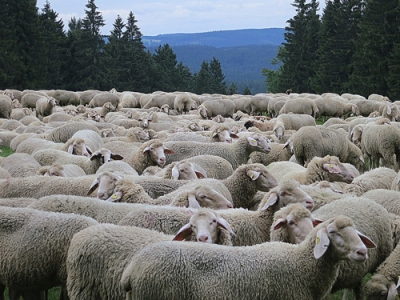
The 5100 bales of South Island wools on offer this week through the Wool Services International auction saw strong competition and a 90.5% clearance.
The weaker NZ dollar compared to last sale on October 29 aided local prices, with the weighted currency indicator down 1.43%, says WSI marketing executive, Malcolm Ching.
Ching says the less stylish merino fleece compared to the last time offered on October 22 saw the 19.5 micron and finer wools up to 6% cheaper with 20 to 23.5 microns up to 3% firmer.
Mid micron fleece 24 to 26 microns was 1 to 4% dearer with 27 to 29.5 microns strongly contested, lifting 8%.
Compared to the North Island sale on October 29, fine crossbred fleece 32 to 35 microns was 3 to 6% dearer with shear types 1.5 to 5% dearer. Coarse full fleece was 4 to 5% stronger with 3 to 5 and 3 to 4 inch shears 1.5 to 3% firmer. Shorter types eased by 1.5%. Long oddments were 4 to 6% dearer with shorter types 1 to 5% dearer.
There was good competition with China and Western Europe supporting the fine wool sector, China dominating the fine crossbreds and Australasia strongly supporting the coarse wools. Limited support came from Western Europe, Middle East and India.
The next sale on November 12 comprises about 5100 bales from the North Island.
New Zealand wool is reaching new heights as air filtration companies move away from synthetic products to biodegradable alternatives.

Will a stronger, more coordinated voice help rebuild confidence and improve returns in the wool sector?
OPINION: Confidence in the wool sector is rebounding as prices hit levels not seen in more than 15 years.
Rising strong wool prices are finally returning the sector to profitability.
The recently signed free trade agreement with India is an invitation to strengthen relationships between the New Zealand and Indian strong wool industries, says Wool Impact chief executive Andy Caughey.


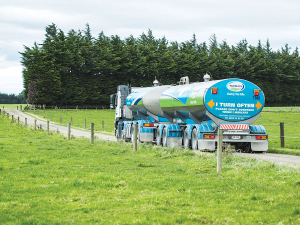
Fonterra board members are in line for a pay rise of around 3%.
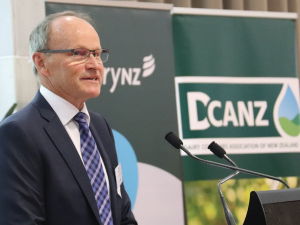
Dairy processors are ready to further boost New Zealand’s export earnings but want the incoming government to match their ambition with good policy.
Massey University is best placed to solve the “problems” facing the dairy industry, says vice chancellor, Pierre Venter.
Synlait's longest serving employee – a man who joined the Canterbury-based milk processor even before it began processing milk – is now its newest executive.
A dairy industry leader believes eradicating the common and costly disease, Bovine Viral Diarrhoea (BVD) is within reach.
A farmgate milk price of $10/kgMS this season is firming up as milk powder prices soar and the New Zealand dollar weakens.

OPINION: The same mainstream media muppets that brought you Jacindamania in 2017 have been flat out pimping for the Opportunities…
OPINION: Your old mate reckons the atrocious way farmers in the UK are treated by their lords and masters in…




