Milk Powder Prices Prop Up Farmgate Milk Price
Milk powder prices are keeping farmgate prices up, helping processors offset the dip in milk fat prices.



 increase font size
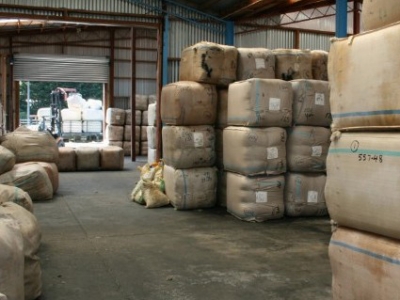
The weakening New Zealand dollar coupled with exporter pressure to meet shipping requirements and limited supply continues to underpin the wool market, says NZWSI.
Marketing executive Paul Steel says that the weighted indicator for the main trading currencies came down 2.14% compared to the last sale on 28th May.
Of the 6,876 bales on offer, 94% sold.
Steel advises that resurgent interest from China saw Mid Micron fleece 24.5 to 31.5 micron increase 6 to 12% with Fine Crossbred Fleece 33 to 35 micron 1.5 to 5% dearer against the last time offered on 21st May.
Compared to last week's North Island offering on the 28th May, Fine Crossbred Shears were 2 to 6% stronger. Good colour Coarse Crossbred Fleece were up to 1.5% firmer, average style eased slightly with poor colour firm.
Coarse Shears were firm to 3% dearer.
First Lambs Fleece received very strong support, lifting 6 to 8%.
Long Oddments were nominally 3% cheaper with good colour short oddments 6 % dearer and poor colour 2 to 3% firmer.
Competition was well spread with China dominating, supported by Australasia, Middle East and Western Europe.
The next sale is due on 11th June and comprises approximately 9,100 bales from the North Island.
However, due to insufficient wool coming forward and no stock wools on hand in brokers stores, the rostered South Island sale on 18th June has been cancelled.
Milk powder prices are keeping farmgate prices up, helping processors offset the dip in milk fat prices.

New Zealand wool is reaching new heights as air filtration companies move away from synthetic products to biodegradable alternatives.
Chinese beef trade quotas and a looming suspension of Brazilian beef imports into the European Union are expected to reshape global beef trade flows over the remainder of 2026, with implications for New Zealand exporters, according to Rabobank's Q3 Global Beef Quarterly report.
Will a stronger, more coordinated voice help rebuild confidence and improve returns in the wool sector?
Ballance Agri-Nutrients has released its latest fertiliser outlook, detailing some of the current global trends influencing fertiliser supply. Ballance head of procurement Shane Crean takes part in a Q&A in the report:


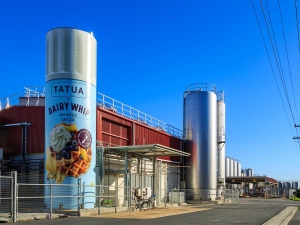
Waikato milk processor Tatua has again declared a record milk payout to farmer shareholders, leaving other processors in the dust.

A Labour-led Government won’t be bringing back the controversial freshwater rules of 2020.
National’s much-touted free trade deal with India featured in the Rural Issues Debate at Mystery Creek, Hamilton on Wednesday night.
New Zealand's 2026-27 freshwater fishing season has opened, with anglers encouraged to head to rivers and lakes over the coming days as conditions look favourable across much of the country.
Central Otago District Council (CODC) has voted against a plan to spread treated sewage sludge from Cromwell and Alexandra on farmland near Lauder, a decision Federated Farmers says reflects strong opposition from rural residents.
Pāmu has released its FY26 Integrated Annual Report, reporting a Net Operating Profit of $113 million, more than double the $49 million recorded in FY25.

OPINION: The same mainstream media muppets that brought you Jacindamania in 2017 have been flat out pimping for the Opportunities…
OPINION: Your old mate reckons the atrocious way farmers in the UK are treated by their lords and masters in…