Election 2026: How Parties Would Lift the Arable Sector
As part of its Election 2026 coverage, Rural News asked political parties how they would help pull the arable sector out of the doldrums. Here's what they said:




 increase font size
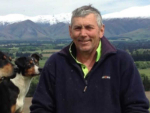
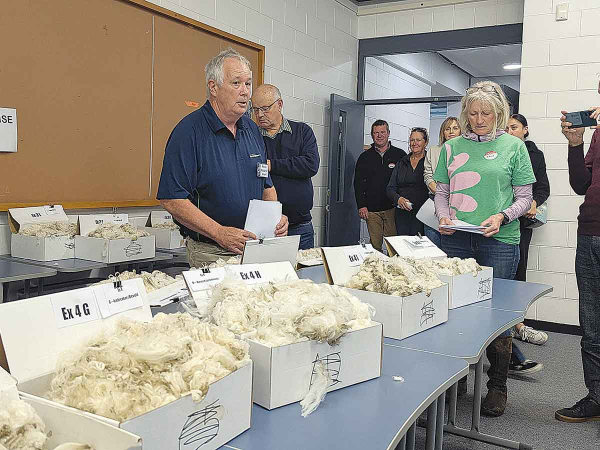 NZ Woolclassers Association board member Kevin Waldron talks through the finer points of grading wool.
A deterioration in the quality of New Zealand's wool clip is a problem for manufacturers and exporters, says Associate Agriculture Minister Mark Patterson.
Speaking at the recent NZ Wool Classers Association professional development day at Lincoln, Patterson said the wool industry has the chance for one of the great turnarounds in New Zealand agricultural commodities, but quality assurance was critical.
"When I'm going around the manufacturers, what I'm hearing quite a bit is the deterioration of the clip is impacting their processes."
He had also heard the same complaint from the Chinese delegation at an international wool conference in Adelaide last year.
"I'm not pointing my finger at the people in this room. What's happened here is that farmers have stopped breeding for wool. They've stopped putting the resource into the sheds and trying to just cut costs to stay viable.
"So, as we start to see the wool price turn - and it has turned and it will go much higher, I'm hoping or absolutely believe that it can - that attention and focus on detail and quality in the sheds is going to be a key part of that turnaround."
Patterson said that Canterbury Spinners in Oamaru (a supplier of woollen yarns to major carpet manufacturers) recently told him of the impact on their efficiency when they must frequently stop and repair the machines.
"That's really disruptive, compared to their synthetic lines that they can run 24 hours a day, seven days a week, without stopping because they're just totally consistent.
"So that's the competition. We have been disrupted badly by synthetics. We're fighting back but part of that fightback is doing our job as farmers, as shearing contractors, wool classers and that sort of thing."
Patterson said he had been "one of those really cynical farmers that didn't really see too much of a future for the wool industry" and it seemed to be in a downward spiral.
However, there was now a big swing back to natural fibres and he was now very confident of a big turnaround.
More than 100 registered for the event, which included practical workshops, speakers, and the association's AGM. Attendees included classers, students, growers, shearers and others in the wool trade.
Patterson told them that their end of the supply chain was "absolutely critical".
Patterson said the message needs to go out from the attendees to the farmers to focus on quality.
"I think we'll see quite quickly that there will be quite a premium start to emerge between the better prepared wools and the not so well."
The message was actually about the viability of hill country sheep and beef farming, and to turn that around we need to turn around their profitability, particularly through getting a better return for wool, he said.
"We don't want to see New Zealand turn into a massive pine plantation."
Introduced to the event as "the Minister of Wool," Patterson was applauded for the Government's recent announcement that government agencies must now use wool fibres and products in construction and fitout of new and refurbished buildings.
We cannot expound the virtues of wool if we're not prepared to use it ourselves, he said.
However, it was not just selling more carpet or more insulation that would turn the industry around, but innovation in uses such as medicinal, sanitary, filtration and acoustics.
Patterson said acoustics manufacturer Autex - a major sponsor of the NZ Warriors - have launched a woollen product after four years development.
Amazing Quality
NZ Wool Classers Association chair Tracy Paterson said the amazing qualities of wool have been known "through eons".
"But it's about making sure that we maintain the quality and from the wool classers' side of things that's important to what we do.
"So, these industry days for us are really important about education and then also bringing everybody up at the same time, and giving people industry oversight, the whole lot."
Patterson said the industry days, usually one each in the North and South Islands, covered different aspects each year.
"When you come to an industry day, you're going to have new things at you, you're going to learn something."
Patterson said the drop in sheep numbers across New Zealand was "a bit of a shame" but the likes of New Zealand Merino and PGG Wrightson were doing their damnedest to build new markets.
As part of its Election 2026 coverage, Rural News asked political parties how they would help pull the arable sector out of the doldrums. Here's what they said:

The Minister for Rural Communities, Mark Patterson, says there's a massive infrastructure deficit in rural areas.
National’s much-touted free trade deal with India featured in the Rural Issues Debate at Mystery Creek, Hamilton on Wednesday night.
It was billed as a chance for all the political parties to woo the rural vote, but question marks hang over just how effective this was.
New Zealand wool is reaching new heights as air filtration companies move away from synthetic products to biodegradable alternatives.


Alliance is calling for final applications for its 2027 Graduate Programme, with applications closing on Sunday 25 October.
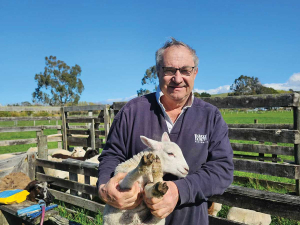
Decades piloting planes has ensured vet and farmer David Hayes is focused on safety. So, after a serious accident while welding on farm, he is sharing his experience so others can learn from it.
Canterbury milk processor, Synlait Milk has confirmed Leon Fung as its chief executive officer.
OPINION: Making it easier to collect rainwater and use it to grow crops and livestock is a no brainer.
As part of its Election 2026 coverage, Rural News asked political parties how they would help pull the arable sector out of the doldrums. Here's what they said:
Farmers are being encouraged to rethink how they manage waste on farm with the launch of ruralwastesorted.co.nz, a new website bringing together practical tips, real farmer experiences and resources.


OPINION: The same mainstream media muppets that brought you Jacindamania in 2017 have been flat out pimping for the Opportunities…
OPINION: Your old mate reckons the atrocious way farmers in the UK are treated by their lords and masters in…




