OPINION: At last, a serious effort to better connect farmers and scientists.
The Science for Farmers initiative promoted by Ministry for Primary Industries (MPI) makes sense.
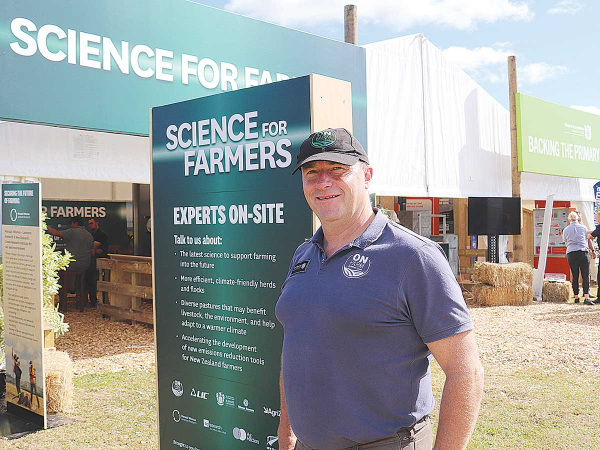
On show at recent regional field days, a special site under this banner was set up whereby farmers can meet up with scientists and discuss some of their problems, and find out what researchers have in the pipeline to deal with some of the challenges they are facing. Likewise, scientists get a heads-up on problems on the farm.
The concept of oozes common sense. Many years ago, politicians and bureaucrats disassembled the old MAF and cut the strong link between the scientists and policy makers. Remember the Ruakura Farmers Conference initiated by the great science leader, the late C.B. McMeeken?
Thousands of farmers flocked there in the 1960s and 70s to listen to men and women who dedicated their lives to finding better ways to farm. And then there were the tours of MAF farms at Ruakura and Whatawhata. Also let’s not forget the excellent horticulture field days held near Levin. All these good science communication events went with the stroke of a pen.
While NZ scrapped the link between science and farmers, 18,000km away the Irish have kept the system that we dumped and that has been hugely successful. A field day organised by the Irish science collective Teagasc, similar to our old MAF, can attract upwards of 10,000 farmers, something we never see in NZ.
It was seeing what Teagasc has done that prompted the MPI boss Ray Smith and his Irish sidekick Dr John Roche to start to improve that scientist-farmer communication by initiating Science For Farmers.
There will never be a return to the halcyon days of the 70s but what is being done is great and hopefully farmers and more science providers will embrace this excellent concept.