Thursday, 25 April 2024 08:55

Editorial: Wake up Wellington

Written by  Peter Burke
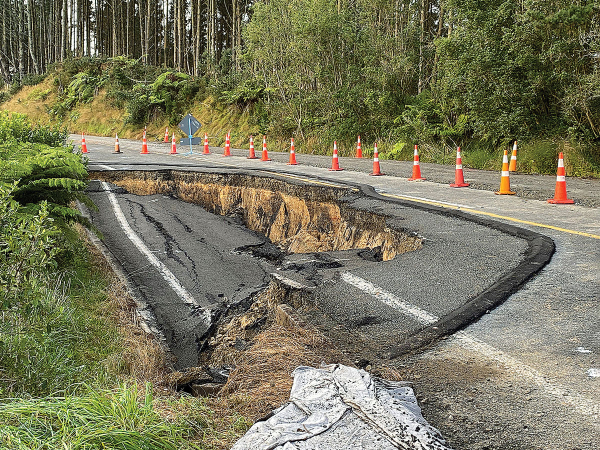
Fourteen months after Cyclone Gabrielle, many farmers have limited access to their farms. Fourteen months after Cyclone Gabrielle, many farmers have limited access to their farms.

OPINION: The distress that the politicians and bureaucrats are causing to the people of Wairoa and the wider Tairāwhiti is unforgivable.

Wairoa Mayor Craig Little has every reason to be angry at the seeming lack of priority, commitment and energy that the Government and its agencies are putting into sorting out this mess: That is, State Highway 2 south of Wairoa. As one who drove the road last year and again just a few weeks ago, it is hard to see much progress, apart from more traffic cones. No doubt a permanent fix to SH2 is a challenge, but the perception is that the problems of the East Coast are not a high priority to those capable of doing something about the problem.

Soon after Cyclone Gabrielle hit, politicians were falling over each other coming to the East Coast for photo opportunities and giving ritual sympathy speeches and promises. Likewise, the media cashed in on the disaster. But the reality is the problems in Tairāwhiti go beyond a perfunctory visit and sound bite on TV or radio. Fourteen months on, people in Wairoa township and in the hills behind the town are still suffering. Many are still living in temporary houses, farmland is still slipping, making it impossible to permanently replace fences. Many farmers have limited access to their farms, all at a time when the primary sector is amid a crisis. The cost to the people of Wairoa and its hinterland, both in social and economic terms, in what amounts to partial isolation, is taking its toll on the mental health of people.

The fact is that the economy of the whole East Coast is in dire straits because of poor infrastructure, and that is the fault of successive governments. But as one famous Wellington retailer used to say, “It’s the putting right that counts”. So what’s the problem and why not now? Or how many more tonnes of paper for reports will be required by the bureaucrats and politicians to get beyond snail’s pace?

More like this

Editorial: Marlborough's viticulture evolution

OPINION: When I moved to Marlborough two decades ago, I found countless lines of tidy vines, neatly mowed and carefully sprayed, with diligent conventional practices interspersed with the odd organic or cover-cropping outlier, like Te Whare Ra.

Cyclone Gabrielle lessons from Young Grower of the Year

If there was a silver lining in the tragedy that was Cyclone Gabrielle, for New Zealand Young Grower of the Year, Grace Fulford, it was the tremendous sense of community and seeing first-hand what good leadership looks like.

Editorial: Getting RMA settings right

OPINION: The Government has been seeking industry feedback on its proposed amendments to a range of Resource Management Act (RMA) national direction instruments.

Featured

Massey University Wiltshire trial draws growing farmer interest

Farmer interest continues to grow as a Massey University research project to determine the benefits or otherwise of the self-shedding Wiltshire sheep is underway. The project is five years in and has two more years to go. It was done mainly in the light of low wool prices and the cost of shearing. Peter Burke recently went along to the annual field day held Massey's Riverside farm in the Wairarapa.

National

Machinery & Products

» Latest Print Issues Online

The Hound

Yes, Minister!

OPINION: The release of the Natural Environment Bill and Planning Bill to replace the Resource Management Act is a red-letter day…

Two-legged pests

OPINION: Federated Farmers has launched a new campaign, swapping ‘The Twelve Days of Christmas’ for ‘The Twelve Pests of Christmas’ to…

» Connect with Rural News

» eNewsletter

Subscribe to our weekly newsletter