Otago Action Group keen to carry on
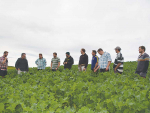
The Otago-based Bruce District Action Group is transitioning to a self-funded group now that the Red Meat Profit Partnership (RMPP) has ended.




 increase font size
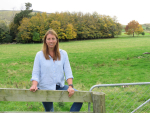
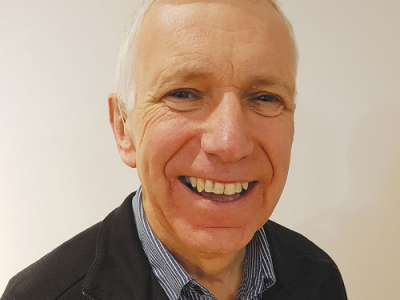 John Stantiall is a facilitator of five lower North Island RMPP action groups.
Farmers should seize the opportunity to join a Red Meat Profit Partnership action group if they want to improve their profitability.
I am facilitating five lower North Island action groups that offer real value to farmers. The RMPP has seed-funding available to help pay for group facilitator services and for other specialist advice, as well as offering the opportunity to learn from fellow farmers.
I don’t adopt the stance of an ‘expert’ in the meetings of the groups I’m involved with; I go along to facilitate the discussion. I discovered a very long time ago that farmers learn more from each other than they ever learnt from me.
Some farmers don’t realise how much they can benefit from an action group until they join and get the opportunity to share their ideas with others.
You must have the right mindset to want to get involved when the opportunity presents itself. It’s just a matter of whether you want to move ahead or not.
The reality is that none of us are going to live long enough to learn everything we need to know on our own, so working together in a group helps speed up the learning process and it gives you confidence when you see other people doing things.
If you stay at home day after day and do the same thing you’ve done for the last 20 years that’s fine too, but don’t expect necessarily to get ahead much.
One of my groups, centred on Dannevirke in Hawkes Bay, is focused on feed budgeting. Members bring their laptops to every meeting; they update their feed budgets and look forward to issues they might encounter in the next few months.
Usually the biggest one’s a potential feed shortage: what are we going to do? So we brainstorm and list all the things we could do at each time of the year, then we cost them out as best we can. That’s been an absolute eye-opener.
Often what we think of as doing nothing, e.g. letting ewes get a bit skinnier, or tightening up the cattle, actually works out to be a very expensive option overall.
Financial analysis has been a real revelation for some group members too.
Sometimes people do something because it’s easy – ‘We’ll just go and buy some baleage’. Farmers can be reluctant to sell stock if they get short of feed; for some reason they’d rather buy in feed than sell stock. But most of the feed you buy in is going to cost at least 50 cents/kgDM, yet our farming systems only return 10 - 20 cents/kgDM, so if you start piling in expensive feed it’s going to affect your profitability quickly.
When the penny drops that what they’re doing isn’t helping profitability, farming practices can start to change. I love it when that happens -- the light-bulb moments everyone shares in: it’s fantastic. That’s part of the benefit of a group of farmers who get on well and can appreciate what’s happening.
Sometimes it takes time for farmers to have the confidence to incorporate new ideas in their management. However, I’m confident positive changes will be made.
It’s just a start, the profit’s not going to happen this year. But they’re now seriously thinking more critically and objectively about what they do. The improvements in profit will come.
What is the Red Meat Profit Partnership?
RMPP is a seven-year Primary Growth Partnership programme funded by 10 partners: government and private sector (Ministry for Primary Industries, Beef + Lamb New Zealand, ANZ, Alliance, ANZCO, Blue Sky Meats, Greenlea Premier Meats, Progressive Meats, Rabobank and Silver Fern Farms) working alongside farmers to help them increase the productivity and profitability of their businesses.
• For more information visit www.actionnetwork.co.nz
The Otago-based Bruce District Action Group is transitioning to a self-funded group now that the Red Meat Profit Partnership (RMPP) has ended.
After seven years, the Red Meat Profit Partnership (RMPP) came to an end on 31 March, yet chair Malcolm Bailey says it's work is "continuous".
Beef + Lamb New Zealand (B+LNZ) has announced changes to the funding approach for Action Groups from 1 April 2021.
A year-long trial has shown that it’s possible to produce a beef patty sustainably across the supply chain in New Zealand.
A new voluntary sustainability and continuous improvement standard developed by the Red Meat Profit Partnership (RMPP) has been piloted by sheep and beef farmers.


LIC shareholders have elected a new North Island representative to the co-operative's Board, along with five representatives to its Shareholder Reference Group (SRG), following the company's Annual Meeting held in Invercargill.
Farmers across parts of Southland and South Otago are continuing to deal with difficult conditions after a prolonged run of wet weather, with pressure building around feed supply, stock management, pasture damage, farm infrastructure and everyday workloads.
Federated Farmers says it welcomes Labour's commitment to reviewing the Sharemilking Agreements Act, calling on other major parties to do the same.
For Canterbury dairy farmers Sian Meijer and Rick Wobben, wearable technology has become one of their most valuable on-farm tools - helping manage 1850 cows across an expansive, high-performing dairy operation while improving efficiency, mating outcomes and day-to-day decision making.
Fonterra has unveiled its annual results for the 2026 financial year, posting $27 billion in revenue and close to $20 billion returned to New Zealand farmer owners and unit holders.
The first major update to the Dairy Cattle Code of Welfare in more than a decade has been released, marking what DairyNZ describes as an important step in ensuring animal welfare standards continue to evolve alongside scientific evidence and on-farm realities.




OPINION: The same mainstream media muppets that brought you Jacindamania in 2017 have been flat out pimping for the Opportunities…
OPINION: Your old mate reckons the atrocious way farmers in the UK are treated by their lords and masters in…