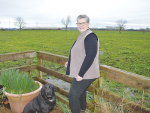
Kiwi spearheads global Jersey strategy revamp
The global organisation for Jersey breeders has undergone a strategy refresh - spearheaded by new president and the first New Zealander to hold the post, Alison Gibb.




 increase font size
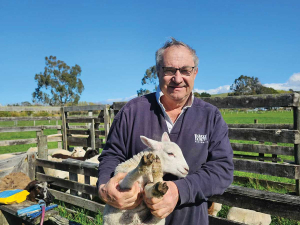
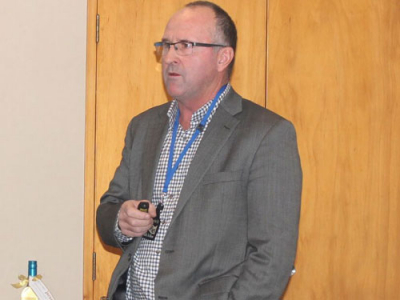 Murray Jagger.
The perception needs to change of Jersey growth rates and finishing times, says Whangarei Heads dairy farmer Murray Jagger.
Jagger has a jersey-cross beef business at his Whangarei Heads dairy farm as a valuable sideline.
“They grow as well as any other animal, the cow has an efficiency in its smaller body size so it is able to be more efficient in what can be stocked.
“Its finishing time suits us because we can get our two and half year cattle away before Christmas so we are not carrying through a dry summer and we are not carrying through another winter.
“We generally quit one third prior to Christmas, another third straight after.
And the last lot go March-April. So we have a good flow in moving the stock on.”
Asked about problems with getting small-framed animal up to 300kg weight, Jagger says the first cut of cattle they send to the works about November at two and a half years old are 260 - 290kg. The last ones are 300 - 320kg.
But with a smaller animal you can carry more stock.
He says the industry needs to reinforce that the Jersey breed enhances the marbling effect. Another customer who buys the second cut of heifers mates them to Wagyu. He sees the advantage of the Jersey-cross in adding to the Wagyu programme.
The global organisation for Jersey breeders has undergone a strategy refresh - spearheaded by new president and the first New Zealander to hold the post, Alison Gibb.
The last thing most Jersey members would expect to read in the Jersey Focus is an article about the well-known Holstein Friesian and Ayrshire breeders Gary and Karen Peters of the Rock View stud, Midhirst, Taranaki.
One of New Zealand’s deepest breeder Jersey herds – known for its enduring connection through cattle with the UK’s longest reigning monarch, Queen Elizabeth II – will host its 75th anniversary celebration sale on-farm on April 22.
Northland farmer Murray Jagger says it's time to focus on alternative pastures that can deliver better milk and beef yield.
Breeding and genetics are a long-term game and it’s three years from the time we make the choice around which straw or bull to use, until we really know whether it’s been a smart decision. So, it’s understandable that most farmers are thinking ahead when it comes to their breeding.


Alliance is calling for final applications for its 2027 Graduate Programme, with applications closing on Sunday 25 October.
Decades piloting planes has ensured vet and farmer David Hayes is focused on safety. So, after a serious accident while welding on farm, he is sharing his experience so others can learn from it.
Canterbury milk processor, Synlait Milk has confirmed Leon Fung as its chief executive officer.
OPINION: Making it easier to collect rainwater and use it to grow crops and livestock is a no brainer.
As part of its Election 2026 coverage, Rural News asked political parties how they would help pull the arable sector out of the doldrums. Here's what they said:
Farmers are being encouraged to rethink how they manage waste on farm with the launch of ruralwastesorted.co.nz, a new website bringing together practical tips, real farmer experiences and resources.

OPINION: The same mainstream media muppets that brought you Jacindamania in 2017 have been flat out pimping for the Opportunities…
OPINION: Your old mate reckons the atrocious way farmers in the UK are treated by their lords and masters in…




