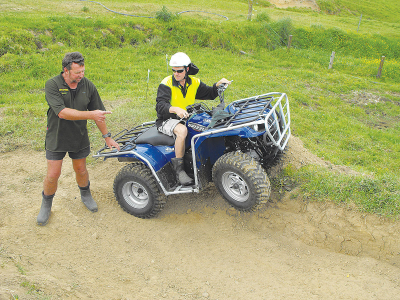
Rider training is overlooked in recent moves by the Worksafe and the ACC to address quad crashes and injuries, says Motor Industry Association chief executive David Crawford.
Better rider skills – not ‘engineering solutions’ – are needed to prevent serious injuries and save lives.
On average five people are killed each year on quads in New Zealand. Particularly tragic is that nearly all these deaths were preventable.
These machines are common in the NZ landscape, with about 120,000 quads and side-by-side recreational vehicles on farms and rural properties.
Commonly, quad accidents tend to be overturning, riding into ditches and losing control.
As well as the devastation the deaths have on families and friends, many more riders and passengers are seriously injured at a huge cost to victims and the community. And while the accident rate may not seem overwhelming, given how many and how often machines are used every day, we can do more to prevent these crashes.
Our rural industry and the Government need to take quad riding seriously and give it the same respect and attention we give on-road motorcycling. We need more emphasis on skills and knowledge and ensure quad riders are suitably equipped.
The no-brainers are wearing a helmet, remaining sober while riding and keeping children off adult size machines.
There should be no debate that rider training is a key area where safety can be improved. It hasn’t exactly been ignored but neither has it had the attention it deserves.
In 2009 the ACC’s Ride Forever training programme for on-road motorcycles was piloted in response to a large spike in crashes that came with a popularity boom in biking, particularly amongst new and often inexperienced riders.
Ride Forever provided accessible, subsidised motorcycle rider training. About 30,000 riders have done the course in the last ten years and ACC says this has resulted in a 27% decrease in accidents amongst course graduates.
That number is adjusted for risk bias because of the likelihood that the riders taking the course are likely to be safety focused.
Ride Forever will now become permanent, with a plan to train 10,000 riders annually.
I’d like to think that similar quality, accessible and subsidised training could be available for quad riders. Quads, like on-road motorcycles, are not toys and can be extremely unforgiving if poorly ridden or ridden in the wrong places or conditions.
Skilled, knowledgeable and mature riding will go a long way to preventing tragic consequences on quads. It is better to reduce the accident rate than seek to modify these machines with untested and untried engineering solutions.
Let’s stop experimenting with farmers’ and their workers’ lives. It’s time to take quad safety seriously by promoting accessible, affordable and proven training for riders.