Synlait CEO Resignation Highlights Deeper Challenges Facing Dairy Processor
A revolving door of chief executives at milk processor Synlait is a warning sign, says Lincon University senior lecturer in agribusiness Nic Lees.




 increase font size
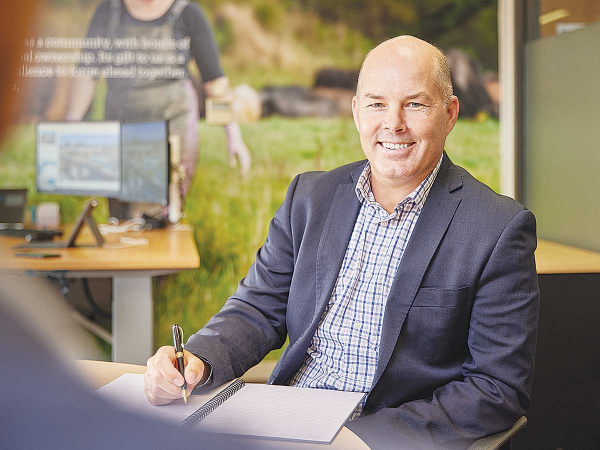 New chief executive of Yili-owned Westland Milk Products Richard Wyeth says his first impressions of the company are positive.
A few weeks ago, Richard Wyeth took over as chief executive of Yili-owned Westland Milk Products and says his first impressions of the company and its people are positive.
It was only a few months ago he was head of the highly successful Maori-owned dairy company Miraka - a company he helped set up from scratch.
However, Wyeth says he's rreally enjoying the new job at Westland and what's really impressed him is the people in the business.
"There is a really strong desire to see the business do well and people are working really hard to do this," he told Rural News.
For Wyeth, the move to Westland has some new challenges and differences from his early days at Miraka.
"when I started there, I was the only employee, but this time round there are 700 staff," he explains. "It is certainly different coming into an established business. It is quite a unique business in the sense that it has been around for a long time and is now under Yili's ownership."
Wyeth says part of his role is helping to make sure that solid foundation at Westland works with the Chinese ownership, and leverage off the strength of the parent company. He says one of differences from Miraka is that he reports to a head office in Chaina to a company that is the fifth largest dairy company in the world.
He says Westland is a small subsidiary of that large business, which is quite different from Miraka that was a small company in its own right.
However, during his time at Miraka, Wyeth was a frequent visitor to China and has a good understanding of the culture of Chinese business systems.
"What I quite like is that I can bring my experience in working with the Chinese and help the West Coast to understand those cultural differences because, ultimately, we want the same thing and that is for Westland Milk to be successful - which means that the West Coast will be successful," he told Rural News.
"If I can do a good job with Westland, then Hokitika - and the whole West Coast - will do well and it will help Yili achieve its goal if being the third biggest dairy company in the world by 2025."
Wyeth is working out of Westland's Canterbury office and has made trips to Hokitika to meet with his leadership team and staff. Not surprisingly, he's been pre-occupied with focusing on the main business and hasn't had the opportunity to get out and meet some of the 429 farmers who supply the company.
"Absolutely I am looking forward to getting out on farm and meeting all the farmer's and am planning to do that in the coming weeks," he says.
It's early days yet and Wyeth is in the phase of looking at the business and making sure that it is profitable. First impressions are, he says, that the plant and equipment is tidy and everything is where it needs to be.
He says the organisation is well positioned to achieve what is required in the coming years.
"We have guaranteed to pay a competitive milk price and to do that we need to be making high value products and selling them across the globe," he adds.
A revolving door of chief executives at milk processor Synlait is a warning sign, says Lincon University senior lecturer in agribusiness Nic Lees.

Troubled milk processor Synlait has lost its third chief executive in five years.
Westgold butter has been named New Zealand's tastiest in a blind tasting conducted by Consumer New Zealand.
Yili's New Zealand businesses have reported record profits following a major organisational and strategic transformation.
Canterbury milk processor Synlait is blaming what it calls "a perfect storm" of setbacks for a big loss in its half year result for the six months ended January 31, 2026.


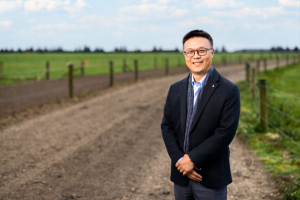
Canterbury milk processor, Synlait Milk has confirmed Leon Fung as its chief executive officer.
OPINION: Making it easier to collect rainwater and use it to grow crops and livestock is a no brainer.
As part of its Election 2026 coverage, Rural News asked political parties how they would help pull the arable sector out of the doldrums. Here's what they said:
Farmers are being encouraged to rethink how they manage waste on farm with the launch of ruralwastesorted.co.nz, a new website bringing together practical tips, real farmer experiences and resources.
New Zealand Winegrowers (NZW) is celebrating the India-New Zealand Free Trade Agreement (FTA) coming into force today, bringing New Zealand wine improved access to one of the world’s fastest-growing economies.
New Zealand’s red meat sector has welcomed the India-New Zealand Free Trade Agreement taking effect, which removes India’s 33% tariff on New Zealand sheepmeat.



OPINION: The same mainstream media muppets that brought you Jacindamania in 2017 have been flat out pimping for the Opportunities…
OPINION: Your old mate reckons the atrocious way farmers in the UK are treated by their lords and masters in…




