NZ Companies Launch World’s First Wool-Based Colour for 3D Printing Filament
A collaboration between two New Zealand companies will see wool used as a renewable colour source for 3D printing.




 increase font size
 The t-shirts are available online in New Zealand and Australia and are being rolled out across New Zealand stores now.
Strong wool is now being used as a pigment in screen printing for a new clothing range.
Wool Source, a Christchurch-based ingredients manufacturer turning wool into new applications, has developed a world-leading patented technology to convert strong wool into a colourant for use in screen printing inks.
Wool Source Pigments are ethically sourced, renewable and traceable pigments with 97- 98% biobased carbon content, which means the product's carbon is almost entirely derived from a renewable biological source. The pigments are mixed into liquids to form screen printing inks and offer an alternative to synthetic and fossil fuel-derived pigments.
Outdoor brand Kathmandu is applying the innovation in a recently released graphic t-shirt made of 100% merino and inspired by Canterbury’s braided river systems, a uniquely local landscape that ties the product back to its natural origins, printed with Wool Source Pigments.
Wool Source chief executive Tom Hooper says it is a significant step to partner with a New Zealand brand like Kathmandu as the company begins to take the technology to global markets.
“It showcases that you can incorporate our pigments into traditional commercial processes at scale and deliver a high-quality final product using more environmentally friendly materials,” Hooper says.
“Innovation should do more than reduce harm,” says Kathmandu head of product innovation and product sustainability Manu Rastogi.
“This is a real example of how innovation and sustainability can complement each other, and the industry as a whole, and now we’ve helped unlock new value for New Zealand strong wool,” he says.
The development work builds on years of scientific research through the “New Uses for Strong Wool” programme led by the Wool Research Organisation of New Zealand and supported by scientists at Lincoln Agritech, wool growers, the wider wool supply chain, the Ministry of Business and Innovation and Employment and the Ministry for Primary Industries’ Sustainable Food and Fibre Futures fund.
The t-shirts are available online in New Zealand and Australia and are being rolled out across New Zealand stores now.
A collaboration between two New Zealand companies will see wool used as a renewable colour source for 3D printing.

New Zealand-based company Wool Source has teamed with lipstick brand Karen Murrell to create a new avenue for strong wool – a lipstick coloured with wool keratin-based pigment.
A new initiative targeting new products and markets for NZ strong wool - with export applications as diverse as cosmetics and printing - has recently been launched.


OPINION: In politics, credibility is and should be big. It must surely rank higher than charisma, which is quite trite and superficial. Yet, voters nowadays are often wooed and influenced by how someone looks or talks at a superficial level. TV plays a huge role in this.
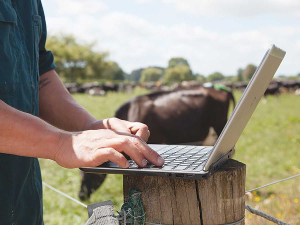
Farmers can spend less time on paperwork, thanks to a new data sharing agreement between DairyNZ’s DairyBase and LIC’s MINDA software.
Kaikōura families affected by July's severe storm have found a practical solution to a problem that's kept some children away from regular schooling for weeks: a washed-out section of Inland Kaikōura Road, which has stopped the local school bus from running its usual route.
Rural New Zealand is welcoming the Government’s recent package of rural healthcare initiatives.
Interest in agritech and production animal systems has prompted Massey University's School of Agriculture and the Environment to new majors to its popular animal science degree.
Ballance Agrinutrients chief executive Kelvin Wickham says despite a tough year, he is pleased the business has returned to profit.




OPINION: The same mainstream media muppets that brought you Jacindamania in 2017 have been flat out pimping for the Opportunities…
OPINION: Your old mate reckons the atrocious way farmers in the UK are treated by their lords and masters in…