
Lanaco and Blueair Launch World-First NZ Wool Air Filter
New Zealand wool is reaching new heights as air filtration companies move away from synthetic products to biodegradable alternatives.




 increase font size

The market held up fairly well for the last of the larger offerings of this season with 22,700 bales on offer and an 84% clearance, New Zealand Wool Services International Ltd's general manager, John Dawson reports.
The weighted indicator for the main trading currencies compared to the last sale on March 15 was practically unchanged, strengthening only 0.06%.
The price levels between the North and South Island selling centres reflects the larger volumes coming forward in the north and although prices lifted considerably compared to their last sale on March 8, the North Island prices are still generally below their counterparts in the south.
Dawson advises that Fine Crossbred Fleece and Shears were firm to 2% stronger. Good Colour Crossbred Fleece eased slightly with other styles firm to 3% dearer. Longer Coarse Shears ranged from firm to 4% stronger, with shorter shears in the South easing 1 to 2% and the north offering firm to 4% dearer. South Island Lambs were 1 to 2% easier with the North Island selection 2 to 5% stronger.
Oddments ranged from firm to 3.5% dearer with the North Island levels lifting the most.
Well spread competition with China, Australasia, Middle East and India principals supported by Western Europe and United Kingdom.
Next sale on March 29 comprises about 10,900 bales of South Island wools only.
New Zealand wool is reaching new heights as air filtration companies move away from synthetic products to biodegradable alternatives.

Will a stronger, more coordinated voice help rebuild confidence and improve returns in the wool sector?
OPINION: Confidence in the wool sector is rebounding as prices hit levels not seen in more than 15 years.
The recently signed free trade agreement with India is an invitation to strengthen relationships between the New Zealand and Indian strong wool industries, says Wool Impact chief executive Andy Caughey.
Strong competition and tightening supply have seen wool reach its highest prices paid at auction since 2011.



National’s pledge to introduce 19 new national standards shows the party is serious about getting Wellington out of farming, Federated Farmers says.
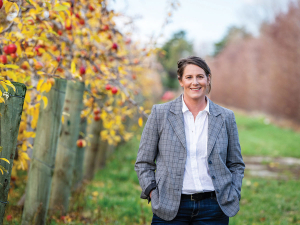
The National Party’s policies to make it easier to grow fresh vegetables, secure reliable water and energy and simplify farm planning are practical changes that will give growers the confidence to invest, according to Horticulture New Zealand (HortNZ).
Fonterra Co-operative Group chief financial officer Andrew Murray has resigned to take up a role outside the dairy giant.
A major move is about to get underway to improve the quality and viability of dairy beef and cattle in NZ.
Veterinarians say changes to the code of welfare for dairy cattle provides a positive foundation for improved cattle welfare across the country.
Today, 15 October, is the International Day of Rural Women, which recognises rural women’s contribution to farming, communities and the environment.




OPINION: The same mainstream media muppets that brought you Jacindamania in 2017 have been flat out pimping for the Opportunities…
OPINION: Your old mate reckons the atrocious way farmers in the UK are treated by their lords and masters in…




