
Farming Leader Katie Milne Steps into Politics for National
Former Federated Farmers president Katie Milne is National’s candidate for the West Coast- Tasman seat in this year’s general election.




 increase font size
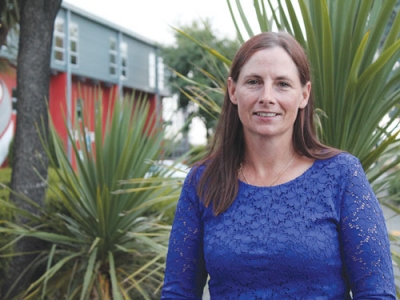 Katie Milne, Federated Farmers board member responsible for health and safety.
Worksafe NZ's prosecution of Work and Income New Zealand over last year’s Ashburton shootings holds worrying implications for New Zealand farmers, says the Federated Farmers board member responsible for health and safety, Katie Milne.
WorkSafe NZ in March prosecuted WINZ over the September shootings at the Ashburton Work and Income office, which killed Peggy Turuhira Noble and Susan Leigh Cleveland.
Milne says though she doesn’t know enough of the specifics of the case, it was a concern given WorkSafe’s push for safer practices on farm. “It raises a lot of questions about the level of effort farmers are going to need to be considered compliant.”
In mid 2014 it became known that WorkSafe would take more action over health and safety practices on farms. Forty three extra inspectors were hired to raise a taskforce of 200 by the start of 2015 for a ‘safer farms’ campaign to reduce farm accidents, predicted to be 21,000 this year – 10,000 severe enough to require time off work.
WorkSafe NZ’s agricultural programme director Al McCone says farmers must start complying with standards other industries have been reaching for some time. “In reality NZ farmers should already know all this stuff and should have been working to this for the last 10 years at least.”
Inspection teams have been travelling to farms across the country since February ensuring farms are operated in a manner that meets the 1992 Health and Safety Act.
“Inspectors are looking at whether the farmer understands the risks they, their staff, their families, and other visitors to the farm face,” McCone says.
While inspectors might not ask to see a risk mitigation plan, McCone says they will be looking for meeting records, feedback from staff on safety procedures and will informally observe staff at work.
“It is possible that a written warning or an improvement notice could be issued if the inspector believes the farmer needs to make a change or improvement. If something poses the possibility of immediate harm to any individual, a prohibition notice may be issued.”
While workplace safety is likely to be farmers’ immediate concern, farmers are also worried about issues that may arise if visitors are allowed on their properties.
Milne says many farmers were now considering shutting their gates to the public, a shame considering the Walking Access Commission’s work in negotiating a ‘middle ground’ between land owners and the public wanting access to remote regions.
“What are we supposed to do when people like duck hunters and fishers wander onto properties without asking? Farmers are likely to end up locking the gate.”
McCone also points to farmers’ worries about, for example, the need for a meat company to run a school trip to a farm because the farrm owner declined to assume liability for costs should someone have been injured.
Concern could be for good reason: a WorkSafe Farmsafe pack includes a form for visitors to fill in, asking for insurance details and, from intending hunters, confirmation that they hold a firearms licence.
The form must be signed by the visitor and the farm manager.
McCone says this is a ‘best practice’ solution. He says farmers operating within the confines of the 1992 act should be able to cover themselves adequately by telling would-be visitors about hazards not normally arising in everyday farming.
This can be done verbally, says McCone, and farmers can further cover themselves with farm diary notes about the call and what was discussed.
Duncan Cotterill associate and workplace health and safety specialist Adam Gallagher says he recalls an incident where the axe head flew off the head of an axe of one of the competitors and hit a spectator at a wood chopping competition in 2011. “The Department of Labour (now Worksafe New Zealand) investigated the incident I understand no prosecution followed.”
Freak accidents can happen. The key question is what reasonably practicable steps should have been taken to prevent harm arising from the hazard.
However, neither signs nor verbal warnings will protect from prosecution if visitors are injured by something deemed to be part of an everyday farming operation, adds McCone.
In incidents which result in serious injury or death, or situations where farmers have repeatedly failed to meet inspectors’ requirements, they are liable for fines of up to $500,000 for a company or $250,000 an individual. That figure is expected to increase to $600,000 for individuals and up to $3 million for body corporates in a new act likely to be tabled in December this year.
Former Federated Farmers president Katie Milne is National’s candidate for the West Coast- Tasman seat in this year’s general election.

Katie Milne, former Federated Farmers president, has been announced as the National Party’s candidate for the West Coast-Tasman electorate.
Southland farmers are being urged to put safety first, following a spike in tip offs about risky handling of wind-damaged trees
Last year saw a major shift in the supply of ATVs or quad bikes in the Australian market, with the Consumer Goods (Quad Bikes) Safety Standard 2019 coming into effect on 11 October 2021.
West Coast dairy farmer Katie Milne is vying for the presidency of the World Farmers' Organisation (WFO).


Mark Hooper has been appointed the new chair of NZPork, the industry organisation representing New Zealand pig farmers.

As the India-New Zealand free trade agreement enters into force, New Zealand’s apple industry has reaffirmed its commitment to the long-term development of India’s apple sector.
Fonterra shareholders can begin voting on Tuesday 20 October in the 2026 Board of Directors’ election, a Co-operative Council election in one Ward, and seven Annual Meeting resolutions.
National’s pledge to introduce 19 new national standards shows the party is serious about getting Wellington out of farming, Federated Farmers says.
The National Party’s policies to make it easier to grow fresh vegetables, secure reliable water and energy and simplify farm planning are practical changes that will give growers the confidence to invest, according to Horticulture New Zealand (HortNZ).
Fonterra Co-operative Group chief financial officer Andrew Murray has resigned to take up a role outside the dairy giant.




OPINION: The same mainstream media muppets that brought you Jacindamania in 2017 have been flat out pimping for the Opportunities…
OPINION: Your old mate reckons the atrocious way farmers in the UK are treated by their lords and masters in…




