Ah Tatua, You've Done It Again!
Waikato milk processor Tatua has again declared a record milk payout to farmer shareholders, leaving other processors in the dust.




 increase font size
 Synlait is facing headwinds on several fronts.
Canterbury Milk processor Synlait has suffered a 76% drop in half-year net profit as it battles Covid-related volatility and rising dairy prices.
The company, last week, reported a net profit of $6.4 million for six months ending January 31, 2021 - compared with $26.2 m for the same period last year.
While all banking covenant ratios were met, Synlait has increased its leverage ratios with lenders to manage any risk for the financial year.
Total revenue rose 19% to $66.4m but gross earnings dropped 29% to $48m. Packaged infant formula sales were down 16%.
Last month, the listed company withdrew its full-year guidance update as it battles headwinds on several fronts.
Synlait's key infant formula customer and cornerstone shareholder, a2 Milk Company is facing a dramatic drop in sales following travel disruptions between Australia and mainland China. Daigou channel sales - personal shoppers in Australia sending products to China - have dried up since the beginning of last year.
The company says the resulting impact of this on its business is two-fold: demand for consumer packaged infant formula remains uncertain, which in turn impacts forward infant base powder production and asset use.
The sudden drop in consumer-packaged infant formula deman, combined with rapidly rising Global Dairy Trade prices, foreign exchange, and a changing product mix, creates volatility which limits returns.
Another issue facing Synlait is the slow arrival and departure of goods in and out of ports globally.
While this is a timing issue, it expects delays to continue for some time and this will likely impact the full year result further.
Synlait chair Graeme Milne says the first half of the year was challenging.
"We continue to find ourselves in a period of significant uncertainty and volatility as Synlait faces into several headwinds.
"This is impacting our short-term operations and will impact our full year 2021 financial result."
Chief exectutive Leon Clement says it will take the company time to weather the storm.
"Our focus is now to mitigate the impact Covid-19 has had on our customers, as we manage costs and capacity and pull forward value creation initiatives to accelerate the execution of our strategy.
"We will need time to get through this, but we remain confident about our future."
Clement says the company's investment phase is now complete.
"We have the capacity, capability, and cutomer base to generate significant value. Covid-19 hit us late, but we will emerge from the pandemic a stronger, more sustainable Synlait."
a2 Milk owns just under 20% of shares in Synlait - with China's Bright Dairy the biggest shareholder with a 39% stake.
Synlait share prices have taken a hit in the past year - dropping from over $10/share in early 2019 to around $3.40 last week.
Before the first Covid lockdown in NZ in March last year, its share price was hovering around $7.30/share.
Waikato milk processor Tatua has again declared a record milk payout to farmer shareholders, leaving other processors in the dust.
Synlait has swung to second-half profit as operations stabilise, but the dairy processor still posted a $75.4m annual loss.
OPINION: It seems Canterbury processor Synlait is still in the doldrums.
Speculation of a possible joint move by Fonterra and a2 Milk to buy Synlait raises a much bigger strategic question, says agribusiness expert Dr Nic Lees.
A revolving door of chief executives at milk processor Synlait is a warning sign, says Lincon University senior lecturer in agribusiness Nic Lees.


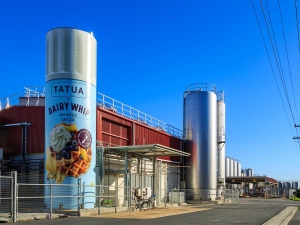
Waikato milk processor Tatua has again declared a record milk payout to farmer shareholders, leaving other processors in the dust.

A Labour-led Government won’t be bringing back the controversial freshwater rules of 2020.
National’s much-touted free trade deal with India featured in the Rural Issues Debate at Mystery Creek, Hamilton on Wednesday night.
New Zealand's 2026-27 freshwater fishing season has opened, with anglers encouraged to head to rivers and lakes over the coming days as conditions look favourable across much of the country.
Central Otago District Council (CODC) has voted against a plan to spread treated sewage sludge from Cromwell and Alexandra on farmland near Lauder, a decision Federated Farmers says reflects strong opposition from rural residents.
Pāmu has released its FY26 Integrated Annual Report, reporting a Net Operating Profit of $113 million, more than double the $49 million recorded in FY25.





OPINION: The same mainstream media muppets that brought you Jacindamania in 2017 have been flat out pimping for the Opportunities…
OPINION: Your old mate reckons the atrocious way farmers in the UK are treated by their lords and masters in…