BVD Control Begins Long Before You See A Problem
Bovine Viral Diarrhoea (BVD) is sometimes viewed as a dairy industry issue, but the reality is that the disease can have serious consequences for beef breeding herds as well.




 increase font size

It is "inbelievable" that it took six weeks to identify a limb found in palm kernel expeller (PKE) came from a New Zealand sheep, says Labour's biosecurity and primary industries spokesperson Damien O'Connor says.
"The discovery of an animal limb in a shipment of PKE delivered to a Bay of Plenty farmer has rightly rung alarm bells across our primary sector economy," says O'Connor.
"It resulted in a six-week long process to identify what the Ministry of Primary Industries initially claimed was a bone from a small exotic animal, but which it now 'confirms' as having come from a New Zealand sheep.
"This unbelievably long and protracted process raises as many questions as it provides interim answers.
"The system is clearly failing if it takes that long to identify a domestic sheep limb.
"Primary Industries Minister, Nathan Guy, and Ministry bosses have offered numerous assurances in the past - on a range of issues - that later proved to be inaccurate, hence I have little confidence in today's announcement.
"If it takes MPI six weeks to identify a NZ sheep, no wonder it is blind to the risk of contamination in PKE imports.
"Two farmers provided the information and evidence exposing the threat, yet Mr Guy and his officials continue to deny the reality of this potential pathway for foot and mouth disease to enter New Zealand.
"I simply can't believe it has taken the Minister this long to identify where, or what, the limb came from. I also don't believe that he is operating a safe biosecurity system."
Bovine Viral Diarrhoea (BVD) is sometimes viewed as a dairy industry issue, but the reality is that the disease can have serious consequences for beef breeding herds as well.

Election years are always a concerning time for farmers, according to DairyNZ chair Tracy Brown.
Testing confirms H5 bird flu in a single northern giant petrel, found dead on a remote Cape Palliser beach in the Wairarapa, says Dr Mary van Andel, the Ministry for Primary Industries' (MPI) Chief Veterinary Officer.
Bovine Viral Diarrhoea (BVD) is sometimes viewed as a dairy industry issue, but the reality is that the disease can have serious consequences for beef breeding herds as well.
Four years since it was first detected in New Zealand, researchers and growers now know much more about management of maize pest fall armyworm (FAW).


Federated Farmers says it welcomes Labour's commitment to reviewing the Sharemilking Agreements Act, calling on other major parties to do the same.
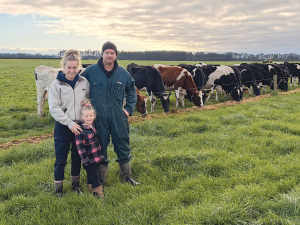
For Canterbury dairy farmers Sian Meijer and Rick Wobben, wearable technology has become one of their most valuable on-farm tools - helping manage 1850 cows across an expansive, high-performing dairy operation while improving efficiency, mating outcomes and day-to-day decision making.
Fonterra has unveiled its annual results for the 2026 financial year, posting $27 billion in revenue and close to $20 billion returned to New Zealand farmer owners and unit holders.
The first major update to the Dairy Cattle Code of Welfare in more than a decade has been released, marking what DairyNZ describes as an important step in ensuring animal welfare standards continue to evolve alongside scientific evidence and on-farm realities.
Ravensdown shareholders have elected Jane Montgomery and Kate Acland to the Ravensdown Board for three-year terms, following a closely contested director election.
Federated Farmers says new legislation replacing the Resource Management Act will cut red tape, unlock investment and help grow New Zealand's export-led economy, after the Planning Bill and Natural Environment Bill passed their third reading in Parliament yesterday.



OPINION: The same mainstream media muppets that brought you Jacindamania in 2017 have been flat out pimping for the Opportunities…
OPINION: Your old mate reckons the atrocious way farmers in the UK are treated by their lords and masters in…