New Reporting Requirements to Boost Transparency for Water Providers
The Commerce Commission has finalised new information disclosure requirements for local councils and water organisations that deliver water supply and wastewater services.




 increase font size

THE COMMERCE Commission's decision to issue legal proceedings against three major banks over their sales of interest rate swap contracts to rural customers is great news, says Damien O'Connor, Labour spokesperson for Primary Industries.
O'Connor says the decision has been a long time coming and so-called swaps loans were misrepresented to rural customers.
"This move by the Commerce Commission is an important step forward in finding out what effect these banking products have had on rural New Zealand," says O'Connor.
"I must also acknowledge the advocacy work by (Wairarapa farmer) Jeanette Walker who was determined to seek justice for the many farmers who found themselves in difficult situations as a result of these swaps loans. Without her tireless commitment it is doubtful the Commission would have initiated this inquiry.
"In simple terms, a swaps loan is a type of fixed rate loan, sold to farmers as a way to manage their interest rate risk. What many were not told was that the bank could increase its margins if they considered the farmer became high risk. This has put some famers under huge financial pressure.
"Farmers are losing their farms as a result of hard sell tactics by banks who have locked them into high interest rates they can't escape unless they pay hefty break fees.
"These tactics have destroyed the important trust relationship that needs to be built between the rural sector and banks as partners in farming for the future."
The Commerce Commission has finalised new information disclosure requirements for local councils and water organisations that deliver water supply and wastewater services.

The Commerce Commission has announced that it has filed proceedings against Westpac New Zealand.
Federated Farmers is vowing to keep the big banks accountable for their actions and to continue pushing for meaningful change in the rural lending sector.
The Commerce Commission is weighing up whether or not it should deregulate the copper network, still used for internet and landline in 80,000 rural premises.
The Commerce Commission's move to investigate commitments made by major banks under the Net Zero Banking Alliance is being hailed by farming leaders.


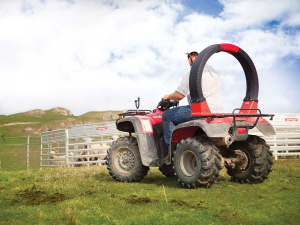
When Northland leather worker Vernon Suckling started making horse saddles 50 years ago, quad bikes and side-by-side vehicles were unheard of.

Alliance Group has confirmed that eligible farmer-shareholders who supply and continue to back the business will receive up to $20 million later this year, following the strategic investment partnership with Dawn Meats.
With a general election under five weeks away, Rural News is asking major political parties about their policies and positions on key issues facing the primary sector. We will run their responses to each question over the next four weeks. The ACT Party and the Greens didn't respond in time.
The red meat sector is in great heart.
Dr Scott Champion, Foundation for Arable Research chief executive, says that everyone in the supply chain had a role to play in driving the sector's long-term success.
Entries opened on Monday, 5 October 2026 for the 2027 New Zealand Dairy Industry Awards (NZDIA), which organisers describe as the nation's biggest celebration of excellence in the dairy sector.





OPINION: The same mainstream media muppets that brought you Jacindamania in 2017 have been flat out pimping for the Opportunities…
OPINION: Your old mate reckons the atrocious way farmers in the UK are treated by their lords and masters in…