
PGG Wrightson Revenue Tops $1.1b as Profit Jumps 46%
After delivering a strong financial year, rural trader PGG Wrightson says the coming months will depend on customer confidence and weather.




 increase font size
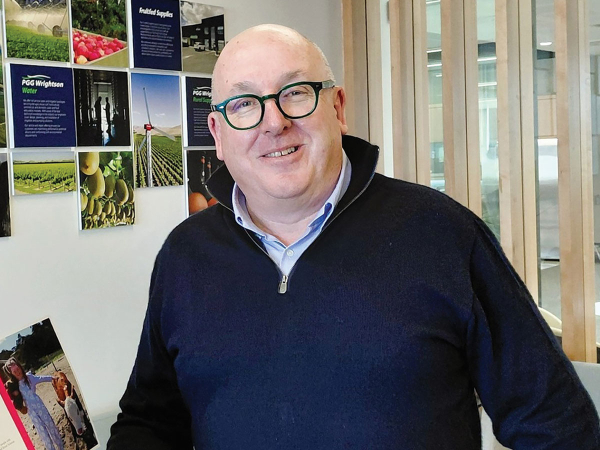 PGG Wrightson chief executive Stephen Guerin
A firm belief in the agricultural sector has kept the PGG Wrightson business going for 175 years, says chief executive Stephen Guerin.
The rural trader, which marked the milestone birthday last week, is the result of a 2005 merger between Pyne Gould Guinness Ltd and Wrightson Ltd, which were both amalgamations of numerous companies.
The first of those companies was Levin & Co, founded in Wellington in 1841.
Guerin says the anniversary is an opportunity to acknowledge and commemorate the efforts of its predecessor companies.
“When the company first established, no matter which strand of the organisation you think about when you look back at the history, it was very much a regional business,” Guerin told Rural News.
He says the country’s transportation network was largely built on coastal and regional shipping.
“We’re still doing some of the things we did way back then,” he adds. “But we do things differently than the way we did back then.”
Guerin points to the company’s online trading platforms, and the advice it gives to farmers and growers, saying those have changed since the company’s forebears were established.
He says it’s relationships between farmers and PGG Wrightson staff that have carried the business through the past 175 years.
During that time, the company has witnessed the rise in corporate and iwi farming enterprises.
“It does come down to the key relationships our staff hold,” Guerin says.
Guerin says the company reflects social change that has occurred within New Zealand.
“It took 100 odd years for us to employ our first female staff member. Now, why did that happen? There was social change that took place around World War II when more women entered the workforce. Now we’ve got a large number of women in our team.”
Guerin says that over the time the organization has been in business, many lessons have been learned.
“Farmers take a longer-term view, so trust is really important.
“Being reliable in what you say and how you deliver to that is really, really important.”
He says the company has had periods within its history where they haven’t delivered on that, but they’ve subsequently learned that lesson.
“I reflect back to a short period just after the merger where we brought three businesses together in a very quick space of time and we lost our way a wee bit there for a year or two. We’ve learned from that and re-established who we are.”
So, why has PGG Wrightson stood the test of time? Guerin says it’s the company’s staff and the relationships they have with their customers.
“Being responsive to the needs of our clients, through those droughts, weather, storm, commodity cycles, and being consistent about that and being supportive of our rural communities is why we’ve survived.”
After delivering a strong financial year, rural trader PGG Wrightson says the coming months will depend on customer confidence and weather.

Strong competition and tightening supply have seen wool reach its highest prices paid at auction since 2011.
Strong farmgate milk price is helping boost investment on farms, says PGG Wrightson chief executive Stephen Guerin.
Booming primary sector exports are helping lift earnings for farm service providers.
OPINION: Wool farmers believe the future of strong wool still holds promise.


National’s pledge to introduce 19 new national standards shows the party is serious about getting Wellington out of farming, Federated Farmers says.
The National Party’s policies to make it easier to grow fresh vegetables, secure reliable water and energy and simplify farm planning are practical changes that will give growers the confidence to invest, according to Horticulture New Zealand (HortNZ).
Fonterra Co-operative Group chief financial officer Andrew Murray has resigned to take up a role outside the dairy giant.
A major move is about to get underway to improve the quality and viability of dairy beef and cattle in NZ.
Veterinarians say changes to the code of welfare for dairy cattle provides a positive foundation for improved cattle welfare across the country.
Today, 15 October, is the International Day of Rural Women, which recognises rural women’s contribution to farming, communities and the environment.




OPINION: The same mainstream media muppets that brought you Jacindamania in 2017 have been flat out pimping for the Opportunities…
OPINION: Your old mate reckons the atrocious way farmers in the UK are treated by their lords and masters in…




