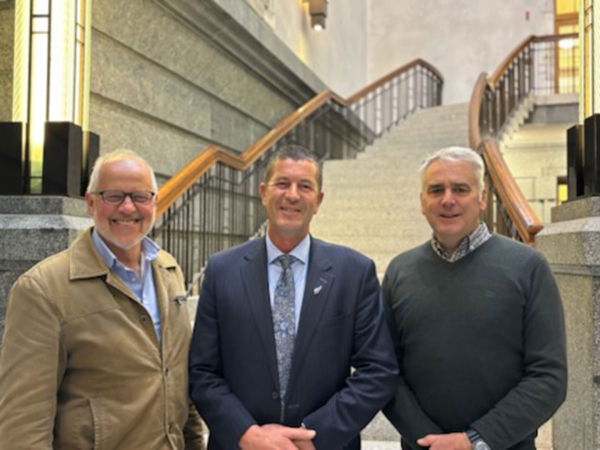
Organics Aotearoa New Zealand (OANZ) spent two days in Wellington last week meeting political parties and key stakeholders to press the case for a National Organic Policy and dedicated investment.
The message coming back to members is blunt: not one party currently has a specific policy for growing organics in New Zealand.
Manifesto Presented Ahead of November Election
The delegation saw OANZ representatives present the Organic Election Manifesto and its five organic priorities directly to MPs and officials ahead of the November election.
The visit follows months of sector engagement building toward a clear ask of the next government: back organics with real investment and policy, not just goodwill.
OANZ board member Scott Lawson says the sector is pointing to an opportunity as opposed to asking for a handout.
"We're not asking for a favour, we're pointing to an opportunity this government is currently leaving on the table," Lawson says.
"Organic is growing at three times the rate of conventional primary exports, because consumers globally are demanding clean, ethical food," he says.
"This government wants to double exports, and organics is one of the clearest paths to get there. But growth like that doesn't happen without policy and investment behind it."
OANZ says the case for backing organics is a "genuine win-win", pointing to measurable gains in soil health, water quality, biodiversity, and climate resilience, alongside a fast-growing export category it says is aligned with where global demand is heading.
Seven Questions Put To Every Party
During the delegation, OANZ put seven direct questions to every party it met, covering:
- The continuation of a dedicated Associate Organic Minister
- The rollout of the National Organic Standard
- Investment in the sector's growth architecture
- Global market access and equivalency
- Protection of GE-free and organic certification status
- Support for organic transition and domestic procurement
- Whether the party has any policy for growing organics
Scorecard to Guide Voters
OANZ says responses to those questions will be published in an Organic Political Scorecard, using a colour-coded system to show voters where each party stands.
The organisation says the scorecard will be a key resource for New Zealand's organic sector, advocates and consumers as they weigh up their choice at the ballot box this November.
Brendan Hoare, OANZ advisor, says parties and ministers were left in no doubt about the sector's intent.
"Political parties and Ministers have been briefed that the organic sector is organised and means business," Hoare says.
"We are expecting the 2026 election will be an instrumental platform for change.
Food Security a Recurring Theme
Lawson says domestic food supply and security came up repeatedly in discussions with political parties.
"A common theme across all political parties we met with was the requirement for domestic food supply and security," he says.
"It's clear it's an election topic of the utmost importance, and one that requires commitment and development as part of the organic growth strategy."
OANZ is calling on all parties to use the time before the election to develop a clear, funded position on organics, and says it will continue pushing until they do.