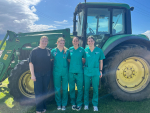
Rural Medical Immersion Programme Students Finish Year
This year's Rural Medical Immersion Programme (RMIP) students have finished their placement year in South Taranaki, and all three are staying in Taranaki for their next placement.




 increase font size
 Education Minister Erica Stanford.
Education union NZEI Te Riu Roa says that while educators will support the Government’s investment in learning support, they’re likely to be disappointed that it has been paid for by defunding expert teachers.
NZEI has been campaigning for more funding for early intervention service staffing, learning support coordinators, psychologists and service managers, and the Ongoing Resource Scheme (ORS) for many years.
Last year, they told Rural News that a lack of funding for learning support specialists – specifically in rural schools – was creating a dual resourcing crisis.
They said that rural school principals were being forced into a position where they would have to fulfil those roles, as well as many others.
Yesterday, as part of Budget 2025, the Government announced that it would be delivering the most significant investment in learning support in a generation.
That includes annual increases to teacher aide hours, expanding early intervention services and an overhaul of the ORS funding model in an effort to ensure that demand for the service is met with guaranteed funding.
Minister for Education Erica Stanford says that too many children are either waiting too long for support or are missing out on the help they need.
“We are addressing this by investing in a smart, system-wide reform that significantly increases specialist and support staff resources in our schools,” Stanford says.
$266 million will be spent to extend the Early Intervention Service (EIS) from early childhood education through to the end of year 1 of primary school. $122 million will be added to the ORS for students with high and complex needs.
$192 million will be made available over the course of three years to ensure that students in Years 1-8 schools and kura are funded for a learning support coordinator.
NZEI president Ripeka Lessels says the union’s members are glad to see the increase in support.
“For Tamariki to thrive they need more support throughout their education journey,” Lessels says.
However, she says that while the investment sounds like a lot, it isn’t enough when $2.5 billion is required by 2029 to correct what she calls a long-running underinvestment.
She says she was disappointed to hear that Resource Teachers of Māori and Resource Teachers of Literacy services would be defunded.
“The Minister is setting in train the biggest round of cuts to expert teacher roles in living memory without any plan for how their expertise is retained. More than 4000 teachers will be impacted,” she says.
Another concern is the schools’ operations grants, the funding that pays for the running of schools. It is being increased by only 1.5%. With inflation at 2.5% this amounts to a funding cut in real terms and will put pressure on schools to meet staffing costs, in particular for teacher aides.
“The additional teacher aide support for the early intervention service is welcome, however it only partly plugs the gap left by the operations grant cut. This cut is another huge hit to teacher aides,” she says.
This year's Rural Medical Immersion Programme (RMIP) students have finished their placement year in South Taranaki, and all three are staying in Taranaki for their next placement.

OPINION: The Government's decision to reinstate agriculture and horticultural science as a standalone subject from Year 11 is the right one.
Teachers are welcoming the outgoing Government’s U-turn allowing agriculture and horticultural science to remain a standalone Year 11 subject.
Students will be able to study Agriculture and Horticultural Science from Year 11, creating a clear pathway into Years 12 and 13 and future careers in New Zealand’s primary industries, Education Minister Erica Stanford says.
Alliance is calling for final applications for its 2027 Graduate Programme, with applications closing on Sunday 25 October.
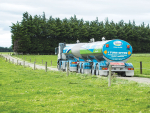
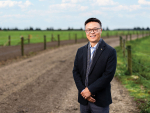

OPINION: The World Dairy Summit, held in Auckland last week, delivered a poignant message – when it comes to global trade, the old order has passed away.
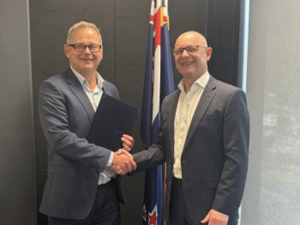
Deer Industry New Zealand (DINZ) has welcomed Government co-investment in a new $10 million programme aimed at increasing the value of New Zealand farmed venison, velvet and co-products and improving returns to deer farmers.
A former Fonterra Brands product, Anlene, is making its return to China.
New Farmlands chair and South Otago dairy and beef farmer, Will Clarke says the co-operative will take the learnings from this week’s annual general meeting to work more closely with shareholders.
Farmlands shareholder and Waitaki Valley sheep and deer farmer, Paige Wills says the co-operative’s board has “a considerable amount of work to do if they want to rebuild shareholder trust and confidence in their governance”.
New analysis from DairyNZ highlights the growing importance of efficiency and cost control in maintaining profitability, with a widening gap between New Zealand’s highest and lowest performing dairy farms.

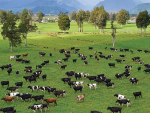



OPINION: The same mainstream media muppets that brought you Jacindamania in 2017 have been flat out pimping for the Opportunities…
OPINION: Your old mate reckons the atrocious way farmers in the UK are treated by their lords and masters in…