Claas Balers Turn 30
Claas built its first variable chamber round baler - the Variant 100 - in 1996, so 2026 marks 30 years and the fifth generation of the Variant name, recently complemented by the new Cerex Series introduced in 2025.




 increase font size
 A large square baler from Claas, yet to be named, has taken out a gold Agritechnica Innovation Award.
Innovation awards at international agricultural events are always on the wishlist of manufacturers.
Harvesting equipment and tractor manufacturer Claas appears to have pulled off a first, not by taking a gold Agritechnica Innovation Award, but for its next generation concept of a large square baler, that until 9th November won’t have its name released.
Described as being capable of baling up to 70 tonnes per hour, the completely new, innovative concept will place the machine above that of the current Claas Quadrant range we know today.
The machine, with bale dimensions of 120cm wide by 90cm high and a transportable length of 2.45 metres, is said to combine high throughputs with consistently high bale densities. In practice, this new concept achieves up to 70 t/h throughput when baling straw, maintaining constant bale densities of 210 kg/ m³, climbing to 235 kg/ m³ at peak performance, delivering bales of up to 500kg.
Among other features, these functions are achieved with the main gearbox integrated into the frame with a straight-line power flow. The driveline operates with two longitudinal flywheels, each operating at 1650 rpm and weighing 202kg, which store considerable inertia to ensure uniform compaction. Power delivery is handled solely through efficient, lowloss, and wear-resistant enclosed gearboxes, in addition to two power belts. Sensors in the intake rotor or feed rake gear, continuously monitor gear loads and automatically adjust assistance systems, including an AI-assisted plunger density control and bale length regulation.
On start-up, the flywheels are switched on in succession, followed by the plunger and then the rotor, reducing start up loadings compared to previous solutions. In the event of overloading, the flywheels are rapidly de-coupled via an electro-hydraulically activated multi-plate clutch, separating them from the main driveline.
The plunger is also actively braked in this process, removing the need for shear bolts and cam clutches. Since the entire drive train consists of power bands and enclosed gearboxes, maintenance tasks are significantly reduced. Besides the PTO input shaft, the only other shaft drive leading is to the knotter mechanism.
Further innovations include a new mechanically driven single-row binder for the pre-chamber and a newly designed doubleloop knotter system. The latter generates two loop knots per tying operation, merging the benefits of McCormick and Deering knotters while avoiding their individual drawbacks. The layout is said to ensure secure, dependable knots with minimal twine tension, with the additional benefit of not leaving twine remnants in the paddock.
Claas built its first variable chamber round baler - the Variant 100 - in 1996, so 2026 marks 30 years and the fifth generation of the Variant name, recently complemented by the new Cerex Series introduced in 2025.
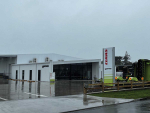
At a time when many businesses are taking a cautious investment approach, Landpower continues to back its customers, having officially opened the doors to its new CLAAS Harvest Centre dealership in Feilding, marking a significant investment in the future of agriculture across the lower North Island.
Twin rotor swathers have become the ‘go-to’ for forming swaths to feed hungry harvesters and balers, however, the design layout often means that crop located between the two rotors is not picked up, turned over or incorporated into the swath formed for subsequent harvesting.
Fifty Eight years ago, on the 16th of August 1968, August Claas, the founder of the harvesting company and father of Helmut Claas, personally presented a Claas Senator combine harvester to Scottish farmer John Steven.
Scheduled to replace its Axion 800 series, Claas has released details of the new, three model, Axion 8 CMATIC range.


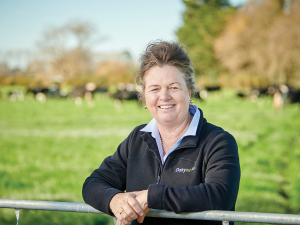
Farmers have until the end of this week to help shape DairyNZ’s future focus.
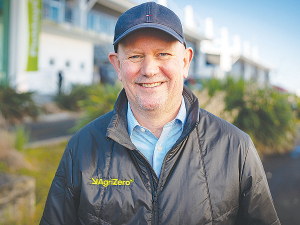
Wayne McNee, chief executive of AgriZeroNZ, has resigned and will leave the organisation on 15 January 2027.
The New Zealand dairy sector set a record in the 2025/26 season, producing more than two billion kilograms of milksolids for the first time.
Milk powder prices are continuing their merry run, firming up a potential $10/kgMS farmgate price this season.
Teachers are welcoming the outgoing Government’s U-turn allowing agriculture and horticultural science to remain a standalone Year 11 subject.
Outgoing ACT MP and dairy farmer Mark Cameron says Saturday’s election result reflects voters deeply impacted by the cost of living.



OPINION: The same mainstream media muppets that brought you Jacindamania in 2017 have been flat out pimping for the Opportunities…
OPINION: Your old mate reckons the atrocious way farmers in the UK are treated by their lords and masters in…