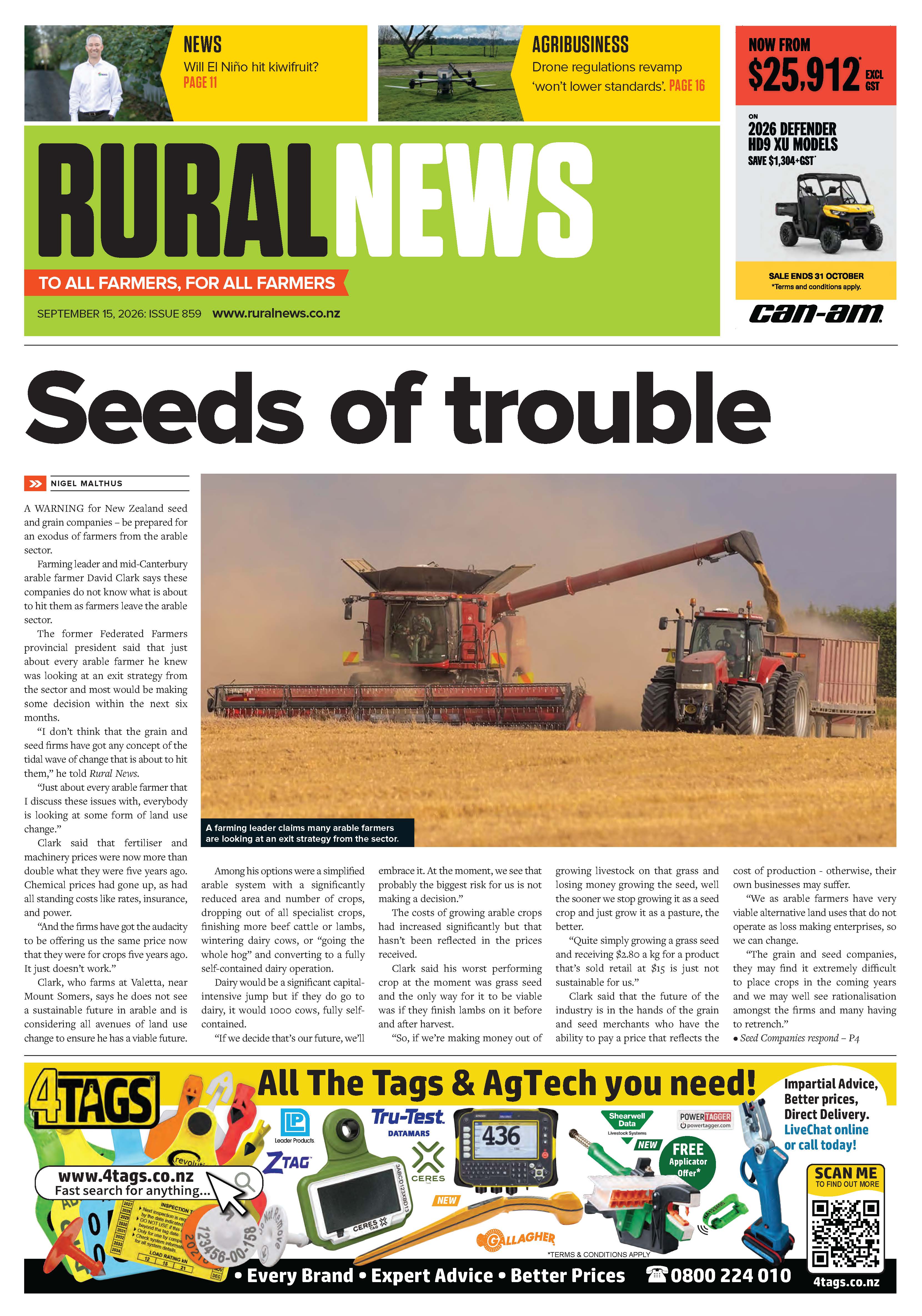
Beef + Lamb NZ's Lambing Kit Checklist for a Tough Season
With lambing underway in many regions, Beef + Lamb New Zealand is encouraging farmers to put together a wellequipped lambing kit to help minimise lamb losses, particularly in bad weather.




 increase font size
 Beef + Lamb NZ’s Jeremy Baker.
The recent IPCC report on climate and land shows how New Zealand lamb and beef can help address climate change, says Beef + Lamb NZ.
“The report highlights that agriculture and livestock farming has a role to play in addressing climate change,” says Jeremy Baker, BLNZ’s chief insight officer.
“It points out that livestock products from sustainable, low greenhouse gas emission farming systems are part of the solution.”
The report recommends how to mitigate and adapt to climate change, much of it already happening on NZ farms -- planting trees, maintaining good soil carbon, and low input, well managed grazing, Baker says.
“While our farmers have made good progress, the job is not done and we are committed to improving our environmental footprint.”
He says that, contrary to some claims, the report is clear that sustainably produced livestock products will keep their role in feeding the world.
“NZ’s sustainable sheep and beef farm systems are well matched with what the report’s authors are talking about. In particular, the report focuses on ensuring that land is matched with the most suitable food production use for it.
“While pastoral livestock farmers must keep reducing their greenhouse gas emissions, the IPCC report reinforces that NZ is already a leader in this.”
The report highlights the importance of soil carbon and the role it can play in mitigating climate change. NZ’s young soils have higher carbon content than anywhere else.
The IPCC’s research will also interest NZ policy makers as they consider the role forestry should play in combatting climate change, Baker says.
“The IPCC encourages the integration of trees into farming systems. But while large scale afforestation can provide opportunities for carbon sequestration, other issues must be taken into account.”
NZ meat's shrinking impact
• Since 1990 the NZ sheep and beef sector has reduced its absolute greenhouse gas emissions by 30%, yet has maintained similar levels of production and doubled the value of its exports.
• Research by Caroline Saunders in 2009 showed that NZ lamb exported to the UK had a lower carbon footprint than UK lamb, despite it being shipped to Europe.
• Research by Professor David Norton, University of Canterbury, has shown that NZ’s sheep and beef farms include 2.8 million hectares of native vegetation. This includes 1.4m ha of native forest, much of it having regenerated since the 1980s when marginal land was retired as Government subsidies ended.
• Research is now measuring the amount of sequestration by these native trees.
• Raising NZ beef requires water at rates of only 45L/kg, and sheepmeat only 20L/kg. Processing adds only 20-70L/kg. This contrasts with water required overseas by feedlots -- 680L/kg extracted water, including production and processing.
With lambing underway in many regions, Beef + Lamb New Zealand is encouraging farmers to put together a wellequipped lambing kit to help minimise lamb losses, particularly in bad weather.

Chinese beef trade quotas and a looming suspension of Brazilian beef imports into the European Union are expected to reshape global beef trade flows over the remainder of 2026, with implications for New Zealand exporters, according to Rabobank's Q3 Global Beef Quarterly report.
Will a stronger, more coordinated voice help rebuild confidence and improve returns in the wool sector?
Bovine Viral Diarrhoea (BVD) is sometimes viewed as a dairy industry issue, but the reality is that the disease can have serious consequences for beef breeding herds as well.
Matt McRae, a farmer from Mokoreta in Southland who runs a sheep, beef and dairy support business alongside a sheep stud, has been elected to the Beef +Lamb NZ Board as a farmer director.


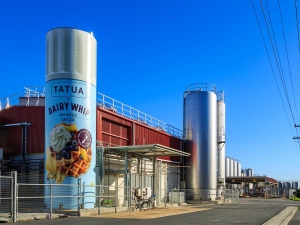
Waikato milk processor Tatua has again declared a record milk payout to farmer shareholders, leaving other processors in the dust.
A Labour-led Government won’t be bringing back the controversial freshwater rules of 2020.
National’s much-touted free trade deal with India featured in the Rural Issues Debate at Mystery Creek, Hamilton on Wednesday night.
New Zealand's 2026-27 freshwater fishing season has opened, with anglers encouraged to head to rivers and lakes over the coming days as conditions look favourable across much of the country.
Central Otago District Council (CODC) has voted against a plan to spread treated sewage sludge from Cromwell and Alexandra on farmland near Lauder, a decision Federated Farmers says reflects strong opposition from rural residents.
Pāmu has released its FY26 Integrated Annual Report, reporting a Net Operating Profit of $113 million, more than double the $49 million recorded in FY25.



OPINION: The same mainstream media muppets that brought you Jacindamania in 2017 have been flat out pimping for the Opportunities…
OPINION: Your old mate reckons the atrocious way farmers in the UK are treated by their lords and masters in…