
NZ Apples Head to India: Apple Action Plan Gets a Leader
A seasoned horticulturist has been appointed to deliver the Apple Action Plan, a key initiative of the India-New Zealand Free Trade Agreement.




 increase font size
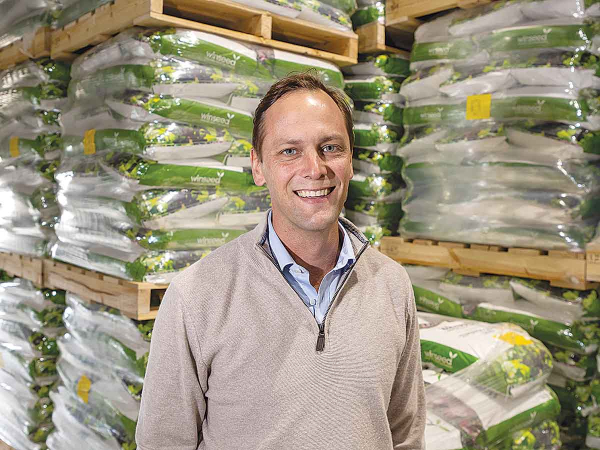 Winseed chief executive officer Tom Sherratt says about half of the company’s total sales come from India.
As the New Zealand Government launches negotiations on a Free Trade Agreement with India, one Canterbury-based vegetable seed breeder is already benefiting from exporting to the world's fifth-largest economy.
Winseed International exports more than 9 billion beetroot seeds to India each year, having captured 60% of the hybrid beetroot seed market.
It's a multi-million-dollar business with 60 staff across New Zealand, India, and most recently, Egypt.
Winseed was born out of the Carrfields Group and was previously known as Canterbury Seeds.
"It started off as a trading business - in the early days we were buying and selling seeds in markets across the world," Winseed chief executive officer Tom Sherratt says.
"That led to an understanding of the markets and products, to having interactions and other seed research companies that were prepared to give us a production and marketing licence on some varieties, which allowed us to really have some skin in the game, in terms of product."
Over the years, Winseed has acquired exclusive germplasm (plant genetic lines) which allowed it to develop its own plant research and breeding programme and more recently it has completed a significant acquisition of beetroot germplasm.
The company's research and development takes place just south of Christchurch, and also in Hyderabad, India.
Winseed now has 45 staff there, including newly hired CEO for its Indian subsidiary, Vinod Kumar Yadav, who previously worked at Limagrain - one of the world's leading seed companies.
"We've taken our plant breeding global - we're not just relying on the one site here in New Zealand," Sherratt says.
"We're researching our core products - carrot, beetroot, daikon radish and pea - but we're also looking to start breeding varieties specifically for the Indian market."
About half of Winseed's total sales now come from India, with the other half from the Middle East, North Africa, Europe, South America, Australia and, of course, New Zealand.
It can take 5-8 years to breed a new plant variety, and another 3-4 to commercialise it, Sherratt says, so having firm financial backing was a must.
"It's extremely important, because when you're talking about research projects, it's a lot of investment up front for a longer return period - the working capital requirements are quite significant.
"ANZ have been really good at backing us, along with Carrfields, which included overdrafts or trade financing, and we'd have been constrained in terms of growth if we didn't have that.
"It would be too hard to invest in plant research programmes and create really exceptional vegetable varieties without financial support."
ANZ's managing director for business and agri Lorraine Mapu says while our larger export earning sectors are vital to the New Zealand economy, it is important not to lose sight of the important role smaller businesses in different sectors play in growing our export earnings.
"Winseed is a fantastic example - they have quickly grown to be our largest seed exporter to India. They also clearly demonstrate the immense value of intellectual property as an export commodity for a small country like New Zealand – providing avenues of scalable long-term growth.”
Mapu acknowledged breaking into export markets could be challenging and emphasised the support available not only from ANZ, but from various organisations to help businesses navigate the complexities of exporting.
Growth Came with Challenges
Winseed's growth has not been without challenges, especially around the complexities of international trade.
The company’s seeds were banned for a year in Pakistan after genetically modified material was falsely detected in a shipment of seeds originating from New Zealand.
The issue was eventually resolved with the help of the Ministry of Foreign Affairs and Trade (MFAT).
“Every country has its plant import criteria and regulations, so you need to make sure your product complies,” Tom Sherratt said.
“Those regulations can also change quickly, leaving you caught with inventories, so you need to be quite dynamic and try to solve those problems quickly.”
Organisations like Seed and Grain New Zealand (where Tom is a director), MFAT and New Zealand Trade and Enterprise have helped along the way.
To establish a presence in a market, Sherratt said finding good distribution key, and that it’s normal to expect “a little bit of trial and error when you’re starting out”.
“We had situations in the earlier years where we’ve selected the wrong distributor; they might forecast a certain demand, you over-produce, and then they drop their sales forecast,” he said.
“In some markets, like the Middle East or North Africa, it can also be tough to get to the point of a written distributor agreement which makes it difficult to deal with issues when they arise.”
Sherratt said Winseed’s choice of markets is also based on competition – countries like China, although the most valuable and largest vegetable seed market, are immensely competitive.
That’s led the company to focus on India, attracted by the size of its market and growth potential.
India has a population of 1.4 billion and enjoyed full-year GDP growth in 2024 of 6.5%.
“Emerging markets like India are not everyone’s cup of tea, but we’re up for the challenge.
“India provides us an opportunity to scale our plant breeding research, so we can do things faster – developing varieties that are more targeted to the market.”
The global seed market is forecast to be worth around NZ$175b, by 2030, as farmers around the world continue to switch to superior hybrid seeds.
New Zealand’s vegetable seed export revenue increased by 87%, to a total of NZ$124 million, between 2014 to 2024.
For businesses looking to get into exporting themselves, Sherratt suggested European countries could be worth looking into.
He said they are a good first step due to their professional environments, well-developed trade agreements and well-documented regulations, meaning you can generally export with confidence.
He also emphasised the need to understand the market you are trying to sell into, and the importance of making face-to-face meetings.
“Never walk into it blindly, know your product and know your market,” he said.
“In the early days, the time we spent on a plane was immense, but that led to an understanding of the markets and got the networks going – those trips helped shape my thinking in terms of where our market opportunities were.”
A seasoned horticulturist has been appointed to deliver the Apple Action Plan, a key initiative of the India-New Zealand Free Trade Agreement.
Mid Canterbury Federated Farmers arable chair, Bevan Lill, said Beef + Lamb NZ data indicated that for the last six years, the average arable return on investment was about 0.8% while inflation ran about 4% - so the average arable farm was going backwards at about 3% a year.
A warning for New Zealand seed and grain companies – be prepared for an exodus of farmers from the arable sector.
Gareth Hale is the current custodian of a 160-year legacy that saw his great grandfather dairying in Taranaki since the mid-1850s and grandfather dairying in the Waikato from the early 1900s.
A spat within the ranks of the New Zealand Deer Farmers Association has resulted in the suspension of outspoken North Canterbury farmer Barry Cuttance.


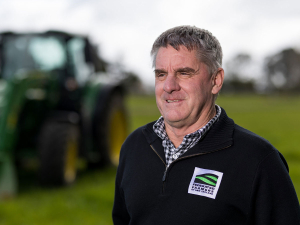
National’s pledge to introduce 19 new national standards shows the party is serious about getting Wellington out of farming, Federated Farmers says.
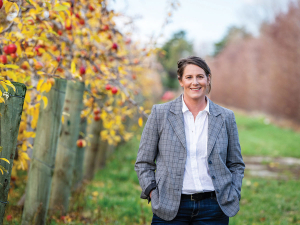
The National Party’s policies to make it easier to grow fresh vegetables, secure reliable water and energy and simplify farm planning are practical changes that will give growers the confidence to invest, according to Horticulture New Zealand (HortNZ).
Fonterra Co-operative Group chief financial officer Andrew Murray has resigned to take up a role outside the dairy giant.
A major move is about to get underway to improve the quality and viability of dairy beef and cattle in NZ.
Veterinarians say changes to the code of welfare for dairy cattle provides a positive foundation for improved cattle welfare across the country.
Today, 15 October, is the International Day of Rural Women, which recognises rural women’s contribution to farming, communities and the environment.




OPINION: The same mainstream media muppets that brought you Jacindamania in 2017 have been flat out pimping for the Opportunities…
OPINION: Your old mate reckons the atrocious way farmers in the UK are treated by their lords and masters in…




