
Rabobank Launches HortPathways for Emerging Hort Leaders
Twenty-eight emerging leaders from across the horticulture sector spent two days last month learning valuable skills and connecting with industry experts.




 increase font size
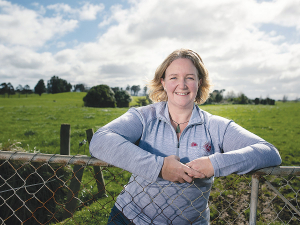
 Rabobank senior animal protein analyst Jen Corkran.
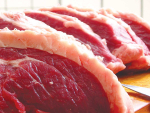
New Zealand consumers are paying more for beef mince than ever before, with the average retail price now sitting above $24 per kilogram, according to Rabobank.
Export demand for New Zealand trim beef, used to make mince, is expected to remain strong for the foreseeable future, meaning consumers should not expect prices to fall anytime soon, Rabobank senior animal protein analyst Jen Corkran says.
Corkran says beef mince was traditionally considered a budget-friendly protein, but recent price rises mean that is no longer the case.
"Off the back of incredibly strong demand for trim beef across the last couple of years - especially out of the US - we've seen local retail prices for beef climb rapidly," she says.
"If we go back to early 2024, the average price for beef mince was around $18 per kilo, however, since then it's been on a rapid upwards ascent, and the average price in July 2026 now sits at above $24.40 per kilo – more than 30% higher than it was just two and a half years ago."
Corkran says mince has historically been a go-to red meat option due to its versatility, but that is changing.
"It's not really the cheap option it once was," she says.
Corkran says the price rise is being driven largely by strong export demand for New Zealand trim beef, particularly from the US market.
She says global beef supply remains tight, both in New Zealand and internationally, and this is expected to keep prices elevated for some time.
"Here in New Zealand and around the world, beef supply is pretty tight and, as a result, we're likely to see beef mince prices remain elevated well into 2027," Corkran says. "This is, of course, great for Kiwi beef exporters, but it's much less welcome news for shoppers looking to keep their weekly food bill down."
Corkran says the rise in beef mince prices stands in sharp contrast to price trends for chicken and pork, which have remained relatively flat over the same period.
"If we look at retail prices for chicken breast and pork loin chops for example, they're currently averaging $14.80 per kilo and $16.70 per kilo respectively, so chicken breast is actually a bit less expensive than it was in early 2024 and pork loin chops nearly exactly the same price," she says.
Corkran says Rabobank's global research team is closely monitoring how rising beef prices are affecting consumption patterns worldwide.
"In the US beef market, my colleagues there have actually been a bit surprised by just how resilient beef demand has been in spite of the record-high prices," she says. "US consumers aren't quite walking away from beef at this point, but they are changing within the category what they're purchasing, and in 2026 it appears US beef demand is recalibrating at record high prices, rather than collapsing."
She says the main concern in the US market is not that consumers have stopped buying beef, but that retailers and foodservice operators may have pushed prices close to the limit of consumer tolerance, particularly for higher-value cuts.
Corkran says rising beef costs are prompting change at a global level, particularly within quick service restaurant (QSR) chains, where burgers are a key driver of customer traffic.
"In food service, and especially within quick service restaurant channels where burgers are a core traffic driver, operators are increasingly challenged by beef cost inflation," she says. "As a result, many chains continue to lean into chicken-based menu innovation and value offerings to protect margins and capture market share."
Corkran points to recent changes at McDonald's New Zealand as a local example of this trend. "In 2025, McDonald's introduced several new chicken items to its New Zealand menu, including the Chicken McCrispy and Chicken McWings," she says.
Corkran says sustained high beef prices raise the risk of New Zealand consumers trading down to lower-cost proteins such as chicken, which would reinforce a favourable demand outlook for poultry relative to beef domestically.
"At this stage we're yet to see any evidence of lower demand for beef mince here in New Zealand but, at some stage, we think there will be a point where the consumer says these high prices are getting too much for me, and this might prompt a more concerted switch to either smaller volumes purchased or lower priced protein options," she says.
Twenty-eight emerging leaders from across the horticulture sector spent two days last month learning valuable skills and connecting with industry experts.
OPINION: There could hardly be a more appropriate theme for a conference than the one chosen by the red meat sector - Navigating Volatility.
New Zealand's red meat and fifth-quarter exports reached $867 million in August, up 23% on the same month last year, as stronger returns lifted earnings across all major markets.
Meat Industry Association data, released alongside the Red Meat Sector conference in Wellington, shows export value climbing across the US, China, UK and Canada.
A 'tsunami' of milk from key exporting countries is winding down and this may be good news for New Zealand dairy farmers.


Farmers are being encouraged to rethink how they manage waste on farm with the launch of ruralwastesorted.co.nz, a new website bringing together practical tips, real farmer experiences and resources.

New Zealand Winegrowers (NZW) is celebrating the India-New Zealand Free Trade Agreement (FTA) coming into force today, bringing New Zealand wine improved access to one of the world’s fastest-growing economies.
New Zealand’s red meat sector has welcomed the India-New Zealand Free Trade Agreement taking effect, which removes India’s 33% tariff on New Zealand sheepmeat.
More than 95 per cent of New Zealand’s forestry and wood exports to India can now enter tariff free as the New Zealand-India Free Trade Agreement comes into force today.
Federated Farmers is backing Feilding High School’s call to keep Agriculture and Horticultural Science as a standalone subject in Year 11.
Food and fibre exports have returned a billion- dollar bonus to the country.



OPINION: The same mainstream media muppets that brought you Jacindamania in 2017 have been flat out pimping for the Opportunities…
OPINION: Your old mate reckons the atrocious way farmers in the UK are treated by their lords and masters in…




