Feds Back National’s 19 Farming National Standards
National’s pledge to introduce 19 new national standards shows the party is serious about getting Wellington out of farming, Federated Farmers says.




 increase font size
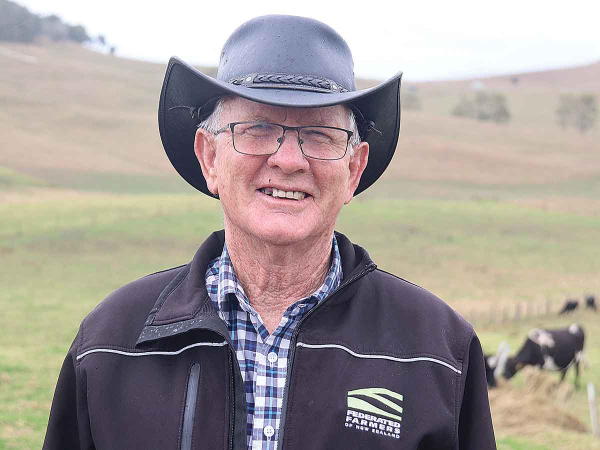 Federated Farmers Northland president Colin Hannah.
The lack of quality internet coverage in Northland is costing farmers time and money, says Federated Farmers Northland president Colin Hannah.
He says so bad is coverage in parts of the province that some farmers are having to leave their homes and travel into the nearest town where there is better internet just to fill out their NAIT data or other compliance forms.
He says the lack of good internet is a major impediment to profitable farming and the growth of the primary sector in the region.
Hannah is part of the Northland Digital Enablement Group that is lobbying for better connectivity in the region and looking at ways to help people in remote areas where internet coverage will likely always be a problem. But Hannah says being close to a town doesn't guarantee good coverage.
"I live about 100 metres from a cell tower, but my internet can go down four or five times in a night. I am told the demand on the tower is exceeding its capacity. The reality is we have gaps or black spots, some of which are quite close to the state highway," he told Rural News.
Hannah says it's not just the form filling and business activity that is being curtailed by poor connectivity - a huge issue is health & safety and also education. He says there are many students who cannot work from home because of poor internet. One former university lecturer says she has instances of students on farms having to get taken up by farm vehicles to high remote points on a farm to simply download work or sit there and do a Zoom call.
"The lack of internet has a big impact on families choosing to work or not work in Northland," he says.
Hannah says the digital group is getting a positive response from some technology providers to improve coverage. He says the advent of Starlink has helped in some ways.
"Some have installed Starlink, but it is not an option for everyone because of cost. What we have done so far is to get 80% of maraes around Northland digitally enabled with tele-health so that those who are further away can go to the marae and do a telehealth call for their initial consult," he says.
Hannah says this will save them money because, for example, if a person lived in Hokianga, it would be a four hour drive to see a consultant in person in Whangarei.
He says for all the local councils in the region, connectivity is a huge issue. He says during Cyclone Gabrielle, the three big problems were that telecommunications went out, as did power, and the main highway to Auckland via the Brynderwyns was blocked for 190 days.
"The closure of the Brynderwyns had a huge effect on Northland. It saw a huge increase in on-farm inflation on top of ordinary inflation. This was largely because of the high transport costs which saw less trips being undertaken by transport companies and higher staff costs," he says.
Other Challenges
On top of this, Colin Hannah says farming in Northland is challenging anyway.
He notes a fall in milk production due to a reduction in cow numbers, mainly because of climate change emissions targets. He says there is a move from sheep to beef because of low wool prices and animal health issues, and to top it off, an increase in forestry. Some of the regulations around setbacks and stock exclusion on slopes will also affect farm income.
"The impact is for basically every dollar decrease in farm revenue, we are seeing a corresponding increase in crime and MSD costs. While forestry may see a return in 30 years time, the reality is a dairy farmer is getting a monthly cheque, and their dollars are going to go around Northland about seven times. For me as a sheep and beef farmer, our arms are too short and we can't get to the bottom of our pockets because we only get a cheque about once or twice a year," he says.
Hannah says the upshot of this points to few jobs for young people in Northland and many people there don't comprehend what is happening.
National’s pledge to introduce 19 new national standards shows the party is serious about getting Wellington out of farming, Federated Farmers says.
Mobile phone coverage and reliability are deteriorating in rural areas, and farming families are bearing the cost, according to a Federated Farmers survey.
The Minister for Rural Communities, Mark Patterson, says there's a massive infrastructure deficit in rural areas.
Central Otago District Council (CODC) has voted against a plan to spread treated sewage sludge from Cromwell and Alexandra on farmland near Lauder, a decision Federated Farmers says reflects strong opposition from rural residents.
Federated Farmers has called on Central Otago District Council (CODC) to drop or vote down a plan to truck sludge from Alexandra and Cromwell to farmland near Lauder, warning it would compound an "outrageous" situation created by a separate council's decision weeks earlier.


Mark Hooper has been appointed the new chair of NZPork, the industry organisation representing New Zealand pig farmers.
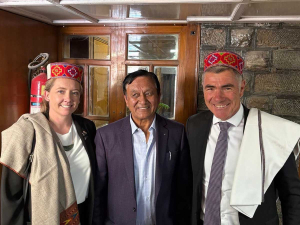
As the India-New Zealand free trade agreement enters into force, New Zealand’s apple industry has reaffirmed its commitment to the long-term development of India’s apple sector.
Fonterra shareholders can begin voting on Tuesday 20 October in the 2026 Board of Directors’ election, a Co-operative Council election in one Ward, and seven Annual Meeting resolutions.
National’s pledge to introduce 19 new national standards shows the party is serious about getting Wellington out of farming, Federated Farmers says.
The National Party’s policies to make it easier to grow fresh vegetables, secure reliable water and energy and simplify farm planning are practical changes that will give growers the confidence to invest, according to Horticulture New Zealand (HortNZ).
Fonterra Co-operative Group chief financial officer Andrew Murray has resigned to take up a role outside the dairy giant.


OPINION: The same mainstream media muppets that brought you Jacindamania in 2017 have been flat out pimping for the Opportunities…
OPINION: Your old mate reckons the atrocious way farmers in the UK are treated by their lords and masters in…




