
Pouarua Water Storage Scheme Gets Government Backing
The Government is backing work on a community-led water storage scheme that could irrigate up to 11,000 more hectares of the Poverty Bay flats, Agriculture Minister Todd McClay says.




 increase font size
 Trade Minister Todd McClay.
Trade Minister Todd McClay has welcomed the release of two studies which shed new light on the cost and impact of unnecessary red tape and arbitrary trade rules on New Zealand’s exports.
“Technically referred to as non-tariff barriers, these unfair obstacles are costing New Zealand businesses US$5.9 billion every year,” says McClay.
This is according to a report released this week by the New Zealand Institute of Economic Research. The research was commissioned by the Ministry of Foreign and Trade as a contribution to Asia Pacific Economic Cooperation (APEC) work on this issue.
In parallel to this, the APEC Business Advisory Council has released a new study showing that, due to non-tariff barriers, food trade is more difficult and expensive than it should be, undermining goals of food security in the Asia Pacific region.
“Non-tariff barriers to trade are a pervasive, costly issue for our exporting businesses. As the studies show, even as our growing network of trade agreements has reduced the costs for our exports, there has been a significant rise in the number of non-tariff barriers that exporters face,” says McClay.
“These new studies underline the importance of the Government’s efforts to address non-tariff barriers, to ensure that New Zealand businesses can compete on a level playing field overseas.
“Addressing non-tariff barriers has always been a significant part of our export-focused work. It is core work for a range of government agencies.
“A cross agency group has been set up under the Government’s Business Growth Agenda to get to grips with the impact that non-tariff barriers are having on our exporters and what we can do to get rid of them. New Zealand Trade and Enterprise is encouraging its export customers to come forward with market access issues they may be encountering.
“Reducing the impact of non-tariff barriers on New Zealand business has also been highlighted as one of the key issues under the Government’s refreshed trade policy strategy.”
McClay, who was recently in Lima for the annual APEC Summit, welcomed the role that APEC has been playing in highlighting the issues posed by non-tariff barriers.
“I am pleased to see APEC taking a leadership role on this issue. New Zealand has been a big driver of this work and we will continue to make a strong contribution to APEC’s efforts in this area,” says McClay.
The Government is backing work on a community-led water storage scheme that could irrigate up to 11,000 more hectares of the Poverty Bay flats, Agriculture Minister Todd McClay says.

A Labour-led Government won’t be bringing back the controversial freshwater rules of 2020.
OPINION: The United States wine market has changed forever, and companies cannot use same old playbook, said Erin Kirschenmann at the New Zealand Wine 2026 Wine Business Forum in August.
It was billed as a chance for all the political parties to woo the rural vote, but question marks hang over just how effective this was.
There's been widespread support from the primary sector for the Government's announcement on changes to freshwater farm plans that come under the Natural Environment Bill, which is now set to replace the existing RMA.


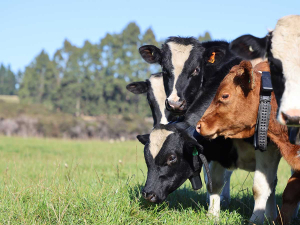
High country stations, mixed sheep and beef farms, Māori-owned farms, corporates and family operations are among the nine commercial farms taking part in the Livestock Innovation Farming Transformation programme, known as LIFT.
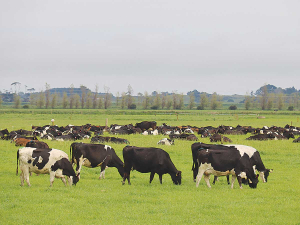
OPINION: New health and safety guidance unveiled by the Government recently provides farmers greater certainty about what is expected of them when managing risks on farm.
The National Animal Welfare Advisory Committee (NAWAC) is seeking public feedback on proposed changes to the Code of Welfare for Rodeos.
A New Zealand initiative supporting farmers to restore the health of grazing landscapes has received international backing through the Regenerative Fund for Nature, a global collaborative fund supporting regenerative agriculture and the communities that produce natural fibres for the fashion industry.
Combine premium New Zealand products, blend in a family ritual and what do you get? A world-class functional drink.
Entries are now open across eleven regions for the 2027 New Zealand Dairy Industry Awards (NZDIA).




OPINION: The same mainstream media muppets that brought you Jacindamania in 2017 have been flat out pimping for the Opportunities…
OPINION: Your old mate reckons the atrocious way farmers in the UK are treated by their lords and masters in…




