
Tongan Student Wins Final William Gearish Award
Vetekina Pau'u is the first Tongan to win the William Gearish Memorial prize and sadly she will also be the last recipient.




 increase font size
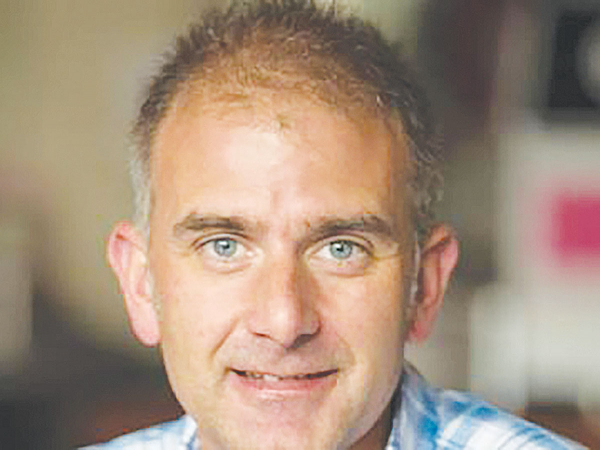 Professor Chris Anderson
Creating and delivering diverse solutions for farmers.
That's the theme of this year's Massey University Farmed Landscapes Research Centres (FLRC) annual workshop, which takes place next week (8-10 February) at the Palmerston North campus. The workshop has been running for 35 years and is one of the highlights of the agricultural science calendar.
The director of the FLRC, Professor Chris Anderson says the workshop will focus on the science around land, air and water and will seek to highlight diverse solutions in these areas and also look at how best to deliver this knowledge to farmers.
The workshop runs for three days - Wednesday to Friday and will feature close to 70 speakers who will present papers on a range of topics including carbon, greenhouse gas emissions, a range of issues around water and soil health. Anderson says there will be a special session on how best to deliver some of these solutions.
"We are being pragmatic by recognising that NZ has a massive opportunity to grow food but that we need to make sure that we have the environment to support that. We go for producing high-value, nutritious food and therefore we need a diversity of integrated solutions to make sure our environment meets that challenge,” he told Rural News.
While the workshop has run for 35 years, most of this has been the standard face-to face conference format. But Covid changed this and last year the conference was held virtually. Anderson says Massey recognises that things have now changed and that some people are not willing to travel for a variety of reasons but are keen to attend remotely.
Last year, Massey based the conference at a studio in Wellington, but this year it is setting up a studio at Massey (Palmerston North) in order to provide a professional, online option for those not attending the workshop in person.
“We are quite excited by having the workshop streamed online for the three days. People can register for the whole event or they can choose to select one or two days as well if they want to.”
But Anderson says because of the cost of running such a professional service means that there will be a registration fee for online.
“FLRC is about showcasing incredible innovative science and we see this workshop as being the melting pot of those professionals in the farming sector, including farmers to see what we and others are doing.”
Registrations are still open and details are on the FLRC web page Farmed Landscapes Research Centre Workshops.
Vetekina Pau'u is the first Tongan to win the William Gearish Memorial prize and sadly she will also be the last recipient.
Researchers at Massey University are using a special piece of scientific equipment to improve the measurement of greenhouse gas emissions from pasture soils.
Interest in agritech and production animal systems has prompted Massey University's School of Agriculture and the Environment to new majors to its popular animal science degree.
The industry is crying out for graduates with agricultural related degrees.
A four year trial has reaffirmed that mixing plantain into dairy pastures can help reduce nitrogen losses to freshwater while maintaining milk production and profitability, say researchers.


Federated Farmers has welcomed new rural policies released by ACT, saying they align closely with its own election priorities.
Rural Contractors NZ says proposed changes to land transport rules for agricultural vehicles are a welcome response by the Government to out of date regulations which have seen members hit with huge fines.
Alliance is calling for final applications for its 2027 Graduate Programme, with applications closing on Sunday 25 October.
Decades piloting planes has ensured vet and farmer David Hayes is focused on safety. So, after a serious accident while welding on farm, he is sharing his experience so others can learn from it.
Canterbury milk processor, Synlait Milk has confirmed Leon Fung as its chief executive officer.
OPINION: Making it easier to collect rainwater and use it to grow crops and livestock is a no brainer.



OPINION: The same mainstream media muppets that brought you Jacindamania in 2017 have been flat out pimping for the Opportunities…
OPINION: Your old mate reckons the atrocious way farmers in the UK are treated by their lords and masters in…




