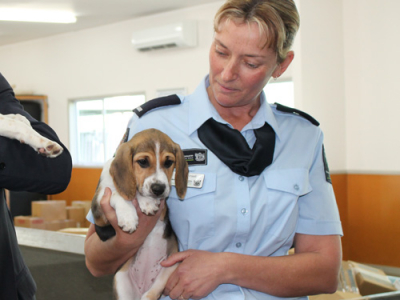
The graduation of 23 new quarantine officers will help protect New Zealand and relieve peak-time congestion at the country’s main international airports, says the Ministry for Primary Industries.
The new officers are among more than 40 MPI frontline staff that graduated in Auckland this week following nearly seven weeks of operational training.
The new staff were employed as part of MPI’s annual intake to ensure it can run its operations at maximum capacity, says Steve Gilbert, MPI’s border clearance director.
The new quarantine officers will work at the border to halt risk goods that have the potential to carry pests or diseases.
Gilbert says the new staff will help reduce waiting times at airports for arriving international passengers by providing more help to search baggage for biosecurity risk goods.
"The tourism boom is bringing in more travellers who are unfamiliar with New Zealand’s strict biosecurity requirements. That means we are undertaking additional baggage searches, and this is having an impact on queues during peak times.
"The new staff will help alleviate the congestion, as will the introduction of a new queue line at Auckland Airport this summer. The queue line will allow low-risk Australian and New Zealand passport holders to pass through MPI’s biosecurity controls more quickly.
"It’s going to be another busy summer for our frontline biosecurity staff and travellers. There is likely to be record numbers of visitors arriving in New Zealand.
"We're very conscious of the increasing fruit fly threat from Australia and parts of the Pacific. We are also on the lookout for threats like the brown marmorated stink bug, which has invaded the United States and parts of Europe."
In addition to the quarantine officers, the new frontline graduates include four biosecurity detector dog handlers and 12 compliance staff.