Federated Farmers Backs Year 11 Agricultural Science
Federated Farmers is backing Feilding High School’s call to keep Agriculture and Horticultural Science as a standalone subject in Year 11.




 increase font size
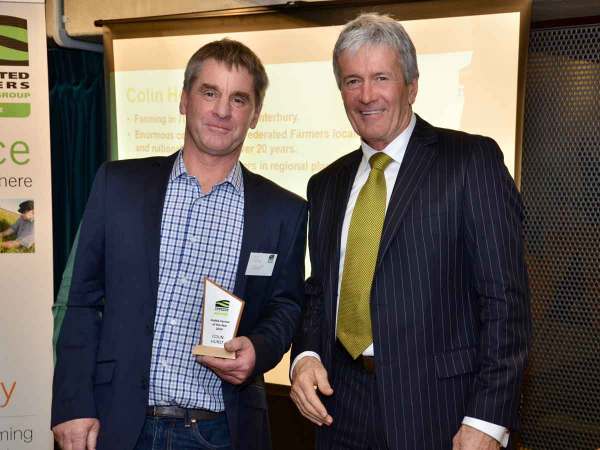 The new chairperson of the Federated Farmers Arable Industry Group, Colin Hurst (left), pictured when Agriculture Minister Damien O'Connor presented him with the 2019 'Arable Farmer of the Year' Award.
Colin Hurst is the new chairperson of the Federated Farmers Arable Industry Group.
Federated Farmers says Hurst brings wide experience and an acknowledged reputation for hard work, tenacity and leadership to the role.
Hurst, the 2019 ‘Arable Farmer of the Year’, was elected at the group’s AGM on Monday for a three-year term.
He replaces Karen Williams, who is vice-president elect of Federated Farmers of New Zealand.
As well as following his interest in science and innovation driving improved production and a lighter environmental footprint, Hurst says he is keen to lift the profile of the arable sector among consumers and fellow farmers.
Sales of arable production and spending generated by the industry contributed $863 million to GDP in 2018.
"Most people know we produce cereal grains used in bread and a host of other staples, and all the malting barley needed by our brewers, but we also grow the pasture seeds essential to our livestock farmers, not to mention brassicas and other feed crops, and seed production for domestic and international markets," says Hurst.
The arable industry’s export receipts were forecast to hit $260 million in the financial year just ended, a 10.2% increase.
Colin has farmed at Makikihi, South Canterbury since the mid-eighties with his family. It’s a 700ha mixed arable farm, including 250ha of irrigation, growing mostly autumn wheat, grass seed, plantain seed, radish seed, forestry, with heifer grazing, dairy wintering and beef cattle finishing.
As well as serving Federated Farmers at national, regional and branch level, Hurst has worked for the South Canterbury Rural Support Trust, the Arable Industry Group’s Herbage Seedgrowers Subsection, United Wheatgrowers and the Foundation for Arable Research.
He has been an advocate for farmers around the Seed Quality Management Authority table, on the Fertiliser Quality Council driving the development of a physical standard for fertiliser, and at a multitude of local authority planning and hearing processes.
Federated Farmers is backing Feilding High School’s call to keep Agriculture and Horticultural Science as a standalone subject in Year 11.
National’s pledge to introduce 19 new national standards shows the party is serious about getting Wellington out of farming, Federated Farmers says.
Mobile phone coverage and reliability are deteriorating in rural areas, and farming families are bearing the cost, according to a Federated Farmers survey.
Central Otago District Council (CODC) has voted against a plan to spread treated sewage sludge from Cromwell and Alexandra on farmland near Lauder, a decision Federated Farmers says reflects strong opposition from rural residents.
Federated Farmers has called on Central Otago District Council (CODC) to drop or vote down a plan to truck sludge from Alexandra and Cromwell to farmland near Lauder, warning it would compound an "outrageous" situation created by a separate council's decision weeks earlier.


Alliance is calling for final applications for its 2027 Graduate Programme, with applications closing on Sunday 25 October.
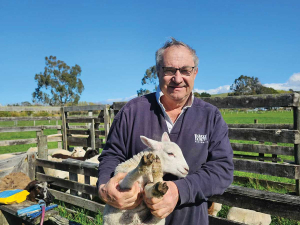
Decades piloting planes has ensured vet and farmer David Hayes is focused on safety. So, after a serious accident while welding on farm, he is sharing his experience so others can learn from it.
Canterbury milk processor, Synlait Milk has confirmed Leon Fung as its chief executive officer.
OPINION: Making it easier to collect rainwater and use it to grow crops and livestock is a no brainer.
As part of its Election 2026 coverage, Rural News asked political parties how they would help pull the arable sector out of the doldrums. Here's what they said:
Farmers are being encouraged to rethink how they manage waste on farm with the launch of ruralwastesorted.co.nz, a new website bringing together practical tips, real farmer experiences and resources.


OPINION: The same mainstream media muppets that brought you Jacindamania in 2017 have been flat out pimping for the Opportunities…
OPINION: Your old mate reckons the atrocious way farmers in the UK are treated by their lords and masters in…




