
New Reporting Requirements to Boost Transparency for Water Providers
The Commerce Commission has finalised new information disclosure requirements for local councils and water organisations that deliver water supply and wastewater services.




 increase font size

THE COMMERCE Commission wants any remaining rural customers with concerns with the way that interest rate swaps were sold to them to come forward.
Since mid-2012 the Commission has been investigating alleged mis-selling of interest rate swaps to the rural sector by ANZ, ASB and Westpac between 2005 and 2009. The Commission has received a significant number of complaints from rural customers of those banks.
"We want to ensure that we have received information from all potentially affected customers before we take next steps in this investigation," said Commission Chairman Dr Mark Berry.
"We cannot be confident that any compensation sought in Court or that may otherwise be available will be obtainable for customers who have not made contact with us. We need rural customers to come forward and provide information that supports their position, if they want it to be taken into account. We now want to give those who have not been prepared to come forward one further chance to do so."
The Commission asks all affected customers – of any of the three banks – to contact the Commission before 30 May 30, 2014 if they wish their concerns to be considered. Customers can complete the questionnaire on the Commission's website, or can call the Commission's contact centre on 0800 943 600.
Interest rate swaps are a financial derivative product that allows a borrower to manage the interest rate exposure on their borrowing. They were typically provided to large corporate and institutional customers, but from 2005 were offered by various banks to rural customers throughout New Zealand.
On 17 December 2013, the Commerce Commission announced that it has advised three major New Zealand banks (ANZ, ASB and Westpac), that it intended to issue legal proceedings over their sales of interest rate swap contracts to rural customers.
In April 2014, the Commission announced it anticipated making a further announcement mid-year, once it has furthered discussions with each bank about the information it holds and any possible resolution of the Commission's concerns. The Commission has entered into a 'standstill agreement' with each bank meaning there will be no barrier to any proceedings brought by the Commission as a result of taking this extra time.
More information about the interest rate swaps case can be found at - http://www.comcom.govt.nz/fair-trading/interest-rate-swaps-2/
The Commerce Commission has finalised new information disclosure requirements for local councils and water organisations that deliver water supply and wastewater services.

The Commerce Commission has announced that it has filed proceedings against Westpac New Zealand.
Federated Farmers is vowing to keep the big banks accountable for their actions and to continue pushing for meaningful change in the rural lending sector.
The Commerce Commission is weighing up whether or not it should deregulate the copper network, still used for internet and landline in 80,000 rural premises.
The Commerce Commission's move to investigate commitments made by major banks under the Net Zero Banking Alliance is being hailed by farming leaders.


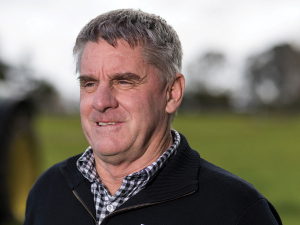
Federated Farmers has welcomed new rural policies released by ACT, saying they align closely with its own election priorities.

Rural Contractors NZ says proposed changes to land transport rules for agricultural vehicles are a welcome response by the Government to out of date regulations which have seen members hit with huge fines.
Alliance is calling for final applications for its 2027 Graduate Programme, with applications closing on Sunday 25 October.
Decades piloting planes has ensured vet and farmer David Hayes is focused on safety. So, after a serious accident while welding on farm, he is sharing his experience so others can learn from it.
Canterbury milk processor, Synlait Milk has confirmed Leon Fung as its chief executive officer.
OPINION: Making it easier to collect rainwater and use it to grow crops and livestock is a no brainer.





OPINION: The same mainstream media muppets that brought you Jacindamania in 2017 have been flat out pimping for the Opportunities…
OPINION: Your old mate reckons the atrocious way farmers in the UK are treated by their lords and masters in…




