
James Blair Named 2026 Young Grower National Champion
James Blair, an agronomist for AS Wilcox and the Pukekohe regional champion, has won the 2026 Young Grower national title.




 increase font size
 Horticulture New Zealand chief executive Mike Chapman.
Government funding for a nationwide project to better protect waterways, by measuring and managing nitrogen on cropping farms, has been welcomed by Horticulture New Zealand.
Environment Minister Dr Nick Smith announced funding of $485,168 from the Freshwater Improvement Fund for a three-year project: Protecting our Groundwater - Measuring and Managing Diffuse Nutrient losses from Cropping Systems.
Horticulture New Zealand chief executive Mike Chapman says food consumers world-wide are increasingly wanting information about the environmental impacts of the food supply chain, particularly when it comes to healthy food such as fresh fruit and vegetables.
"Environmental sustainability is paramount as it relates to freshwater and the horticulture and cropping industries are very aware of this," Chapman says. "So it is important to have funding to apply science and research to ensuring the best management practices for our growers to this end.
"This project, throughout New Zealand’s key cropping areas, gives us really useful information to target on-farm management practices to meet environmental impact expectations. Ultimately, we are looking to give growers the tools to manage and reduce their environmental footprint and long-term, robust data and science will allow us to do that.
"For arable and vegetable cropping, we are looking to minimise nutrient leaching and sediment run-off - preventing it from entering waterways.
"The aim of the project is to improve groundwater quality to contribute to the overall improvement of the management of New Zealand’s freshwater bodies," Chapman says.
The project accesses a network on arable and vegetable farms to measure nutrient losses and collect information about the crop rotation and farm’s management practices. This detailed, unique dataset will have increasing value for farmers and scientists over time, providing evidence to drive management changes on the farm and improve environmental outcomes.
It is managed by the Foundation for Arable Research (FAR) with funding from Vegetable Research and Innovation (V R & I), industry and regional councils, and the project cost is estimated at a total of $1,040,168. Horticulture New Zealand is part of the project team.
James Blair, an agronomist for AS Wilcox and the Pukekohe regional champion, has won the 2026 Young Grower national title.
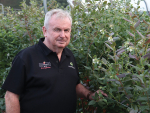
Blueberries have the potential to become a major horticultural export, earning up to $150 million within the next three to five years.
OPINION: Mike Chapman, former chief executive of levy-funded HortNZ, has thrown out a challenge to farmers and growers to put their levy-funded industry organisations under the same scrutiny as fertiliser, electricity, labour and freight.
New Zealand needs to make sure that it continues to focus on its own food security, according to HortNZ board member and blueberry grower Dermott Malley.
According to a progress report on the Aotearoa Horticulture Action Plan (AHAP), New Zealand's horticulture sector is making real progress on the big issues facing growers.


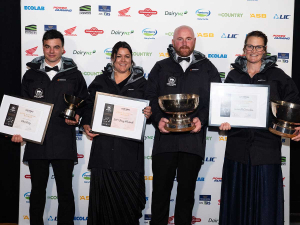
Entries opened on Monday, 5 October 2026 for the 2027 New Zealand Dairy Industry Awards (NZDIA), which organisers describe as the nation's biggest celebration of excellence in the dairy sector.
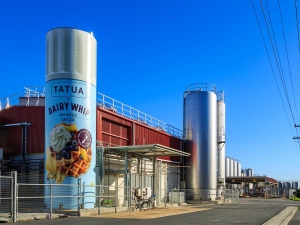
Waikato milk processor Tatua has again declared a record milk payout to farmer shareholders, leaving other processors in the dust.
A Labour-led Government won’t be bringing back the controversial freshwater rules of 2020.
National’s much-touted free trade deal with India featured in the Rural Issues Debate at Mystery Creek, Hamilton on Wednesday night.
New Zealand's 2026-27 freshwater fishing season has opened, with anglers encouraged to head to rivers and lakes over the coming days as conditions look favourable across much of the country.
Central Otago District Council (CODC) has voted against a plan to spread treated sewage sludge from Cromwell and Alexandra on farmland near Lauder, a decision Federated Farmers says reflects strong opposition from rural residents.




OPINION: The same mainstream media muppets that brought you Jacindamania in 2017 have been flat out pimping for the Opportunities…
OPINION: Your old mate reckons the atrocious way farmers in the UK are treated by their lords and masters in…