BVD Control Begins Long Before You See A Problem
Bovine Viral Diarrhoea (BVD) is sometimes viewed as a dairy industry issue, but the reality is that the disease can have serious consequences for beef breeding herds as well.




 increase font size
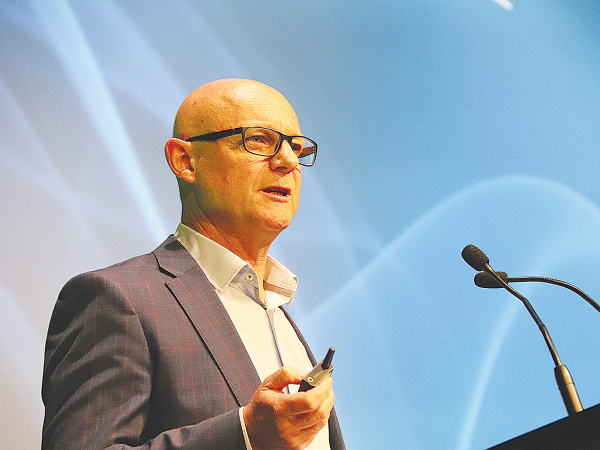 MPI director-general Ray Smith.
Don’t worry about it but just be aware - that’s the message from Ministry for Primary Industries (MPI) director-general Ray Smith as the H5N1 strain of bird flu is found in Australia.
Smith says it’s inevitable that the H5N1 strain will reach New Zealand.
The alert for NZ comes after a migratory seabird in Western Australia was confirmed to have the same deadly H5N1 strain that has killed millions of chickens, ducks, wild birds, poultry and some mammals globally, since late 2021.
Speaking at the Primary Industries NZ Summit in Auckland this morning, Smith noted that “a couple of birds have landed” in Australia.
“I reckon there'll be more, but, you know, we'll wait and see.
“We always knew it potentially would come to New Zealand.
“We would now be the only country along the Pacific Island countries in the world that haven't had it. So, it's inevitable that it comes here.”
But Smith told 300 industry leaders and stakeholders that he doesn’t want them to worry about it.
“I just want you to be aware,” he says.
Smith points out that it's not an issue for our cattle industry, just because it was an issue in the US.
“They have a completely different system- it got into the water, that feeds the animals.
“So, birds in the water, bird droppings, what have you - it's not the system we operate in New Zealand with our more extensive farming systems where things are done in a different way. So, don't worry about that.”
Smith says it’s not really a human health issue “unless you go pick up a dead bird that's got it”.
He urged people not to be dumb and touch a dead bird.
“So, I use a spade, my wife uses plastics and gloves, so, don't let the dog or the cat eat the dead birds.”
Smith warned that if the H5N1 strain arrives in NZ, there will be dead birds around us and people will be distressed about it.
“And it will be serious, because it could get into our wild bird population.
“And they're not protected from it – they have no immunity to this. So, it's a serious matter.”
But he cautioned the public against reporting every dead bird to MPI.
“We get a lot of dead bird reports, I can tell you.”
Smith acknowledged that the poultry industry is the most vulnerable to the H5N1 strain.
“If it gets into a poultry shed, it will wipe it out.”
Bovine Viral Diarrhoea (BVD) is sometimes viewed as a dairy industry issue, but the reality is that the disease can have serious consequences for beef breeding herds as well.

Election years are always a concerning time for farmers, according to DairyNZ chair Tracy Brown.
Testing confirms H5 bird flu in a single northern giant petrel, found dead on a remote Cape Palliser beach in the Wairarapa, says Dr Mary van Andel, the Ministry for Primary Industries' (MPI) Chief Veterinary Officer.
Bovine Viral Diarrhoea (BVD) is sometimes viewed as a dairy industry issue, but the reality is that the disease can have serious consequences for beef breeding herds as well.
Four years since it was first detected in New Zealand, researchers and growers now know much more about management of maize pest fall armyworm (FAW).


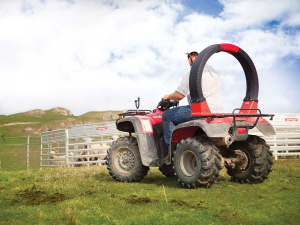
When Northland leather worker Vernon Suckling started making horse saddles 50 years ago, quad bikes and side-by-side vehicles were unheard of.
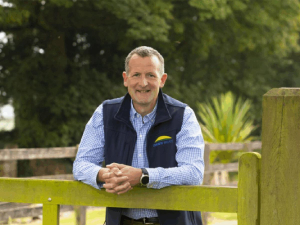
Alliance Group has confirmed that eligible farmer-shareholders who supply and continue to back the business will receive up to $20 million later this year, following the strategic investment partnership with Dawn Meats.
With a general election under five weeks away, Rural News is asking major political parties about their policies and positions on key issues facing the primary sector. We will run their responses to each question over the next four weeks. The ACT Party and the Greens didn't respond in time.
The red meat sector is in great heart.
Dr Scott Champion, Foundation for Arable Research chief executive, says that everyone in the supply chain had a role to play in driving the sector's long-term success.
Entries opened on Monday, 5 October 2026 for the 2027 New Zealand Dairy Industry Awards (NZDIA), which organisers describe as the nation's biggest celebration of excellence in the dairy sector.




OPINION: The same mainstream media muppets that brought you Jacindamania in 2017 have been flat out pimping for the Opportunities…
OPINION: Your old mate reckons the atrocious way farmers in the UK are treated by their lords and masters in…