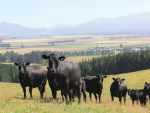
BVD Control Begins Long Before You See A Problem
Bovine Viral Diarrhoea (BVD) is sometimes viewed as a dairy industry issue, but the reality is that the disease can have serious consequences for beef breeding herds as well.




 increase font size
 Dr Mary van Andel
Testing confirms H5 bird flu in a single northern giant petrel, found dead on a remote Cape Palliser beach in the Wairarapa, says Dr Mary van Andel, the Ministry for Primary Industries' (MPI) Chief Veterinary Officer.
"This positive detection is not a surprise as these ocean-going birds can arrive on our coastlines, especially in poor weather. We expect we will continue to find more cases in wild birds," van Andel says.
The petrel is found by a Department of Conservation (DOC) ranger, who notifies MPI's exotic pest and disease hotline.
"There were no signs of other issues at the site, but we will carry out precautionary checks along the remote coastline tomorrow," van Andel says.
"The risk to human health remains low and chicken and eggs are safe to eat," van Andel says.
There have now been three confirmed positive detections of H5 bird flu in New Zealand, all in the Wellington region. The detections involve individual wild birds, with no mass mortality events and no detections in poultry to date.
Samples are received by MPI's Animal Health Laboratory on 14 August. Initial tests find the bird has a low level of influenza virus, requiring several rounds of testing to confirm H5 bird flu.
"Given this species is known to be affected by bird flu and the location, we wanted to be thorough with our testing despite the low viral load," van Andel says.
"MPI remains focused on surveillance to track the movement of bird flu so we can help protect our poultry industry and support DOC's work with native wildlife," van Andel says.
"By building a precise picture through testing, we help egg and chicken producers make good decisions about the best biosecurity measures to protect their flocks and keep operating."
Alongside industry, MPI continues to offer one-on-one support and advice to poultry and egg operations in the Wairarapa and Wellington.
Since the first H5 bird flu detections in New Zealand, MPI reports a strong response from the public reporting groups of unwell or dead birds.
"MPI experts consider every notification and triage them based on internationally recognised processes for assessing H5 bird flu risk. Multiple unwell or dead birds, certain species (sea birds, waterfowl, birds that congregate in large groups), and certain locations take priority," van Andel says.
Anyone who sees three or more sick or dead wild birds in a group is urged to report it immediately to the exotic pest and disease hotline on 0800 80 99 66 from anywhere in New Zealand, or online at report.mpi.govt.nz.
The public is asked not to handle or move the birds.
More information about H5 bird flu is available at mpi.govt.nz/hpai.
Bovine Viral Diarrhoea (BVD) is sometimes viewed as a dairy industry issue, but the reality is that the disease can have serious consequences for beef breeding herds as well.

Striking a balance between meeting the needs of industry to speed up approval time for products but on the other hand ensuring that risks are properly assessed.
Election years are always a concerning time for farmers, according to DairyNZ chair Tracy Brown.
A partnership between state-owned enterprise Pāmu (Landcorp Farming Limited) and charity Meet the Need is putting more than quality New Zealand beef into food bank parcels this year.
The terrible floods that hit the Wairarapa may have subsided, but the danger to farmers still exists, according to local Federated Farmers president Rob Hickson.



Canterbury milk processor, Synlait Milk has confirmed Leon Fung as its chief executive officer.
OPINION: Making it easier to collect rainwater and use it to grow crops and livestock is a no brainer.
As part of its Election 2026 coverage, Rural News asked political parties how they would help pull the arable sector out of the doldrums. Here's what they said:
Farmers are being encouraged to rethink how they manage waste on farm with the launch of ruralwastesorted.co.nz, a new website bringing together practical tips, real farmer experiences and resources.
New Zealand Winegrowers (NZW) is celebrating the India-New Zealand Free Trade Agreement (FTA) coming into force today, bringing New Zealand wine improved access to one of the world’s fastest-growing economies.
New Zealand’s red meat sector has welcomed the India-New Zealand Free Trade Agreement taking effect, which removes India’s 33% tariff on New Zealand sheepmeat.

OPINION: The same mainstream media muppets that brought you Jacindamania in 2017 have been flat out pimping for the Opportunities…
OPINION: Your old mate reckons the atrocious way farmers in the UK are treated by their lords and masters in…




