
Christmas gift for farmers
The repeal of Fair Pay Agreements (FPA) legislation by the new Government will be a great Christmas gift for farmers and rural service businesses, claims Federated Farmers.




 increase font size
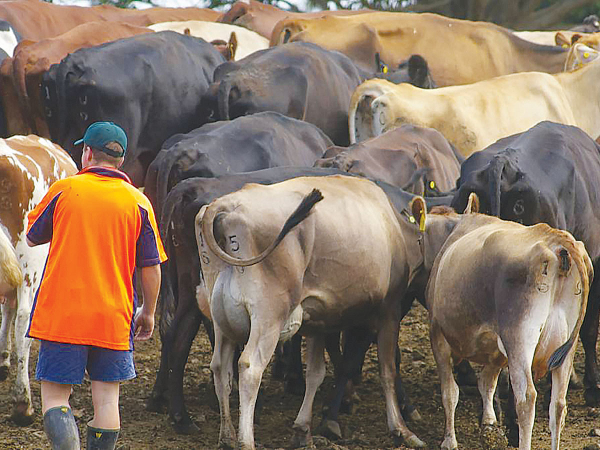 Farmers are being warned that the proposed fair pay agreements (FPAs) could cause upheaval in the agriculture sector.
Farmers are being warned that the proposed fair pay agreements (FPAs) could cause upheaval in the agriculture sector.
Business NZ chief executive Kirk Hope claims the Government will target all sectors with FPAs.
He wants the agriculture sector to join its campaign 'Your Work, Your Way' in opposing the final FPAs regulations passing in Parliament.
Hope told Rural News that the proposed legislation means an FPA will become compulsory once either 10% of the sector workforce or 1000 workers are signed up.
"For the farming sector, say each farm has five workers it will be relatively easy for organisers to reach 1,000 workers.
"It may take a little bit of organising but there are unions and groups who have started mobilising workers to join FPAs."
But Hope points out that the legislation to pass in Parliament soon will let FPAs apply to just about any sector, including the farming sector.
"So, it could certainly be forced on the entire farming sector."
Hope says collective bargaining is currently almost unknown in the farm sector.
"Not being bogged down in collective bargaining has helped contribute to NZ farming's great economic success. It would be a tragedy if a FPA was unleashed on the farming sector."
The repeal of Fair Pay Agreements (FPA) legislation by the new Government will be a great Christmas gift for farmers and rural service businesses, claims Federated Farmers.

OPINION: The Fair Pay Agreements (FPAs) bill proposed by Government is causing alarm in the farming sector.
Federated Farmers are joining the fight against Fair Pay Agreements (FPAs), saying they are unnecessary and inflexible.
'Talk to your banks' is the message to South Island farmers facing continued drought conditions from the New Zealand Bankers' Association (NZBA).



Canterbury milk processor, Synlait Milk has confirmed Leon Fung as its chief executive officer.

OPINION: Making it easier to collect rainwater and use it to grow crops and livestock is a no brainer.
As part of its Election 2026 coverage, Rural News asked political parties how they would help pull the arable sector out of the doldrums. Here's what they said:
Farmers are being encouraged to rethink how they manage waste on farm with the launch of ruralwastesorted.co.nz, a new website bringing together practical tips, real farmer experiences and resources.
New Zealand Winegrowers (NZW) is celebrating the India-New Zealand Free Trade Agreement (FTA) coming into force today, bringing New Zealand wine improved access to one of the world’s fastest-growing economies.
New Zealand’s red meat sector has welcomed the India-New Zealand Free Trade Agreement taking effect, which removes India’s 33% tariff on New Zealand sheepmeat.




OPINION: The same mainstream media muppets that brought you Jacindamania in 2017 have been flat out pimping for the Opportunities…
OPINION: Your old mate reckons the atrocious way farmers in the UK are treated by their lords and masters in…




