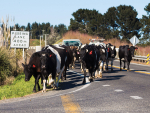
Ospri Urges Farmers To Prepare NAIT Records Before Moving Day
Moving Day (June 1) is just around the corner and farmers who are moving farms with the herd are being urged by Ospri to start preparations now.




 increase font size
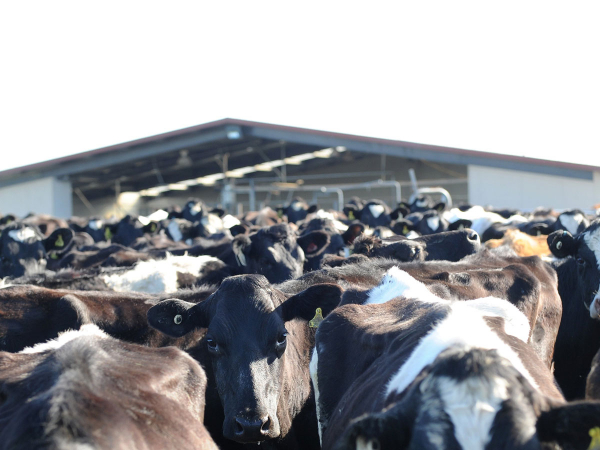 Twelve herds are now infected with TB in Hawke’s Bay.
The past week has seen a further four herds test positive for tuberculosis (TB) in Hawke’s Bay.
OSPRI reports that there are now twelve herds infected with TB in Hawke’s Bay, including nine beef farms and three dairy farms.
A beef herd previously under investigation is now confirmed to be infected and three additional herds have been added to investigations.
The increase in infected herds represents a 50% jump in cases, with OSPRI reporting eight herds infected last week.
Ten herds are currently being investigated for TB, three of which are new from last week.
The number of herds being investigated is slightly lower than the eleven being tested last week, with investigations being closed for two herds after testing showed no infection.
A total of 56,916 animals have been tested since 1 November 2019.
For infected herds, two clear, whole herd tests six months apart are required to achieve clear status
Current possum control operations progressing: ground control work in Waitara Valley, Tarawera, Opouahi, Tutira, Waipatiki, Willowflat and Mohaka Forest; aerial control operations scheduled to start in Te Awahohonu-Ahimanawa and Waitara Valley before June.
OSPRI’s Hawke’s Bay TB response webpage has been revised with the latest information for farmers – go towww.ospri.co.nz/hawkes-bay
Moving Day (June 1) is just around the corner and farmers who are moving farms with the herd are being urged by Ospri to start preparations now.

OPINION: New economic modelling confirms what many of us in Hawke's Bay have long understood - getting water security right for this region is one of the most important decisions we face as a community. Not just for farmers, but for everyone who lives, works and builds a future here.
Perrin Ag has appointed Vicky Ferris as its new Hawke's Bay consultant.
You'll be hard-pressed to find a more emphatic tribute to family than the one Jenny Dobson conveys via her Hawke's Bay wines.
Ospri is reducing TB testing frequencies and movement control measures as the disease risk subsidies in parts of the country.


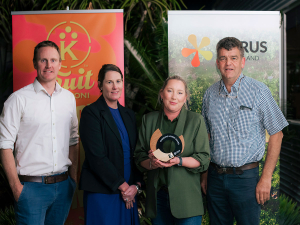
New Zealand's citrus growers were challenged to build their future on the value embedded in their fruit rather than the volume they produce, at Citrus New Zealand's annual gathering in Gisborne on 17 September.

Leading John Deere technicians and apprentices from New Zealand and Australians were recognised at the recent sixth annual JD Technician of the Year Awards, held in Brisbane.
In Dacre, near Invercargill in New Zealand’s South Island, Bruce Dinnington is running a dairy operation unlike any other.
A free online platform aggregating governance vacancies across rural and regional New Zealand has been launched.
Environment Minister Nicola Grigg has announced details of a new rural plastics recycling scheme.
Agricultural drone operators say that a government decision to allow lower-risk drone work without certification won’t lower standards but drive innovation and efficiency.



OPINION: The same mainstream media muppets that brought you Jacindamania in 2017 have been flat out pimping for the Opportunities…
OPINION: Your old mate reckons the atrocious way farmers in the UK are treated by their lords and masters in…