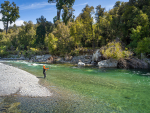
Election 2026: Freshwater Protection at Centre of Fish & Game Manifesto
Fish & Game New Zealand has announced its election priorities in its Manifesto 2026.




 increase font size
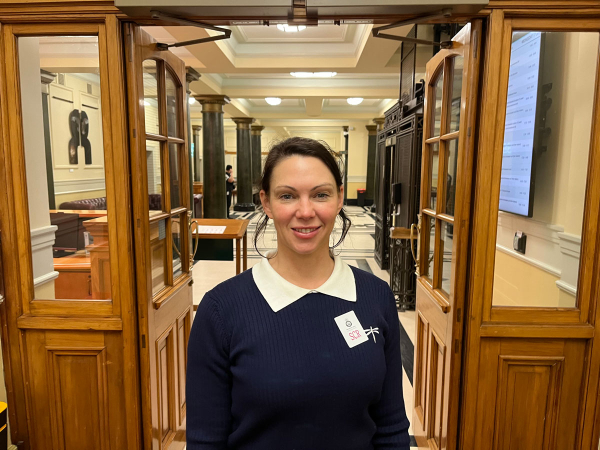 Corina Jordan
The New Zealand Fish & Game Council has announced a leadership change in an effort to provide strategic direction for the sector and support the implementation of proposed legislative changes.
Corina Jordan, currently chief executive of the Game Animal Council, will be seconded to serve as chief executive of both New Zealand Fish & Game and the Game Animal Council on a fixed term basis.
The joint role is designed to recognise the overlap of interests between Fish & Game licence holders and other game hunters.
From 2022 to 2025, Jordan was chief executive of New Zealand Fish & Game.
Jordan will be supported by Richie Cosgrove who will serve as the newly created chief operative officer for Fish & Game.
In this position, Cosgrove will provide operational management of Fish & Game while supporting the implementation of legislative changes, ensuring Fish & Game maintains its capability to fulfil its current purpose while placing the organisation to work with stakeholders and the government to make sure legislative changes strengthen the organisation and the sector.
New Zealand Fish & Game Council chairman Barrie Barnes says the reforms to Fish & Game provide further opportunity to build on the work Jordan completed as chief executive of the organisation, adding that continuity in strategic leadership is important.
"This is a measure that draws on Corina's extensive knowledge, policy expertise and leadership skills to support and guide Fish & Game through upcoming change," Barnes says.
“It will help ensure the proposed reforms are implemented effectively, while looking after the interests of New Zealand’s angling and hunting community," he adds.
“Richie will remain a leader in his new role as Chief Operating Officer, ensuring operationalisation of Fish & Game’s core statutory functions, and working closely with our regions to maintain a unified organisation during this period of change."
The arrangement will see costs shared between the two statutory bodies and is designed to support the effective management of strategy and implementation of the Ministerial changes whilst maintaining Fish & Game's accountability to licence holders.
The sharing of a joint CEO with the Game Animal Council, along with the creation of the COO position, will ensure that Fish & Game continues to build on the substantial work undertaken over the last three years in meeting the needs of game bird hunters and anglers, increasing value for licence holders, and promoting healthy habitats and ecosystems.
“Importantly, this will also best place the organisation to represent licence holders and strengthen the recognition of hunting and fishing and valued introduced species and their management, through this period of legislative reform,” Barnes says.
Meanwhile, Jordan says the move is a practical step.
“Hunting and fishing bring both economic and societal benefits to the New Zealand community,” she says.
“The value of which can be measured in more than dollar terms, including improved mental health and physical wellbeing, a sense of community, conservation benefits, and attracting the next generation of hunters and anglers to continue our outdoor traditions that Kiwis value so much.”
Fish & Game New Zealand has announced its election priorities in its Manifesto 2026.
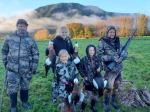
The 2025 game bird season is underway with Hawke’s Bay and Southland reporting the ideal weather conditions for hunters – rain and wind.
OPINION: Irate Southland farmers are on the money denying anglers access across their land.
Anglers are at loggerheads with an environment group over its plans for a new conservation system.
Hunters around the country are hoping for some foul weather this weekend with the game bird season getting underway.


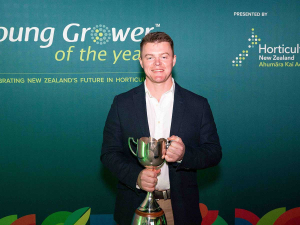
The potato industry is celebrating the success of two rising stars - James Blair, the 2026 Young Grower of the Year and runner-up and innovation award winner, Amber Davy.
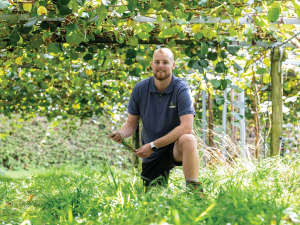
Twenty-eight emerging leaders from across the horticulture sector spent two days last month learning valuable skills and connecting with industry experts.
There are five entrants in this year’s Young Horticulturist of the Year, competing in a series of technical, practical, business and leadership challenges.
A seasoned horticulturist has been appointed to deliver the Apple Action Plan, a key initiative of the India-New Zealand Free Trade Agreement.
New Zealand's citrus growers have been told to compete on the value built into their fruit rather than the volume they grow.
Hawke's Bay fruit growers are being reminded of the need to prepare for whatever the El Niño weather system may bring in the coming months.




OPINION: The same mainstream media muppets that brought you Jacindamania in 2017 have been flat out pimping for the Opportunities…
OPINION: Your old mate reckons the atrocious way farmers in the UK are treated by their lords and masters in…