
Landowners urged to trim trees to prevent major power outages
Power bills could be lower, and power restored faster following a storm if landowners took greater responsibility for trimming trees - so they don't come down on transmission lines.




 increase font size

Federated Farmers is opposing the Western Bay of Plenty District Council's moves to create buffer zones of up to 32m either side of electricity transmission lines.
"Federated Farmers strongly opposes the creation of these Electricity Transmission Buffer Zones, because they are solely designed to protect transmission line companies' interests and circumnavigate individual easement agreements with landowners," Federated Farmers Bay of Plenty provincial president John Scrimgeour says.
"Transpower says it wants these buffer zones to ensure safety and supply continuity. However, Federated Farmers feels the width of the zones is excessive, as is the level of proposed regulation around them.
"We believe the resulting raft of new rules for earthworks, buildings and subdivision within those zones would hamper landowners' ability to farm, without meeting Transpower's original goals.
"Transpower seems to be trying to restrict landowners' activities through the District Plan, to avoid having to negotiate easement agreements with individual land owners. This is an attempt to exploit a RMA loophole which says no compensation needs to be paid when landowners are affected by rules in a District Plan.
"What this will mean for Western Bay of Plenty farmers is more costly consent processes if they wish to construct basic farm infrastructure such as deer fences and water tanks within the Transmission Buffer Zone.
"Likewise, the subdivision rule would also capture subdivision of a farm into two farms, although the house sites may be many kilometres away from the line itself.
"The council must recognise that much of the land under and alongside transmission lines is productive rural land. Using the land to transmit electricity should not limit landowners' ability to also use it for primary production," Scrimgeour says.
Power bills could be lower, and power restored faster following a storm if landowners took greater responsibility for trimming trees - so they don't come down on transmission lines.

The raising of six heavy power cables across the Waikato River last week was a milestone in lines company Unison’s work to energise 30 new dairy farms in the Taupo region.
FEDERATED FARMERS is helping farmers understand their rights when it comes to electricity lines on their property.
TRACTOR COMPANY New Holland has added its Electro Command semi-powershift transmission to the T5 tractor range, saying it expects this feature to increase the machines’ appeal to livestock and mixed farmers, and contractors.
Agricultural contractors are reminded they must leave a buffer of at least 2m between waterways and areas cultivated for growing maize.



The potato industry is celebrating the success of two rising stars - James Blair, the 2026 Young Grower of the Year and runner-up and innovation award winner, Amber Davy.
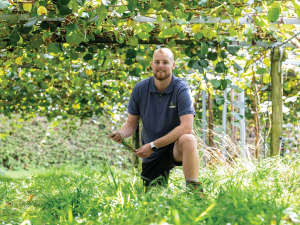
Twenty-eight emerging leaders from across the horticulture sector spent two days last month learning valuable skills and connecting with industry experts.
There are five entrants in this year’s Young Horticulturist of the Year, competing in a series of technical, practical, business and leadership challenges.
A seasoned horticulturist has been appointed to deliver the Apple Action Plan, a key initiative of the India-New Zealand Free Trade Agreement.
New Zealand's citrus growers have been told to compete on the value built into their fruit rather than the volume they grow.
Hawke's Bay fruit growers are being reminded of the need to prepare for whatever the El Niño weather system may bring in the coming months.





OPINION: The same mainstream media muppets that brought you Jacindamania in 2017 have been flat out pimping for the Opportunities…
OPINION: Your old mate reckons the atrocious way farmers in the UK are treated by their lords and masters in…




