Dairy Sector Drives Strong Rural Property Market Activity in NZ
The latest data from the Real Estate Institute of New Zealand (REINZ) reveals a mixed rural property market due to consistent inflation concerns.




 increase font size
Overall, there were 499 farm sales in the three months ended December 2016, compared to 447 farm sales for the three months ended November (+11.6%), and 547 farm sales for the three months ended December 2015. 1,742 farms were sold in the year to December 2016,
2.5% fewer than were sold in the year to December 2015, with 28% fewer dairy farms and 15% fewer grazing farms sold over the same period.
The median price per hectare for all farms sold in the three months to December 2016 was $27,774 compared to $28,120 recorded for three months ended December 2015 (-1.2%). The median price per hectare rose 5.4% compared to November.
The REINZ All Farm Price Index rose 8.8% in the three months to December 2016 compared to the three months to November. Compared to December 2015 the REINZ All Farm Price Index rose 4.0%. The REINZ All Farm Price Index adjusts for differences in farm size, location and farming type, unlike the median price per hectare, which does not adjust for these factors.
Seven regions recorded increases in sales volume for the three months ended December 2016 compared to the three months ended December 2015. Otago recorded the largest increase in sales (+13 sales), followed by Wellington (+7 sales), and Canterbury (+6 sales).
Compared to the three months ended November 2016, 11 regions recorded an increase in sales.
“As has been the case in previous seasons, figures for the three months ending December 2016 reflect solid activity during the spring, with an easing of volumes in the last month of the period, due in part to the shorter pre-Christmas selling period”, says REINZ rural spokesman Brian Peacocke.
“Demand for good property remains constant, with limited activity surrounding the lesser quality properties.
“Reduced production from a national perspective, particularly in the dairy sector, is the result of an unseasonably late spring, mainly due to the volatile weather conditions.”
Highlights include:• Northland – A continuation of reasonable activity relating to finishing and grazing properties, with limited results in dairy;
• Auckland - An isolated flicker of light in the finishing and grazing categories;
• Waikato – Solid sales of dairy farms with one standout sale in the Matamata district; a simmering of sales in the arable, finishing and grazing sectors;
• Bay of Plenty / Central Plateau – A continuation of spectacular strength in the horticultural industry backed up by solid sales, albeit at moderate prices, for dairy and finishing units in the eastern and central regions;
• Taranaki – Reliable results in the dairy sector with one exceptional sale for an exceptional property; reasonable life in the finishing and grazing categories;
• Manawatu / Wanganui – Reduced results for dairy and grazing properties but improving sales of arable and finishing units;
• Gisborne / Hawke’s Bay / Wairarapa – Quiet at the top and bottom ends of the East Coast of the North Island but an improvement in sales of finishing and arable farms in Hawke’s Bay where horticultural sales also registered;
• Nelson / Marlborough – Some sales of grazing units but quiet in the other sectors;
• Canterbury – Solid sales of finishing and grazing units, albeit reduced numbers from November, and sufficient activity to register in the forestry and dairy sectors;
• Otago – Consistent sales of finishing units, back to normal numbers of grazing sales after a spectacular November, and a stirring of embers on the dairy front; and
• Southland – Steady to improving in the dairy industry and a dramatic lift in sales volumes of finishing farms; other categories on par with previous periods.
The latest data from the Real Estate Institute of New Zealand (REINZ) reveals a mixed rural property market due to consistent inflation concerns.
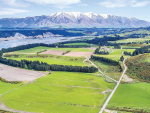
The Real Estate Institute of New Zealand (REINZ) has released its latest rural property report, providing a detailed view of New Zealand’s rural real estate market for the 12 months ending December 2025.
Beef + Lamb New Zealand (B+LNZ) says the Government needs to close loopholes in the guidance around limits on carbon forestry as news of further whole-farm sales emerges.
Buoyed by strong forecasts for milk prices and a renewed demand for dairy assets, the South Island rural real estate market has begun the year with positive momentum, according to Colliers.
Farm sales are on the rise. According to recent data from the Real Estate Institute of New Zealand (REINZ), there was an 18.9% increase in farm sales for the three months ending August 2024 compared to the same period in 2023.


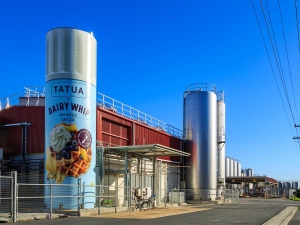
Waikato milk processor Tatua has again declared a record milk payout to farmer shareholders, leaving other processors in the dust.

A Labour-led Government won’t be bringing back the controversial freshwater rules of 2020.
National’s much-touted free trade deal with India featured in the Rural Issues Debate at Mystery Creek, Hamilton on Wednesday night.
New Zealand's 2026-27 freshwater fishing season has opened, with anglers encouraged to head to rivers and lakes over the coming days as conditions look favourable across much of the country.
Central Otago District Council (CODC) has voted against a plan to spread treated sewage sludge from Cromwell and Alexandra on farmland near Lauder, a decision Federated Farmers says reflects strong opposition from rural residents.
Pāmu has released its FY26 Integrated Annual Report, reporting a Net Operating Profit of $113 million, more than double the $49 million recorded in FY25.





OPINION: The same mainstream media muppets that brought you Jacindamania in 2017 have been flat out pimping for the Opportunities…
OPINION: Your old mate reckons the atrocious way farmers in the UK are treated by their lords and masters in…