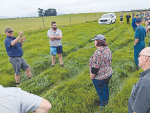
Deer farmer targets poor performers, saves money
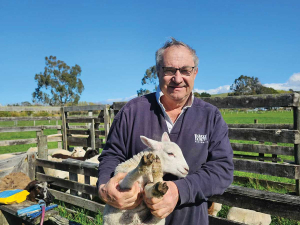
Management practices that aim to cull the poor performers rather than boost the best are a key to success for Canterbury deer farmer Stu Stokes.




 increase font size
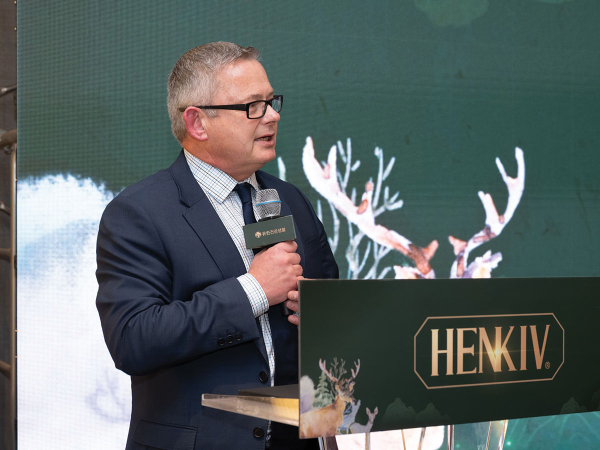 Deer Industry NZ chief executive Rhys Griffiths.
It's our time to shine, says Deer Industry NZ chief executive Rhys Griffiths.
He says this year's conference in Palmerston North, attended by more than 170 delegates, was focused on the future and what the sector needs to do to build its markets.
His comments come after some hard and challenging times for the industry which has seen a drop in velvet prices that prior to 2023 were good.
But Griffiths says in 2024 there was a major issue in the velvet market and it was only the intervention of the Ministry for Primary Industries (MPI) and government that got things back on track.
A lot of velvet goes into China before going back to markets in South Korea and too much was going into the commodity trade, depressing prices.
"As a result of all this, the production of NZ velvet has fallen from a high of 1200 tonnes a year down to 1000 tonnes and that is due to an increase of older velveting stags going through the works," he told Rural News.
Griffiths says that consequently there will be a reduction in the amount of velvet produced in the coming season.
At the same time there is a move by industry to start moving away from the traditional medical use of velvet to functional foods where it is used as an ingredient in new and higher value products.
When Covid struck, it hit the venison hard as much of the product was destined for the food service sector; with people not eating out, that market virtually collapsed.
Griffiths says the answer has been to revive that market and also put more emphasis on the retail market.
He says exporters are doing a good job in this regard.
The US is still the largest market for our venison followed by the EU and then a range of other markets, many in the Asian region.
"The opportunities down the track will see us reconnect with some of those higher paying markets, such as the US and the EU, which are going well, and we also want to look to Asia - in particular China," he says.
"What we learned from Covid is not to rely on a single channel and so have a mix of food service and retail," he says.
Back on farm, Rhys Griffiths says deer farmers, like all others in the primary sector, are faced with farm inflationary pressure with the war in the Middle East causing rising fuel and fertiliser prices.
He says land use pressure is also an issue as other red meat farming systems look to expand, putting pressure on venison.
He says in the past 10 years deer numbers have dropped from a high of 900,000 to the present 706,000.
But now hind numbers are increasing as deer farmers seek to rebuild their herds, and this means that in the short term there many be a slight drop in the supply of venison.
Griffiths says it's important to keep supplying key markets so that NZ can take advantage of the good times ahead.
"We see venison as a healthy food - the best protein - and we are seeing people looking for more red meat. We think of the dense protein that venison has to offer and [it] is ideally placed to meet the needs of the modern consumer,” he says.
“It should also be noted that most deer farms operate as mixed farms with 77% running some cattle and sheep. Those producing velvet on the other hand tend to produce that product alone.”
Griffiths says NZ can be very proud of its deer industry. He says we farm more deer than any other country and we have got lots of options for the future and that he and the industry are excited about that.
Management practices that aim to cull the poor performers rather than boost the best are a key to success for Canterbury deer farmer Stu Stokes.
The deer industry will be appointing a new chair for their industry-good organisation within two weeks following the shock removal of incumbent Mandy Bell.
Beef + Lamb New Zealand (B+LNZ), Federated Farmers, DairyNZ, and Deer Industry New Zealand (DINZ) say while they support the use of farm plans as a tool, they have concerns about the implementation and short timeframes the Government is working to.
New chair of Deer Industry NZ Mandy Bell wants the deer industry to be recognised as a sector that produces really healthy protein and is farmed by people who are passionate about the environment.
Central Otago deer farmer and veterinarian Amanda (Mandy) Bell has been elected chair of the Deer Industry NZ (DINZ) board.


Alliance is calling for final applications for its 2027 Graduate Programme, with applications closing on Sunday 25 October.
Decades piloting planes has ensured vet and farmer David Hayes is focused on safety. So, after a serious accident while welding on farm, he is sharing his experience so others can learn from it.
Canterbury milk processor, Synlait Milk has confirmed Leon Fung as its chief executive officer.
OPINION: Making it easier to collect rainwater and use it to grow crops and livestock is a no brainer.
As part of its Election 2026 coverage, Rural News asked political parties how they would help pull the arable sector out of the doldrums. Here's what they said:
Farmers are being encouraged to rethink how they manage waste on farm with the launch of ruralwastesorted.co.nz, a new website bringing together practical tips, real farmer experiences and resources.


OPINION: The same mainstream media muppets that brought you Jacindamania in 2017 have been flat out pimping for the Opportunities…
OPINION: Your old mate reckons the atrocious way farmers in the UK are treated by their lords and masters in…




