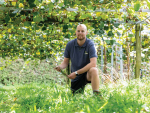
Rabobank Launches HortPathways for Emerging Hort Leaders
Twenty-eight emerging leaders from across the horticulture sector spent two days last month learning valuable skills and connecting with industry experts.




 increase font size

FARMER CONFIDENCE has waned slightly in the past quarter.
Results of Rabobank’s latest survey show 33% expect the agricultural economy to improve in the next 12 months, compared to 35% in the survey three months earlier.
Similarly, those expecting conditions to worsen rose from 10% to 12%.
“Farmers are well aware that they are not immune from the financial instability at play in the Northern hemisphere,” says Rabobank general manager New Zealand, Ben Russell.
Of those expecting the agricultural economy to improve, 54% say rising commodity prices are the reason. That sentiment is strongest among sheep and beef farmers, with 56% pointing to improved prices, but 50% of dairy farmers also now expect better prices, compared to 37% in the previous survey.
The horticulture sector is least confident, with 30% expecting the economic outlook to deteriorate.
Russell says ongoing optimism among sheep and beef farmers reflects recent strong farm-gate returns, including for wool.
Dairy farmers remain cautiously optimistic with 42% (down from 46%) expecting an improvement in their business’ performance and only 10% expecting it to worsen.
“While dairy farmer confidence has weakened slightly, this is likely to be an expectation that record high prices are unlikely to persist into 2012 with the gradual softening of global dairy trade prices over recent months,” says Russell.
But confidence in the horticultural sector continues to be dogged by Psa in kiwifruit, with more farmers expecting a worsening of business performance than not for the third survey running.
Overall, optimism in farm business performance is reflected in investment expectations, with 33%, (up from 30% last quarter) expecting to increase total farm investment and 59% expecting to hold it steady, compared to 63% in the hold steady category in the previous survey.
Of an overall 8% expecting to decrease investment, horticulturalists stand out as the exception, with 39% expecting to reduce investment, compared to 16% in the previous quarter.
The Rabobank Rural Confidence Survey has been conducted since 2000 and is administered by independent research agency TNS, interviewing a panel of approximately 450 farmers each quarter.
Twenty-eight emerging leaders from across the horticulture sector spent two days last month learning valuable skills and connecting with industry experts.

A 'tsunami' of milk from key exporting countries is winding down and this may be good news for New Zealand dairy farmers.
Will the good times last? That's one of the key issues to come out of the latest Federated Farmers confidence survey.
Where any worker in the kiwifruit industry is mistreated, we expect the authorities to take action.
Kiwifruit growers are watchful but remain optimistic as concerns around the potential effects of the El Niño weather pattern this season.


The National Party’s policies to make it easier to grow fresh vegetables, secure reliable water and energy and simplify farm planning are practical changes that will give growers the confidence to invest, according to Horticulture New Zealand (HortNZ).

Fonterra Co-operative Group chief financial officer Andrew Murray has resigned to take up a role outside the dairy giant.
A major move is about to get underway to improve the quality and viability of dairy beef and cattle in NZ.
Veterinarians say changes to the code of welfare for dairy cattle provides a positive foundation for improved cattle welfare across the country.
Today, 15 October, is the International Day of Rural Women, which recognises rural women’s contribution to farming, communities and the environment.
Global dairy giant Lactalis has integrated its Australian operations with the Mainland Dairy consumer business it acquired from Fonterra earlier this year.




OPINION: The same mainstream media muppets that brought you Jacindamania in 2017 have been flat out pimping for the Opportunities…
OPINION: Your old mate reckons the atrocious way farmers in the UK are treated by their lords and masters in…




