
Southern Dairy Hub Rides Out Wet Southland Winter
Managing feed by sticking to a firm plan has helped the Southern Dairy Hub (SDH) demonstration farm survive an extremely wet winter, says the farm's acting general manager Greg Delaney.




 increase font size
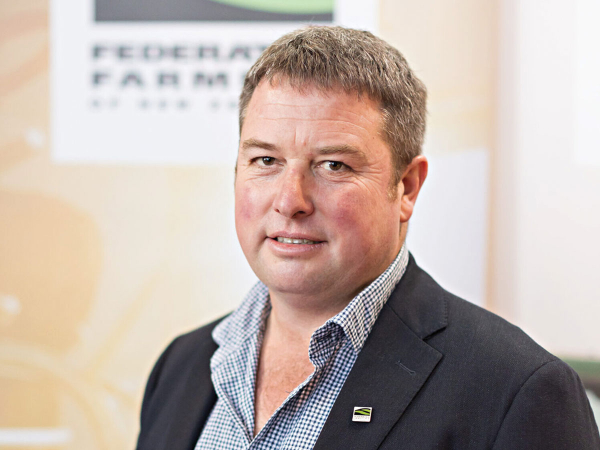 Federated Farmers arable industry group chair, Chris Dillon.
The arable industry needs profitablity, so it doesn't disappear, says newly elected Federated Farmers Arable Industry Group chair, Chris Dillon.
"You can currently see in Canterbury there's arable farms leaving the industry to go to livestock or dairy. And if we can't change what goes on in our industry, we risk losing its critical mass," Dillon told Rural News.
A Southland arable and grazing farmer, Dillon is currently the Southland provincial president, a position he held from 2021 to 2024 and took up again in May when Jason Herrick resigned to stand for New Zealand First at the general election.
Dillon says he will again stand down to concentrate his new role as national Arable Chair.
"It's very important to advocate for the arable farmers of New Zealand. I've been involved in this industry for a long time and it's good to be giving back."
Dillon says his priority is to return the sector to something that's sustainable long-term.
He runs what he describes as a "fairly large scale" arable and grazing operation near Gore, with 600ha of arable crops and about 260ha in grazing.
Dillon says the big challenge for arable farming in Southland, as in the rest of the country, is profitability.
He says there are cost increases in everything arable farmers do, and what they are receiving for the seeds and the grain they grow is not reflecting that.
"And the biggest challenge now is no one saw the fertiliser prices doubling. We knew they were going to go up a bit, but we didn't know they were going to double.
"And in an industry like arable, you cannot simply stop using the stuff. Diesel and fertilisers are just part of what we do."
Tackling profitability could mean moving into different markets and improving efficiency, said Dillon.
With the livestock sectors currently doing well, that may mean arable farmers moving into more livestock, or switching to more profitable crops - which may come at the expense of some of the feeds that go into other sectors.
Dillon points out that the arable sector exports a lot of vegetable seeds, but the grains grown are almost entirely sold locally to the livestock sectors.
"So, we don't contribute heaps to what is exported from the country, but we produce a heap towards what is exported from the other sectors."
The outgoing Feds Arable Chair, Leeston farmer David Birkett, says Canterbury farmers were always thinking about drought, but even with irrigation, no system will keep up during an El Niño-type season.
"There'll be choices to be made between which crops are going to essentially be sacrifice crops and which ones will receive irrigation."
Although many crops were already in the ground, he said farmers should now be considering more water-efficient crops for spring planting, because once you're into the season, it becomes around where is the best place to put water and also how you set the crop up.
Setting up for a high yield when you know a dry summer is coming is asking for problems, said Birkett.
Managing feed by sticking to a firm plan has helped the Southern Dairy Hub (SDH) demonstration farm survive an extremely wet winter, says the farm's acting general manager Greg Delaney.

Flat pricing in the face of significant increases in costs is the greatest problem facing the arable sector, says Foundation for Arable Research (FAR) chief executive Dr Scott Champion.
OPINION: Warning bells are ringing in the arable sector.
Mid Canterbury Federated Farmers arable chair, Bevan Lill, said Beef + Lamb NZ data indicated that for the last six years, the average arable return on investment was about 0.8% while inflation ran about 4% - so the average arable farm was going backwards at about 3% a year.
Four years since it was first detected in New Zealand, researchers and growers now know much more about management of maize pest fall armyworm (FAW).


Federated Farmers has welcomed new rural policies released by ACT, saying they align closely with its own election priorities.

Rural Contractors NZ says proposed changes to land transport rules for agricultural vehicles are a welcome response by the Government to out of date regulations which have seen members hit with huge fines.
Alliance is calling for final applications for its 2027 Graduate Programme, with applications closing on Sunday 25 October.
Decades piloting planes has ensured vet and farmer David Hayes is focused on safety. So, after a serious accident while welding on farm, he is sharing his experience so others can learn from it.
Canterbury milk processor, Synlait Milk has confirmed Leon Fung as its chief executive officer.
OPINION: Making it easier to collect rainwater and use it to grow crops and livestock is a no brainer.


OPINION: The same mainstream media muppets that brought you Jacindamania in 2017 have been flat out pimping for the Opportunities…
OPINION: Your old mate reckons the atrocious way farmers in the UK are treated by their lords and masters in…




