
Arable Sector Costs Are the Biggest Problem, Says FAR
Flat pricing in the face of significant increases in costs is the greatest problem facing the arable sector, says Foundation for Arable Research (FAR) chief executive Dr Scott Champion.




 increase font size
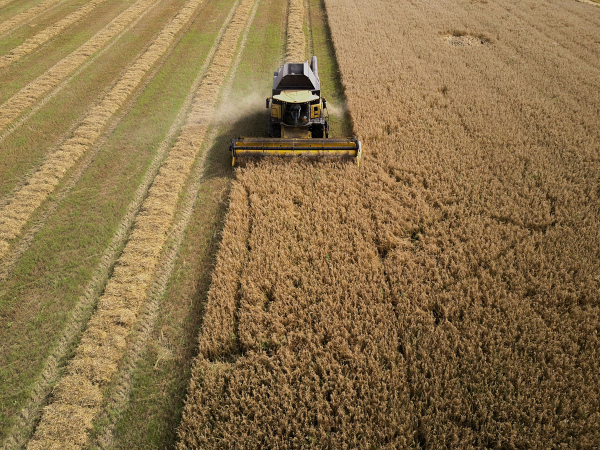
OPINION: Warning bells are ringing in the arable sector.
Arable farmers are looking at exit strategies as grower profitability takes a hammering.
For farmers, the costs of growing arable crops has increased significantly but that hasn’t been reflected in the prices received.
As one farming leader pointed out to Rural News, the worst performing crop was grass seed and the only way for it to be viable was if they finish lambs on it before and after harvest.
Growing a grass seed and receiving $2.80/kg for a product that’s sold retail at $15 cannot be sustainable for any grower.
The arable sector is sometimes known as the invisible industry.
It is a significant part of New Zealand agriculture. While its export profile, at around $350 million, appears modest compared to dairy or meat, that understates its true economic contribution.
Arable production feeds directly into both the human food chain and the livestock sector. When domestic grain is displaced by imports, that value leaves the country rather than circulating within it.
In total, the sector contributes close to $1 billion to GDP, supports more than 11,000 jobs, and drives over $2 billion in direct and indirect economic activity.
However, arable growers have been under the pump.
Feed grains continue to operate under a pricing ceiling set not just by domestic demand but by imported alternatives, with PKE or imported grains anchoring the economics of locally grown feed wheat and barley.
At the same time, fertiliser, labour, energy, compliance, and finance costs are on the rise.
Beef+Lamb NZ data indicated that for the last six years, the average arable return on investment was about 0.8% while inflation ran about 4%. So the average arable farm was going backwards at about 3% a year.
That’s not sustainable in anyone’s imagination.
Let’s hope that the sector – seed companies and arable growers – can stitch together a plan to bring the sector back to profitability. This will be the best outcome for everyone.
Flat pricing in the face of significant increases in costs is the greatest problem facing the arable sector, says Foundation for Arable Research (FAR) chief executive Dr Scott Champion.
Mid Canterbury Federated Farmers arable chair, Bevan Lill, said Beef + Lamb NZ data indicated that for the last six years, the average arable return on investment was about 0.8% while inflation ran about 4% - so the average arable farm was going backwards at about 3% a year.
Four years since it was first detected in New Zealand, researchers and growers now know much more about management of maize pest fall armyworm (FAW).
Growers and farmers are being encouraged to have an important conversation before the coming season starts: how to prolong the effectiveness of the crop protection tools they rely on.
The arable industry needs profitablity, so it doesn't disappear, says newly elected Federated Farmers Arable Industry Group chair, Chris Dillon.



Federated Farmers has welcomed new rural policies released by ACT, saying they align closely with its own election priorities.

Rural Contractors NZ says proposed changes to land transport rules for agricultural vehicles are a welcome response by the Government to out of date regulations which have seen members hit with huge fines.
Alliance is calling for final applications for its 2027 Graduate Programme, with applications closing on Sunday 25 October.
Decades piloting planes has ensured vet and farmer David Hayes is focused on safety. So, after a serious accident while welding on farm, he is sharing his experience so others can learn from it.
Canterbury milk processor, Synlait Milk has confirmed Leon Fung as its chief executive officer.
OPINION: Making it easier to collect rainwater and use it to grow crops and livestock is a no brainer.

OPINION: The same mainstream media muppets that brought you Jacindamania in 2017 have been flat out pimping for the Opportunities…
OPINION: Your old mate reckons the atrocious way farmers in the UK are treated by their lords and masters in…




