
Arable advocacy?
OPINION: Spare a thought for the arable farmer, squeezed on one side by soft global prices and on the other by limits on further yield increases.




 increase font size
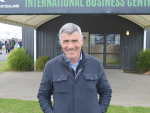
 NZ’s new special agriculture trade envoy Hamish Marr.
It's all about relationships.
That's how NZ's latest special agricultural trade envoy Hamish Marr describes his new role - following in the footsteps of Mel Poulton, and before her, Mike Peterson.
Marr is the fifth generation to work on the family farm at Methven. With his brother and father, they grow a multiplicity of seed crops and also have dairy, heifer and sheep grazing operations on the 500 hectare property.
After completing a bachelor of agricultural commerce at Lincoln University in 2000, he spent five years as a field officer for Ravensdown before doing his OE, which took him to the UK and the USA. In 2006, he returned to the family farm and now lives there with his wife Melanie and three daughters.
In 2019, Marr was awarded a Nuffield scholarship and the subject of his research was glyphosate use, how it is regulated in NZ and what farmers here could learn from others if a ban or de-registration were to occur. He says while glyphosate use is important for arable farmers, it is very important right across the whole primary sector.
"We have got Roundup - like it or not - and it's integral to all the farming in NZ," he says.
Marr has just taken up his new role and admits it's too early for him to make any pronouncements on what he may do, beyond saying his role is to promote and protect the NZ brand, which he says is second to none in the world.
"For me, the job is 100% about relationships and getting to know my counterparts around the world," Marr told Rural News.
"To me, relationships are about viewing things through the eyes of the people you are talking with and somewhere amongst it all i the middle ground.
"That's my challenge, but I will get there," he says.
OPINION: Spare a thought for the arable farmer, squeezed on one side by soft global prices and on the other by limits on further yield increases.

Profitability issues facing arable farmers are the same across the world, says New Zealand's special agricultural trade envoy Hamish Marr.
New Zealand’s special agricultural trade envoy Hamish Marr believes the outlook for the dairy sector remains strong.
The chair of New Zealand's biggest grower, packer and exporter of apples says it's been a bumper season.
While New Zealand dominates some areas of international agricultural trade, we're still only a small player, warns New Zealand's special agricultural trade envoy Hamish Marr.

Federated Farmers has welcomed new rural policies released by ACT, saying they align closely with its own election priorities.
Rural Contractors NZ says proposed changes to land transport rules for agricultural vehicles are a welcome response by the Government to out of date regulations which have seen members hit with huge fines.
Alliance is calling for final applications for its 2027 Graduate Programme, with applications closing on Sunday 25 October.
Decades piloting planes has ensured vet and farmer David Hayes is focused on safety. So, after a serious accident while welding on farm, he is sharing his experience so others can learn from it.
Canterbury milk processor, Synlait Milk has confirmed Leon Fung as its chief executive officer.
OPINION: Making it easier to collect rainwater and use it to grow crops and livestock is a no brainer.

OPINION: The same mainstream media muppets that brought you Jacindamania in 2017 have been flat out pimping for the Opportunities…
OPINION: Your old mate reckons the atrocious way farmers in the UK are treated by their lords and masters in…




