McRae Wins Southern South Island B+LNZ Director Vote
Matt McRae, a farmer from Mokoreta in Southland who runs a sheep, beef and dairy support business alongside a sheep stud, has been elected to the Beef +Lamb NZ Board as a farmer director.




 increase font size
 Britain crashing out of the EU will be detrimental to NZ meat exporters.
The meat industry is preparing for Britain to crash out of the EU on March 29.
Beef + Lamb NZ’s general manager policy and advocacy, Dave Harrison, told Rural News that while BLNZ hopes this won’t happen it is making preparations.
He says the UK political situation over Brexit remains in limbo as politicians struggle to agree among themselves as the clock ticks down to the ‘leave’ date.
“We are actively planning for the worst-case scenario,” said Harrison. “We are hoping that this will be a lost investment, but we are investing in the software and the computer programming we need to have to run a split quota system if need be.
“We are talking to exporters about what it means for allocation systems so there is actually a heap of work going on to make sure that on March 29 – if the worst happens – we are as prepared as we can be.”
Harrison sees a real possibility that Britain will crash out and that will be detrimental to NZ meat exporters.
An issue of concern is the arbitrary splitting of the sheep and beef quotas when Britain leaves the EU. Britain and the EU have agreed that there should be a 50/50 split of the sheepmeat quota and a 65/35 split for beef.
“Our argument is that splitting the quota doesn’t represent the full value of the quota,” Harrison explains.
“Because being able to send a certain amount of product to one country and then a certain amount to another 27 countries isn’t the same as being able to send it anywhere in 28 countries, which is the case at present.”
He says the issue may need to be sorted out through the World Trade Organisation (WTO) under whose rules the original quota was set.
Another issue relates to the onward shipping of product once it reaches Europe. Often cargo destined for the UK will initially arrive in, say, the port of Rotterdam and then be trans-shipped to its main destination, which is Britain. But he says it’s hard to understand what might happen under Brexit.
Harrison and a colleague are heading to Europe in the next week or so to talk to customs officials and try to clarify the situation.
He is hoping to get changes to the certification system, which would make things easier.
Matt McRae, a farmer from Mokoreta in Southland who runs a sheep, beef and dairy support business alongside a sheep stud, has been elected to the Beef +Lamb NZ Board as a farmer director.
Recent widespread autumn rain will have triggered the germination of subterranean clover seeds, and the resulting seedlings should be allowed to reach the 3–4 trifoliate leaf stage before grazing, says Beef+Lamb NZ.
A hub farm in each of Beef + Lamb NZ’s seven regions and more focus groups are being rolled out for the red meat sector this year.
The red meat sector is poised for a strong rebound this season, with export receipts forecast to top $10 billion and farm profitability to almost double.
Progeny testing at Pāmu’s Kepler farm in Southland as part of Beef + Lamb New Zealand’s Informing New Zealand Beef programme is showing that the benefits of hybrid vigour could have a massive impact on the future of beef breeding.


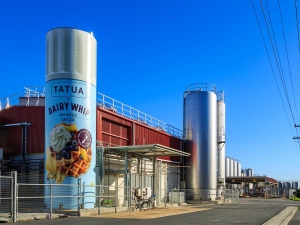
Waikato milk processor Tatua has again declared a record milk payout to farmer shareholders, leaving other processors in the dust.
A Labour-led Government won’t be bringing back the controversial freshwater rules of 2020.
National’s much-touted free trade deal with India featured in the Rural Issues Debate at Mystery Creek, Hamilton on Wednesday night.
New Zealand's 2026-27 freshwater fishing season has opened, with anglers encouraged to head to rivers and lakes over the coming days as conditions look favourable across much of the country.
Central Otago District Council (CODC) has voted against a plan to spread treated sewage sludge from Cromwell and Alexandra on farmland near Lauder, a decision Federated Farmers says reflects strong opposition from rural residents.
Pāmu has released its FY26 Integrated Annual Report, reporting a Net Operating Profit of $113 million, more than double the $49 million recorded in FY25.





OPINION: The same mainstream media muppets that brought you Jacindamania in 2017 have been flat out pimping for the Opportunities…
OPINION: Your old mate reckons the atrocious way farmers in the UK are treated by their lords and masters in…