Business boost for Blue Sky Meats
Blue Sky Meats’ annual report reveals a lift in business performance and better financial position, but the Southland meat processor says it won’t be resting on its laurels.




 increase font size
 Blue Sky Meats is looking ahead to greener pastures after delivering $1.5 million of added value in the first three months of its three-year strategic plan.
Blue Sky Meats (BSM) says it is looking ahead to greener pastures after delivering $1.5 million of added value in the first three months implementation of its three-year strategic plan.
The value was added during the January to March period in the areas of significantly improved yields, an increase of over double on the volume of chilled lamb exports, and cost savings across the business.
The company says this helped to partially offset a 2017 fiscal year loss of $1.9 million on sales of $98 million.
BSM chief executive Todd Grave, says despite the loss in 2017, the results for the first three months of the 2018 year were up significantly on budget and previous years which displayed a positive trend for the upcoming season.“Including the use of the new, fully operational effluent storage pond, we are already seeing the effects from the first quarter of the bottom-up strategic plan.
“The Plan forms the platform for a return to profit and outlines 20 projects which will bring a targeted $7.8 million of added value over the three-year period. The results in the first quarter were double what we’d anticipated.
“In addition, last year the base business, our Morton Mains plant, generated a small profit and we maintained strong selling prices,” says Grave.
He acknowledged there was a bit of a ‘financial hangover’ they were dealing with from the 2017 year but the business was very future-focused. Contributors to the loss included one-off, unbudgeted costs such as weather-related delays in the operation of its new effluent pond resulting in lost income, and non-recoverable costs incurred from the NZ Binxi takeover attempt, as well as poor performance from the Gore Beef Plant due to difficult market conditions.
“Since its acquisition in 2014 the Beef Plant has struggled due to high schedule prices and weak overseas market dynamics. The tough decision was made to temporarily close the plant until a long-term feasible solution is identified as part of the Plan,” says Grave.
BSM is currently celebrating 30 years in business and employs 350 staff, of which many will celebrate their 25 year-long service at the upcoming AGM on August 21.
Blue Sky Meats’ annual report reveals a lift in business performance and better financial position, but the Southland meat processor says it won’t be resting on its laurels.

NZ Binxi Foods, a subsidiary of China’s Heilongjiang Binxi Cattle Industry Co, has backed out of a $25.4 million takeover of Invercargill meat processor Blue Sky Meats.
Chinese moves on the New Zealand meat industry are again noteworthy, with NZ Binxi (Oamaru) Foods making a $25.3 million bid for a 100% takeover of Blue Sky Meats, Invercargill.
Lowering farmer costs and reducing duplication are key aspects of a new farm audit system being introduced this month.
Local meat processor Blue Sky Meats (BSM) has reported a $2 million loss, blaming it on bad timing.

Farmer-owned fertiliser company, Ballance Agri Nutrients is welcoming National’s plan to negotiate security agreements with key supplier countries to protect New Zealand-bound products from export restrictions and greater supply chain certainty.

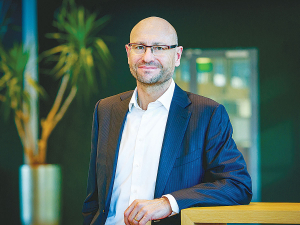
Carrfields has announced the appointment of Stu Hall to the newly created role of chief operating officer, Carrfields Ltd, reflecting the continued growth of their agribusinesses and the need to ensure the company has the leadership capacity and support in place as it pursues the emerging opportunities ahead.
New Zealand's role is not to compete with Indian growers, according to NZ Apples and Pears.
The potato industry is celebrating the success of two rising stars - James Blair, the 2026 Young Grower of the Year and runner-up and innovation award winner, Amber Davy.
Twenty-eight emerging leaders from across the horticulture sector spent two days last month learning valuable skills and connecting with industry experts.
There are five entrants in this year’s Young Horticulturist of the Year, competing in a series of technical, practical, business and leadership challenges.




OPINION: The same mainstream media muppets that brought you Jacindamania in 2017 have been flat out pimping for the Opportunities…
OPINION: Your old mate reckons the atrocious way farmers in the UK are treated by their lords and masters in…