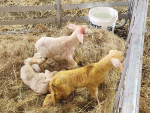
Beef + Lamb NZ's Lambing Kit Checklist for a Tough Season
With lambing underway in many regions, Beef + Lamb New Zealand is encouraging farmers to put together a wellequipped lambing kit to help minimise lamb losses, particularly in bad weather.




 increase font size
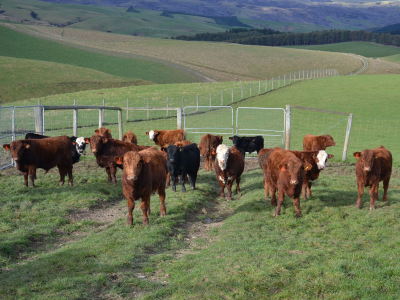
Beef up, sheep down, is the simple message from Beef + Lamb NZ’s latest data on the state of the national sheep flock and beef herd.
The report shows that in the last year beef cattle numbers are up by 2.6% (or 97,000 head) nationwide. Of this total 3.8 million, just over one million are breeding cows or heifers.
The biggest increase in beef numbers was in the South Island – up 4.6% while the North Island was up 1.8%. Most of the increase in beef numbers in the South Island was in Otago and Southland, while the East Coast and Taranaki/Manawatu were the main contributors to the rise in cattle numbers in the North Island.
Despite beef cattle numbers being up, surprisingly the number of breeding cows declined in the last year by 1.4%. But against the national trend there was an increase in Otago. BLNZ predicts calving percentages for the current season will be in line with those of 2018.
In sheep, a minuscule increase of 0.4% in the national flock is due to greater hogget numbers which rose 3.4% to 9.55m. Set against that was a drop of 1.1% in the number of breeding ewes (16.97m) held on farms.
BLNZ says it has been a great season for lambs: the tally is down 570,000 or 2.4% on last season.
The North Island lamb crop is expected to drop by 1.8% and the South Island crop by 3%.
With lambing underway in many regions, Beef + Lamb New Zealand is encouraging farmers to put together a wellequipped lambing kit to help minimise lamb losses, particularly in bad weather.

Chinese beef trade quotas and a looming suspension of Brazilian beef imports into the European Union are expected to reshape global beef trade flows over the remainder of 2026, with implications for New Zealand exporters, according to Rabobank's Q3 Global Beef Quarterly report.
Will a stronger, more coordinated voice help rebuild confidence and improve returns in the wool sector?
Bovine Viral Diarrhoea (BVD) is sometimes viewed as a dairy industry issue, but the reality is that the disease can have serious consequences for beef breeding herds as well.
It’s official, lamb will take centre stage on Kiwi Christmas tables this year.

Federated Farmers has welcomed new rural policies released by ACT, saying they align closely with its own election priorities.

Rural Contractors NZ says proposed changes to land transport rules for agricultural vehicles are a welcome response by the Government to out of date regulations which have seen members hit with huge fines.
Alliance is calling for final applications for its 2027 Graduate Programme, with applications closing on Sunday 25 October.
Decades piloting planes has ensured vet and farmer David Hayes is focused on safety. So, after a serious accident while welding on farm, he is sharing his experience so others can learn from it.
Canterbury milk processor, Synlait Milk has confirmed Leon Fung as its chief executive officer.
OPINION: Making it easier to collect rainwater and use it to grow crops and livestock is a no brainer.

OPINION: The same mainstream media muppets that brought you Jacindamania in 2017 have been flat out pimping for the Opportunities…
OPINION: Your old mate reckons the atrocious way farmers in the UK are treated by their lords and masters in…




