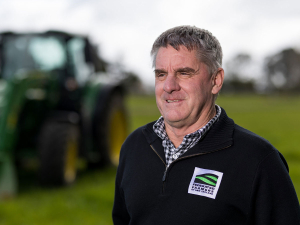
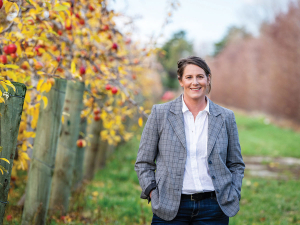
Southland farmers Grant and Bernie Weller love talking about their farm and the challenges of balancing profitability with environmental sustainability.
So the opportunity to share their passion with an international audience was the 'icing on the cake' for the national winners of the 2011 Ballance Farm Environment Awards.
The Wellers recently returned from an industry-backed trip to Europe where they visited a number of key markets for New Zealand sheep, beef and dairy products to showcase New Zealand's stance on agricultural sustainability.
"We'd always planned to visit Europe because Bernie has friends and relatives there," says Grant, "but originally it wasn't going to happen for another eight or nine years".
Then the Wellers, who farm an 890ha (850ha effective) sheep and beef farm in the Waimea Valley, won the Supreme title in the 2011 Southland Ballance Farm Environment Awards. This led to the annual Sustainability Showcase where they were thrilled to be announced national winners of the 2011 awards, becoming the inaugural holders of the Gordon Stephenson trophy.
"We didn't enter the Ballance Farm Environment Awards for the prizes," says Bernie.
"We did it because we wanted to show that when you are working with the land, environmental sustainability and profitability go hand in hand."
Winning the national title has enabled the Wellers to share their passion with a far wider audience than they would ever have imagined.
"We've met some fascinating people and the whole experience has been fantastic," says Grant.
He says the Europe trip capped off an incredible year.
The aim of the March trip was to learn more about offshore markets and to exchange views on topics of crucial interest to New Zealand.
While there is no doubting New Zealand farmers face some major challenges in future, particularly when it comes to environmental issues, Grant says he came back feeling that New Zealand farmers are doing really good things.
"And that must continue, otherwise we will face increasing regulations that we have little say in."
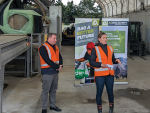
During the trip the Wellers visited industry and government agency contacts in London, Brussels, France and the Netherlands. They also met with representatives from environmental groups and media organisations.
At a Sainsbury Lamb Producers Group meeting in London they explained their farming system and use of sustainable farming practices to inquisitive farmers and vets.
Bernie says Europeans generally had a good impression of New Zealand's natural pasture-based agriculture.
"Some farmers found it hard to believe that we farmed without subsidies."
While NZ's clean and green image had taken a hit or two in recent years, Grant says most people "respect that we are trying to farm as sustainably as possible".
The Wellers saw examples of sustainable farming in the UK where farmers are encouraged to use practices such as set-asides (retiring land) to enhance biodiversity. Much of this work is subsidised by well–funded environmental groups.
Grant says one of the highlights of the trip was eating lamb from their own farm at a processing plant in England.
The chilled lamb had been dispatched from New Zealand eight weeks earlier, held for their arrival and cooked at the plant.
Grant says the maturation period made the lamb "even better" than lamb eaten in New Zealand.
"It was some of the best lamb I've ever had, and it made us realise why New Zealand lamb is so popular in the United Kingdom and Europe. Even one of our taxi drivers said his mum bought only NZ lamb."
After the 11-day industry trip was over, the Wellers enjoyed a week in Scotland and England with friends and relatives.
Bernie says Beef + Lamb New Zealand's Europe manager, Dave Harrison, did a great job of organising the tour schedule.
She and Grant are also grateful to the New Zealand Farm Environment Trust, the Ministry of Foreign Affairs and Trade (MFAT), Fonterra and Beef + Lamb New Zealand for making the trip possible.
New Zealand Farm Environment Trust chairman Jim Cotman says the Wellers are great ambassadors.
"They did a wonderful job of representing grassroots farming and showing the world how Kiwi farmers view long term sustainability".