Rural Lobby Groups Seek Clear Election Positions On Farming And Emissions
Centre right parties are backing policy positions pushed by three farmer lobby groups ahead of the general election.




 increase font size
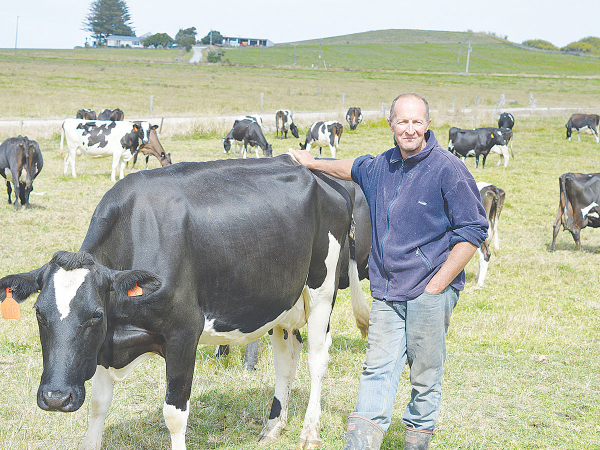 ACT's primary industries spokesperson Mark Cameron.
The ACT Party is backing a call from Groundswell NZ for alternatives to an emissions trading scheme, says its primary industries spokesperson Mark Cameron.
“Introducing a new tax on farmers while there are few options for reducing emissions will mean farmers have to cut herd sizes and will force emissions overseas,” Cameron says.
“ACT doesn’t accept that farmers should be forced into an emissions trading scheme while there are no credible emissions measurement or reduction technologies available.”
He says the Government should focus on working with the primary sector on more accurate measurement and management frameworks for methane emissions and ensuring there are no barriers to the uptake of new emissions reduction technologies.
“Forcing farmers into an emissions trading scheme will push up the price of mince, milk and cheese at a time when inflation is going from a canter to a gallop but wages are rising more slowly.”
Cameron claims an emissions trading scheme will increase global emissions because people won’t stop eating and the same food will be produced less efficiently offshore.
“New Zealand has the most efficient farming practices in the world. If we stop producing food here, it will go offshore where the practices aren’t as efficient.
“By taxing farmers without credible alternatives for reducing emissions, the Government will be forcing farmers to reduce herd sizes and productivity.”
“ACT urges the Government to listen to Groundswell and consider the alternatives before introducing more damaging climate policies,” Cameron says.
Centre right parties are backing policy positions pushed by three farmer lobby groups ahead of the general election.

The Climate Change Commission has recommended maintaining the current New Zealand Emissions Trading System (NZ ETS) settings but warns of a potential unit shortfall as early as 2028.
OPINION: I recently wrote an open letter to the Prime Minister because at a recent Federated Farmers meeting, Chris Luxon told me wind and solar generation is not subsidised.
Additional reductions to costs for forest owners in the Emissions Trading Scheme Registry (ETS) have been announced by the Government.
Farmers are welcoming the Government’s revised science-based biogenic methane targets for 2050.



Amelia Marsden has secured the 2026 Nelson Young Grower title for the second year running, earning another opportunity to represent the region at the national Young Grower of the Year competition later this year.
Federated Farmers is urging the Government to put a halt to Waikato Regional Council's controversial Plan Change 1 (PC1), warning the regulations will impose significant costs, complexity and duplication on thousands of farmers while major national reforms remain unresolved.
Joshua Irving has been named the 2026 Ormond Nurseries North Canterbury Young Viticulturist of the Year.
Vets say they support the responsible use of virtual fencing and virtual herding technology for cattle and wants to work with farmers, manufacturers and government to help shape standards for future use backed by ongoing research to strengthen animal welfare outcomes.
National and world records tumbled as top Kiwi axeman claimed two Stihl Timbersports world titles at the same event in Budapest, Hungary over the first weekend in June.
A safety push across New Zealand has revealed significant gaps in hazardous substances management, farm vehicles, tractors, quad bikes and side-by-sides.




OPINION: Central Hawke's Bay farmer Mark Warren recently told the Hawke's Bay Times it's time for a conversation about allowing…
OPINION: A nation that relies as heavily as NZ does on functional global shipping lanes will have to do its…