Evaluating Tech Providers Beyond The Product
As the dust settles after Fieldays, we're once again reminded of the sheer volume of technology now available to New Zealand dairy farmers.




 increase font size
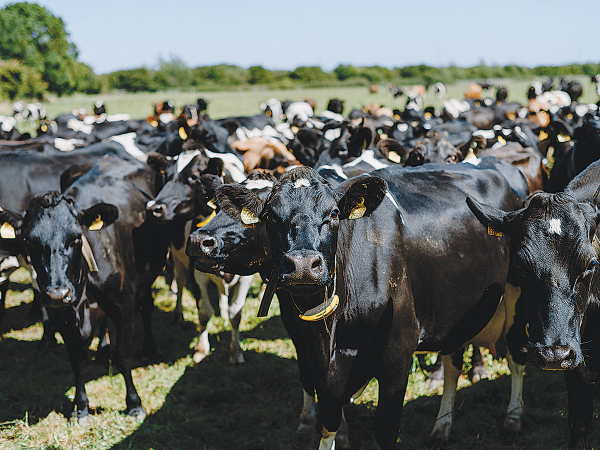 Nedap currently offers its Cow Collar and cloud software technology in NZ through its business partners.
Livestock management technology provider Nedap is on a mission – to put the power of precision farming on the side of New Zealand dairy farmers.
Monitoring six million cows globally, Nedap, headquartered in Groenlo, Netherlands, announced the launch of Nedap New Zealand on January 1 this year.
Nedap currently offers its Cow Collar and cloud software technology in NZ through its business partners - GEA, Waikato Milking Systems, Lely and Censortec - and is looking to introduce Nedap ‘SmartSort’ and Nedap ‘SmartFlow over time.
Nedap general manager Oceania Mike Wilson says the company strives to improve farmers bottom line with Nedap solutions that maximise dairy herd performance and save time, labour and costs.
Wilson told Rural News the Nedap Cow Collar paired with Nedap Now software offers upto- date insights into cow health, fertility, and activity, helping farmers maximise their herd’s potential.
“With 24/7 monitoring, you can reduce labour, make informed decisions, and boost both productivity and animal well-being—all while keeping your farm running smoothly,” says Wilson.
He points out that currently about 18% of New Zealand farmers utilise wearable technology.
However, Nedap expects the adoption rate to rise significantly in the coming years.
“Globally adoption is much higher and Nedap views cow monitoring as a natural step into further on farm automation,” he says.
“Nedap’s business partners are at the cutting edge of robotic milking systems, the Nedap Collar is used to provide insights and identification for these systems globally.”
Nedap Cow Collar automatically tracks signs of heat, such as increased activity, chin resting and mounting behaviour. The system shows a clear list of all cows in heat with their optimal insemination moment for effective insemination with the highest chance of conception. It also provides additional reproduction insights, helping farmers find cows with irregular heats, non-cycling cows and non-pregnant cows.
It’s also suited for health monitoring – to keep cows healthy, fertile and productive.
“Nedap Health Monitoring is an essential tool to keep track of your cow’s health, picking up changes before you see them,” says Wilson.
“The system compares all behaviour with standards for optimum condition, the previous behaviour of the cow and the behaviour of the group she is in and detects changes or abnormalities.
“It provides early and reliable health alerts for cows that need urgent attention and shows a list of cows that need to be checked today, allowing you to treat health issues before they become problems.
“It also enables you to intensively monitor transition cows and posttreatment recovery.”
Wilson says another benefit of the Nedap Now software is that it evaluates group and herd behaviour.
“It shows you how external factors and management decisions may have influenced the herd’s performance.”
Wilson says Nedap will be at the South Island Field Days at Kirwee this month to support dairy farmers.
“New Zealand is a global leader in dairy production. Its dairy industry is a cornerstone of the nation’s economy, contributing over $26 billion in export revenue annually and employing nearly 55,000 people who support many rural towns and communities.
“The adoption of advanced technology is crucial for maintaining this leadership position. Nedap New Zealand and its partners are poised to be pivotal in supporting this industry transformation,” says Wilson.
As the dust settles after Fieldays, we're once again reminded of the sheer volume of technology now available to New Zealand dairy farmers.
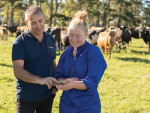
Technology adoption on New Zealand dairy farms has accelerated rapidly over the past decade.
For Taranaki sharemilkers Elly and Kale Grahame, technology hasn't beeen about overcomplicating their system.
For Ashburton farmer Craig Hickman, technology hasn’t replaced the way he farms, it’s strengthened how he operates day to day.
With collars on more than seven million cows worldwide, Nedap says its standalone launch into New Zealand represents world-leading, reliable and proven smart technology solutions for dairy farmers.


Federated Farmers has welcomed new rural policies released by ACT, saying they align closely with its own election priorities.
Rural Contractors NZ says proposed changes to land transport rules for agricultural vehicles are a welcome response by the Government to out of date regulations which have seen members hit with huge fines.
Alliance is calling for final applications for its 2027 Graduate Programme, with applications closing on Sunday 25 October.
Decades piloting planes has ensured vet and farmer David Hayes is focused on safety. So, after a serious accident while welding on farm, he is sharing his experience so others can learn from it.
Canterbury milk processor, Synlait Milk has confirmed Leon Fung as its chief executive officer.
OPINION: Making it easier to collect rainwater and use it to grow crops and livestock is a no brainer.





OPINION: The same mainstream media muppets that brought you Jacindamania in 2017 have been flat out pimping for the Opportunities…
OPINION: Your old mate reckons the atrocious way farmers in the UK are treated by their lords and masters in…




