Pāmu Silver Stabilizer Dairy Beef Genetics Open to Farmers
A major move is about to get underway to improve the quality and viability of dairy beef and cattle in NZ.




 increase font size
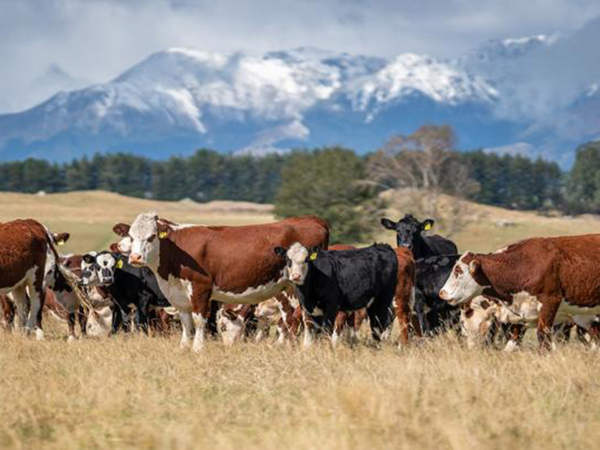 The across-breed Progeny Test builds on data gathered from the original Beef Progeny Test (2014-2020).
At Pāmu’s Kepler Farm in Manapouri, mating has wrapped up at the across-breed Beef Progeny Test.
Now entering its sixth year, the progeny test is a cornerstone of the Informing New Zealand Beef (INZB) programme.
On the farm, Hereford and Angus cows are run side-by-side with crosses undertaken both ways.
This replicates the crossbreeding systems commonly used by commercial beef breeders across New Zealand. Data is collected from conception through to processing including carcase data from calves and reproductive data from heifers born into the programme.
The test retains purebred and first-cross heifer progeny (where commercially viable), evaluating them under natural service for at least their first two matings. Last year's mating at Kepler achieved a record 70% conception rate via artificial insemination.
Beef + Lamb New Zealand's (B+LNZ) head of genetics, Jason Archer says the Beef Progeny Test plays a critical role in creating a stronger future for New Zealand beef farmers and the industry.
"It allows us to evaluate good bulls on the same level playing field while demonstrating the differences and similarities between the breeds, as well as the benefits of hybrid vigour - and the opportunities this presents for ongoing genetic improvement," Archer says.
Breeders of bulls selected for use in the Beef Progeny Test receive detailed information about the performance of their bull's progeny, including processing data.
The across-breed Progeny Test builds on data gathered from the original Beef Progeny Test (2014-2020), which compared bulls across several large-scale commercial beef operations nationwide.
B+LNZ continues to analyse the dataset collected over the course of the original Beef Progeny Test and the current across-breed Beef Progeny Test to provide valuable insights for stud breeders and commercial farmers.
A series of short articles by scientist and ‘data wrangler’ Dr Nicola Dennis brings to life some of these findings.
Topics covered include mature live weight and growth, the genetics of body condition scores, increasing beef marbling without excess external fat, carcase rib fat depth, and how ultrasound scanning can predict marbling in beef.
A major move is about to get underway to improve the quality and viability of dairy beef and cattle in NZ.
High country stations, mixed sheep and beef farms, Māori-owned farms, corporates and family operations are among the nine commercial farms taking part in the Livestock Innovation Farming Transformation programme, known as LIFT.
Pāmu has welcomed Taranaki student Paige Burston as its newest First Foundation Scholar, supporting her journey towards a career in agriculture and animal science.
State farmer Pāmu is bracing for a $30 million hit from soaring farm input costs this financial year.
Pāmu has released its FY26 Integrated Annual Report, reporting a Net Operating Profit of $113 million, more than double the $49 million recorded in FY25.


Dairy processors are ready to further boost New Zealand’s export earnings but want the incoming government to match their ambition with good policy.

Massey University is best placed to solve the “problems” facing the dairy industry, says vice chancellor, Pierre Venter.
Synlait's longest serving employee – a man who joined the Canterbury-based milk processor even before it began processing milk – is now its newest executive.
A dairy industry leader believes eradicating the common and costly disease, Bovine Viral Diarrhoea (BVD) is within reach.
A farmgate milk price of $10/kgMS this season is firming up as milk powder prices soar and the New Zealand dollar weakens.
Federated Farmers has welcomed new rural policies released by ACT, saying they align closely with its own election priorities.

OPINION: The same mainstream media muppets that brought you Jacindamania in 2017 have been flat out pimping for the Opportunities…
OPINION: Your old mate reckons the atrocious way farmers in the UK are treated by their lords and masters in…




