
Where Is The Honesty Among Our Representatives?
OPINION: A founding principle of Groundswell NZ is that farmers, and people generally, should be provided with full and accurate information about regulations that directly affect them.




 increase font size
 Groundswell has added fuel to the fire, claiming He Waka Eke Noa is toast.
OPINION: Whether Groundswell is right or wrong that He Waka Eke Noa is toast, there's certainly growing angst among farmers about HWEN.
Leaders of levy-paying bodies maintain that HWEN - the Primary Sector Climate Action Partnership - is still on track.
They are telling farmers that there's no truth to claims that an alternative option to HWEN's pricing scheme has been in the works for months.
The HWEN preferred option presented to Government would see farmers pay individually by farm, in a scheme that sits outside the Emissions Trading Scheme (ETS).
The Climate Change Commission has told Government that a pricing system for agriculture must be in place by 2025 and that the country cannot afford a delay.
Farmers prefer a farm-level pricing system - one which gives them control to manage their own farm business and individual emissions profile.
However they remain uncertain about what pathway should be taken to reach a farm-level pricing system: HWEN submissions show of those that expressed a preference, 48.7% prefer moving immediately to farm-level pricing in 2025, while 34.2% support a gradual transition to farm-level from a processor-level system.
The HWEN proposal submitted to government apparently continues to have the unanimous support of all 11 primary sector partners.
But a growing number of farmers are now worried that those tasked with finding a path forward have so far faltered and resigned themselves to conflicted compromises, while departing from their stated aims of enabling sustainable food and fibre production for future generations.
All eyes are now on Cabinet, which will decide whether to accept HWEN's proposal or force agricultur into the ETS.
A lot depends on how much sway the Greens will hold around the Cabinet table.
The Government has to make some decisions. Ministers could make wholesale changes and still call it HWEN.
They will also make a call on whether on-farm sequestration will be counted and whether there will be a fertiliser tax.
Wholesale changes to HWEN's preferred option won't go down well with farmers.
Farmers are already agitating and rumblings are growing louder.
Groundswell has added fuel to the fire by claiming HWEN is toast. If that turns out to be the case, farmers will feel hoodwinked by their leaders. Let's hope common sense prevails and the Government lets the farm-level pricing proposal sail through without any major changes.
OPINION: A founding principle of Groundswell NZ is that farmers, and people generally, should be provided with full and accurate information about regulations that directly affect them.

OPINION: Groundswell's opinion of the incumbent farm industry representatives isn't high.
The Climate Change Commission has recommended maintaining the current New Zealand Emissions Trading System (NZ ETS) settings but warns of a potential unit shortfall as early as 2028.
OPINION: Bouquets this week from the old mutt for Fed Farmers and Groundswell for continuing to resist the proposed Gore District plan and its intention to apply costly "cultural values" across the district and a raft of land classifications that are unworkable and counterproductive.
Three farmer lobby groups are applying the blowtorch to political parties on key issues facing the primary sector ahead of the general elections.


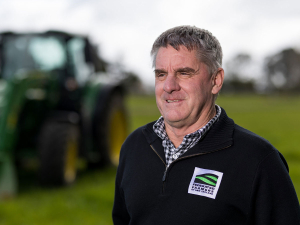
National’s pledge to introduce 19 new national standards shows the party is serious about getting Wellington out of farming, Federated Farmers says.
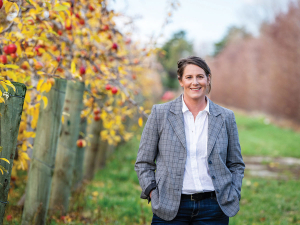
The National Party’s policies to make it easier to grow fresh vegetables, secure reliable water and energy and simplify farm planning are practical changes that will give growers the confidence to invest, according to Horticulture New Zealand (HortNZ).
Fonterra Co-operative Group chief financial officer Andrew Murray has resigned to take up a role outside the dairy giant.
A major move is about to get underway to improve the quality and viability of dairy beef and cattle in NZ.
Veterinarians say changes to the code of welfare for dairy cattle provides a positive foundation for improved cattle welfare across the country.
Today, 15 October, is the International Day of Rural Women, which recognises rural women’s contribution to farming, communities and the environment.




OPINION: It seems Canterbury processor Synlait is still in the doldrums.
OPINION: Get offside with New Zealand First leader Winston Peters at your own peril.




