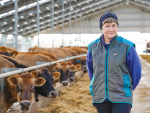
A former dairy farmer with a passion for breeding good cows has switched gears after farming in her own right.
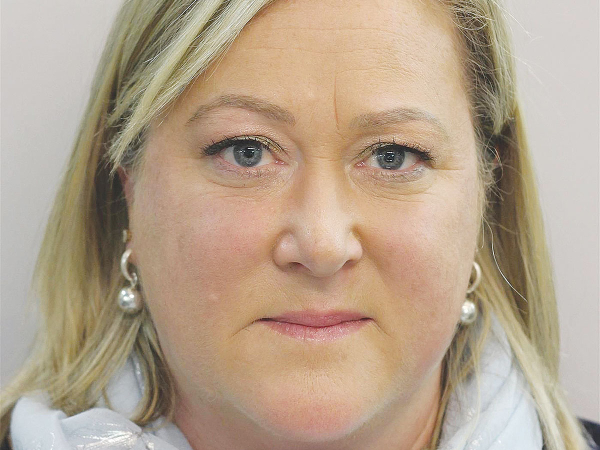
Jan-Maree Pyle has combined 21 years of dairy farming with eight years' working in the artificial breeding space and put it all together in her new role as a breeding consultant for STgenetics New Zealand (STg). She is available from Dunedin south.
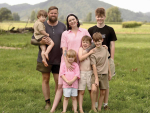
Jan-Maree and her husband Karl worked their way up through the sharemilking system through to leasehold farms in Southland milking between 250 to 850 head during their career.
The daughter of a harness racing trainer has always had an eye for stock, and when Jan-Maree turned her attention to breeding decisions - including some registered Holsteins - she was hooked.
Her drive since has been to breed medium-sized cows with capacity, good udders, and good legs and feet.
When she was exposed to dairy tours in Europe, she took another step to appreciating how genetics can impact on performance can impact on performance when it is teamed with great management. It changed her perspective on breeding for their own farm, and she is now using her knowledge and international exposure to help others.
She says there are great gains to be achieved through the right genetics.
"I think in the past Kiwi farmers have thought that by putting global genetics into their herd they were going to have these huge, big cows that need lots of feed and that's no longer what it's about," Jan-Maree said.
"We farmed on a low-cost system, and we could get cows to 510kg milksolids with the correct breeding. I'm now seeig animals that have been crossed with our global sires, and their calves are medium-sized, and they look exciting."
She says being on farm is her happy place.
"In all honesty, I love sitting at the kitchen table or being down at the cowshed talking farming with clients.
"It's the ultimate compliment when my clients tell me that they feel like I'm part of their business. It's not just about the genetics. It's also about that connection with farming, and to the people within it.
"Then it's also about seeing the results of the breeding decisions I've helped make. That is the proof of the pudding. I'm born and bred down here, and I'm not going anywhere."
She says STg also appealed to her because of its global lead in sex-sorting technology and research.
From a global standing start in 2004, STg now own nine of the top 25 Total Performance Index (TPI) bulls in the April 2024 sire summaries (including the No.1 TPI sire in the world - Captain).
Captain was the No.1 Genomic Total Performance Index (GTPI) sire in 2019, and he has held No.1 proven TPI sire for six successive proof runs. He is also No.1 in Canada and the UK, and he joins other household STg sire names, Delta-Lambda Rubicon, Delta, Chief, Johnboy, and Charl.
STg also runs a large heifer-breeding programme in Ohio. That is where it initiated EcoFeed - a finalist for Innovation in Climate Action for the 2024 International Dairy Federation (IDF) Dairy Innovation Awards.
EcoFeed focuses on identifying animals that have superior feed conversion efficiency and reduced methane production.